Nano-Banana Visual Media Production
Introduction to Nanotechnology
What is Nanotechnology?
Nanotechnology is the science of the extremely small. It's all about understanding and controlling matter at the scale of atoms and molecules. The "nano" in nanotechnology comes from the Greek word for "dwarf."
nanometer
noun
A unit of length equal to one billionth of a meter. It's often abbreviated as nm.
It's hard to wrap your head around just how small a nanometer is. A sheet of paper is about 100,000 nanometers thick. A single gold atom is about a third of a nanometer across. We're talking about a scale far smaller than what we can see with a normal microscope.
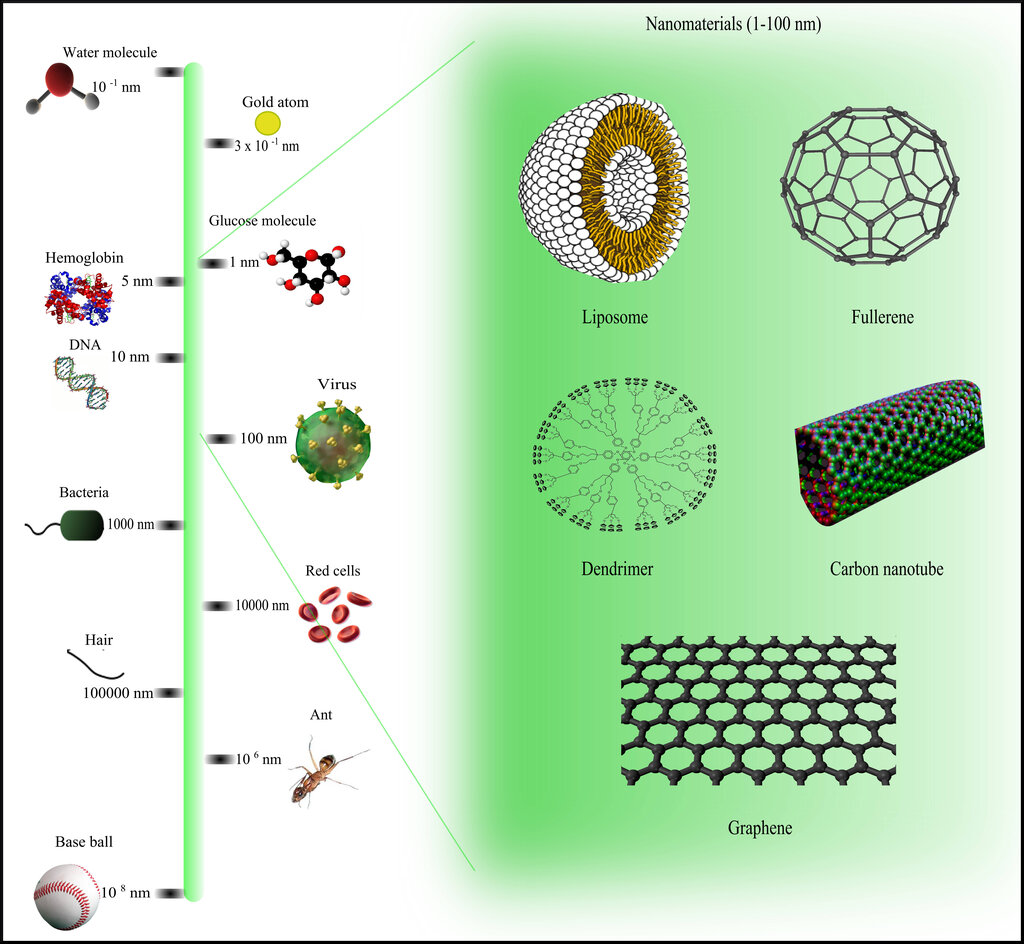
But nanotechnology isn't just about shrinking things down. When you get to the nanoscale, the familiar rules of physics can change. Materials can suddenly have brand new, unexpected properties. This is the core idea of nanotechnology: small is different.
A Brief History
The ideas behind nanotechnology have been around for a while. In 1959, the famous physicist Richard Feynman gave a talk called "There's Plenty of Room at the Bottom." He imagined a day when we could build machines by arranging individual atoms and molecules.
Feynman challenged scientists to think about manipulating matter on an atomic scale, laying the conceptual groundwork for the field decades before it was possible.
Feynman's vision was ahead of its time. For decades, it remained a fascinating but distant dream. The big breakthrough came in the 1980s with the invention of powerful new tools, like the scanning tunneling microscope (STM) and the atomic force microscope (AFM).
These weren't like regular light microscopes. They used a tiny, sharp probe to feel the surface of a material, almost like a record player needle reading a groove. For the first time, scientists could not only "see" individual atoms but also pick them up and move them around. Feynman's dream was becoming a reality.
Why Size Matters
So why do materials behave so strangely at the nanoscale? It mostly comes down to two things: quantum effects and a much greater surface-area-to-volume ratio.
Quantum effects are the weird rules that govern the universe at the subatomic level. At the nanoscale, these effects become much more pronounced and can change a material's electrical or optical properties.
The second reason is easier to visualize. Imagine a single cube of sugar.
As you break the cube into smaller and smaller pieces, the total volume stays the same, but the total surface area skyrockets. At the nanoscale, a huge percentage of a material's atoms are on its surface. This makes nanomaterials much more chemically reactive than their larger counterparts.
A classic example is gold. We know bulk gold as a shiny, yellow, and chemically stable metal. But gold nanoparticles are a completely different story. Depending on their size, they can appear red, purple, or blue. They also become excellent catalysts, speeding up chemical reactions, and can melt at much lower temperatures.
Countless Applications
These unique properties have opened the door to an incredible range of applications across many different fields.
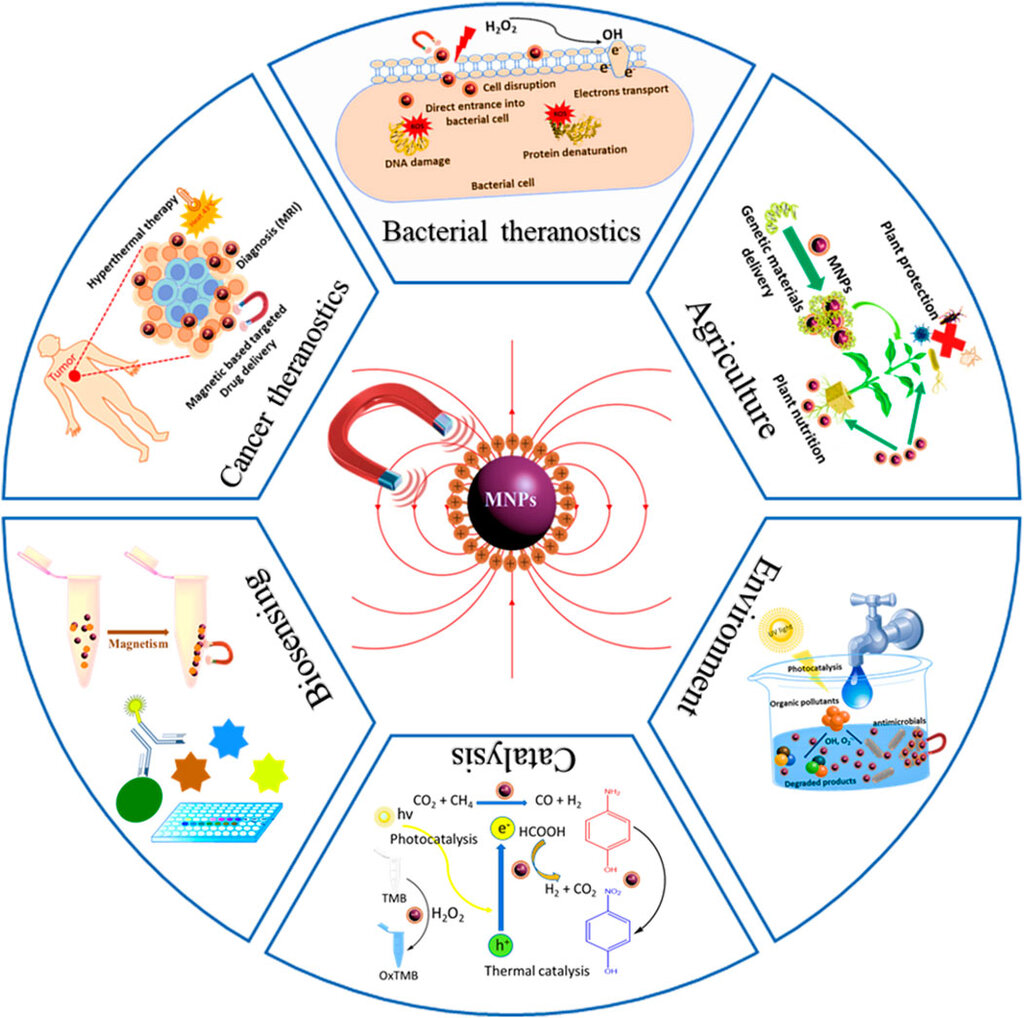
In medicine, nanoparticles can be used to deliver drugs directly to cancer cells, avoiding damage to healthy tissue. In electronics, nanotechnology is helping create smaller, faster, and more powerful computer chips. Materials science uses nanoparticles to make stronger, lighter, and more durable products, from tennis rackets to airplane wings.
Nanotechnology is also used to create more efficient solar panels, self-cleaning windows, and stain-resistant fabrics. The possibilities are vast, and researchers are constantly discovering new ways to use these tiny materials to solve big problems.
Ready to check your understanding?
What does the prefix "nano" signify in the word nanotechnology?
Which physicist's 1959 talk, "There's Plenty of Room at the Bottom," is considered a foundational moment for the ideas behind nanotechnology?
This is just the beginning of the journey into the world of the very small. By understanding these fundamental principles, we can start to see how this powerful technology is shaping our world.