N/A
Understanding Curriculum Design
The Blueprint for Learning
Curriculum design is the thoughtful process of creating a roadmap for learning. It’s not just about listing topics to cover; it's about building a coherent journey that guides a student from one point to another. Think of it like building a house. You wouldn't just start throwing bricks together. You'd begin with a detailed blueprint that outlines the foundation, the structure, and the final goal.
Without this blueprint, learning can feel disconnected and random. A well-designed curriculum ensures that everything a student does—every reading, every activity, every project—serves a clear purpose. It connects the what (content) with the why (learning objectives) and the how (activities and assessments). This intentional structure makes learning more effective, engaging, and meaningful.
Core Components
Every curriculum, regardless of the subject, is built from a few key components that work together. Understanding these parts is the first step to designing an effective learning experience.
Learning Objectives: This is the starting point and the most crucial component. Learning objectives are clear, specific statements that define what a student should know, understand, or be able to do by the end of the course or lesson. They are the destination on your learning map.
Once you know your destination, you can plan the route. This involves selecting the right content and designing activities that help students achieve the objectives. This could include readings, lectures, discussions, experiments, or projects. The key is that every piece of content and every activity must directly support one or more learning objectives.
Finally, the structure and sequence of the curriculum determine the flow of the learning journey. Topics should be organized logically, often building on one another. Simpler, foundational concepts usually come first, creating a scaffold that supports more complex ideas later on. This progressive layering helps students build knowledge and confidence systematically.
Models and Frameworks
To help organize the design process, educators often use established models or frameworks. These provide a structured approach to ensure all the key components are considered and aligned. While there are many different models, they all share the goal of creating a logical and effective learning path.
One popular framework is Backward Design. It reverses the traditional process. Instead of starting with content, you begin with the end in mind:
- Identify desired results (the learning objectives).
- Determine acceptable evidence (how you'll know students have met the objectives).
- Plan learning experiences and instruction (the content and activities).
Another widely used model in instructional design is ADDIE, an acronym that stands for Analysis, Design, Development, Implementation, and Evaluation. It’s a cyclical process where insights from the evaluation phase feed back into the analysis phase for continuous improvement.
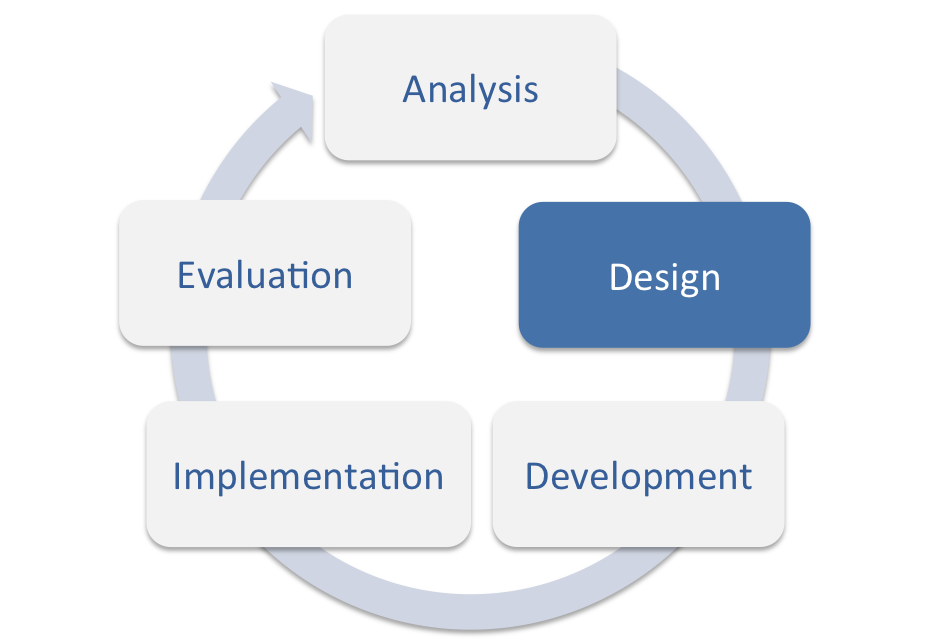
These frameworks aren't rigid rules but rather helpful guides. They provide a systematic way to think through the design process, ensuring that the final curriculum is purposeful, coherent, and centered on the learner.