N/A
Understanding Course Design
Start with the End in Mind
When building a course, it’s tempting to jump right into creating content—gathering readings, designing lectures, and finding cool videos. But the most effective courses start somewhere else entirely: with the end goal. This approach is called backward design.
Think of it like planning a road trip. You don't just start driving and hope you end up somewhere interesting. You pick a destination first. Only then do you map out the route, decide where you'll stop along the way, and pack what you need. Course design works the same way. First, you define what you want students to know and be able to do by the end of the course. These are your learning objectives. Everything else flows from there.
Once you know your destination—the learning objectives—the next step is to figure out how you’ll know students have arrived. This is where assessments come in. Assessments are the evidence of learning. They can be anything from a final exam to a project, a presentation, or a portfolio. The key is that they must directly measure the objectives you set in the first step.
If your objective is for students to analyze historical documents, a multiple-choice quiz on dates and names won't cut it. You need an assessment where they actually perform that analysis.
Only after defining the objectives and the assessments do you plan the day-to-day instructional strategies. These are the learning activities, lectures, and practice exercises that will help students gain the knowledge and skills they need to succeed on the assessments. This alignment—connecting objectives, assessments, and activities—is the core of good course design. It creates a clear, logical path for learners.
Mapping the Journey
Zooming out from a single course, we find a similar principle at work for an entire program of study. This is where curriculum mapping comes in. A curriculum map is a bird's-eye view of a student's entire educational journey, showing how knowledge and skills are introduced, developed, and mastered over time.
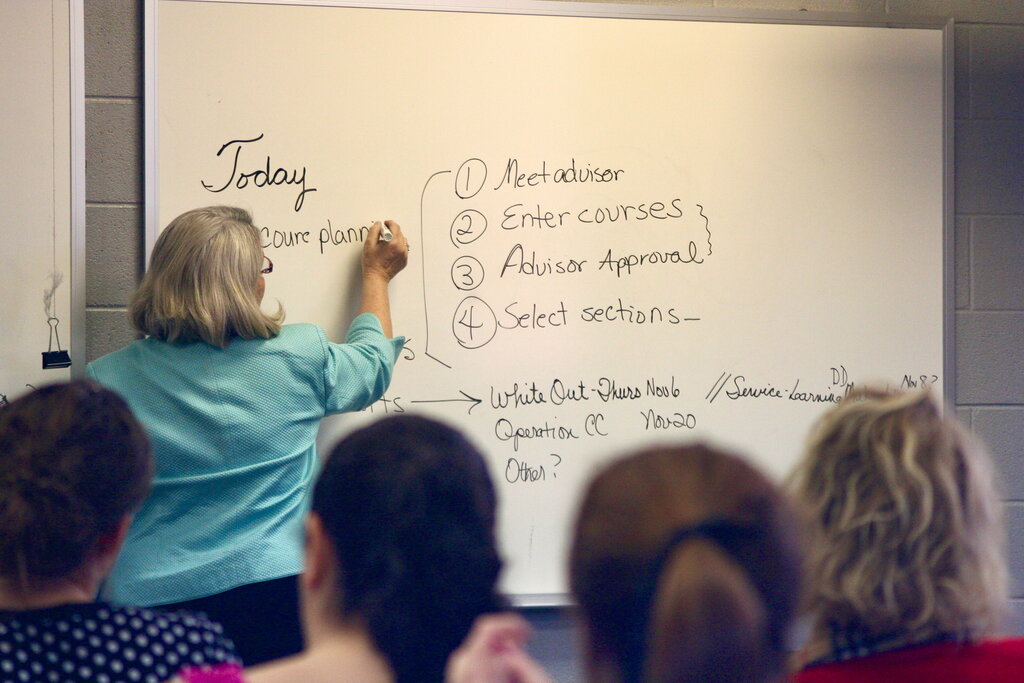
Mapping helps educators see the big picture. It ensures that courses within a program build on each other logically, without unnecessary repetition or crucial gaps. For example, a curriculum map might show that a foundational concept is introduced in a 100-level course, reinforced with more complexity in a 200-level course, and then applied in an advanced project in a 400-level course.
By mapping the curriculum, you can track where key skills are taught and assessed, ensuring a coherent and comprehensive learning experience from the first day of the program to the last.
Ultimately, both backward design and curriculum mapping are about being intentional. They are frameworks for making thoughtful decisions that put student learning first, creating a clear and purposeful path to success.
According to the principles of backward design, what is the very first step you should take when designing a course?
The core principle of 'alignment' in course design refers to the connection between which three components?