N/A
Introduction to Pedagogical Strategies
What Are Pedagogical Strategies?
At its core, teaching is about helping people learn. Pedagogical strategies are the methods and theories that guide how we do that. Think of a teacher as a guide and the learning goal as a destination. The pedagogical strategy is the map they choose to get there. There isn't one single "best" map; the right one depends on the terrain, the traveler, and the destination itself.
A pedagogical approach is the overall educational philosophy used by instructors to improve the effectiveness of their teaching.
Choosing a strategy isn't just about making a lesson fun, though that helps. It's about being intentional. A well-chosen strategy makes learning more efficient, boosts student engagement, and ensures that what's being taught actually sticks. It's the difference between aimlessly wandering and taking a clear, purposeful path to understanding.
Theories That Shape Teaching
Most teaching methods are rooted in learning theories—ideas about how the human brain acquires knowledge. Understanding these theories helps us see why certain strategies work. Let's look at three major ones.
Behaviorism: Learning as a change in behavior.
Behaviorism focuses on observable actions. It suggests that learning happens when a learner responds to a stimulus, and that behavior is reinforced with positive or negative feedback. Repetition and reward are key. Think of a dog learning to sit on command to get a treat. In a classroom, this looks like drilling multiplication tables with flashcards and giving praise for correct answers. The focus is on the correct output, not the internal thought process.
Cognitivism: Learning as a mental process.
Cognitivism shifted the focus inward, comparing the brain to a computer. It's concerned with how information is received, organized, stored, and retrieved. This theory explores mental processes like memory, problem-solving, and attention. A cognitivist approach might involve using mnemonic devices to remember historical dates or organizing information into a concept map to see connections. It's all about how the mind works with information.
Constructivism: Learning as knowledge creation.
Constructivism proposes that learners don't just passively receive information; they actively build their own understanding of the world through experiences and interactions. Learning is a social and contextual activity. In this model, a teacher acts as a facilitator, guiding students as they discover concepts for themselves. This could involve project-based learning, collaborative group work, or science experiments where students formulate and test their own hypotheses.
| Theory | Core Idea | Role of Learner | Classroom Example |
|---|---|---|---|
| Behaviorism | Response to stimuli | Passive recipient | Flashcard drills |
| Cognitivism | Information processing | Active processor | Using mnemonics |
| Constructivism | Knowledge construction | Active creator | Group projects |
Matching the Strategy to the Goal
No single learning theory is perfect for every situation. The most effective teaching involves aligning the strategy with the specific learning objective and the needs of the students.
By setting pedagogical goals before the creation of assignments, educators ensure that their instructional strategies and assessment methods are aligned with the desired learning outcomes, enhancing the overall effectiveness of the teaching and learning process.
For example, if the goal is for a student to memorize the state capitals, a behaviorist approach using quizzes and repetition is highly effective. But if the goal is for them to understand the economic factors that led to the growth of those capitals, a constructivist approach involving research projects and group discussions would be far more powerful.
A great strategy for memorizing facts might be a poor choice for teaching critical thinking.
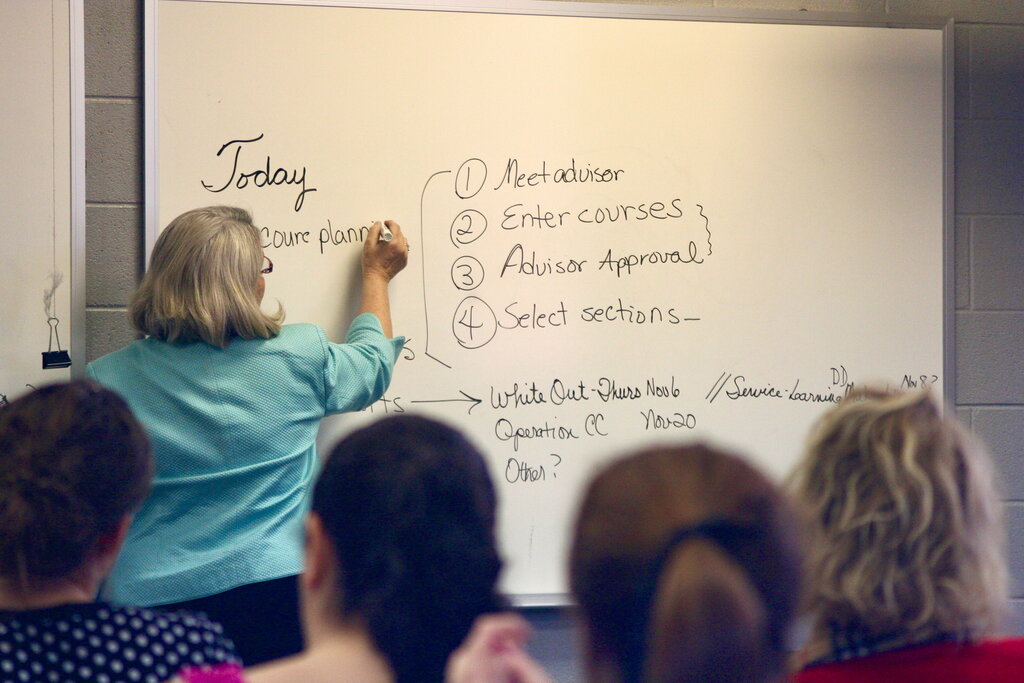
Beyond the objective, it's also crucial to consider the learners themselves. Are they beginners who need a lot of structure, or are they experts who can handle more self-direction? Do they learn best by listening, seeing, or doing? A student's background knowledge, learning style, and motivation all play a role in determining which pedagogical strategy will be most successful. The art of teaching lies in making these choices thoughtfully.
Now, let's test your understanding of these foundational concepts.
What is the primary purpose of a pedagogical strategy?
A teacher assigns a project where students must research, design, and build a small-scale model of a sustainable city in collaborative groups. This approach is most aligned with which learning theory?
By understanding these core theories and the importance of alignment, educators can build a strong foundation for creating effective and engaging learning experiences.