n8n Workflow Automation
Introduction to n8n
Automating Your Digital Tasks
Many of our daily tasks are repetitive. Think about saving email attachments to a cloud drive, or sending a welcome message to a new customer. Each step is simple, but doing it over and over takes time. This is where workflow automation comes in.
n8n is a tool that connects your different apps and services to automate these tasks. You can think of it as a visual way to build a digital assembly line. Instead of writing code, you connect blocks that represent different actions. This creates a workflow, a series of steps that run automatically.
With n8n, you can visually build workflows to sync data between applications and react to events without needing to be a programmer.
The n8n Interface
When you open n8n, you're greeted by the workflow editor. This is your canvas for building automations. It might look a bit empty at first, but it has a few key areas.
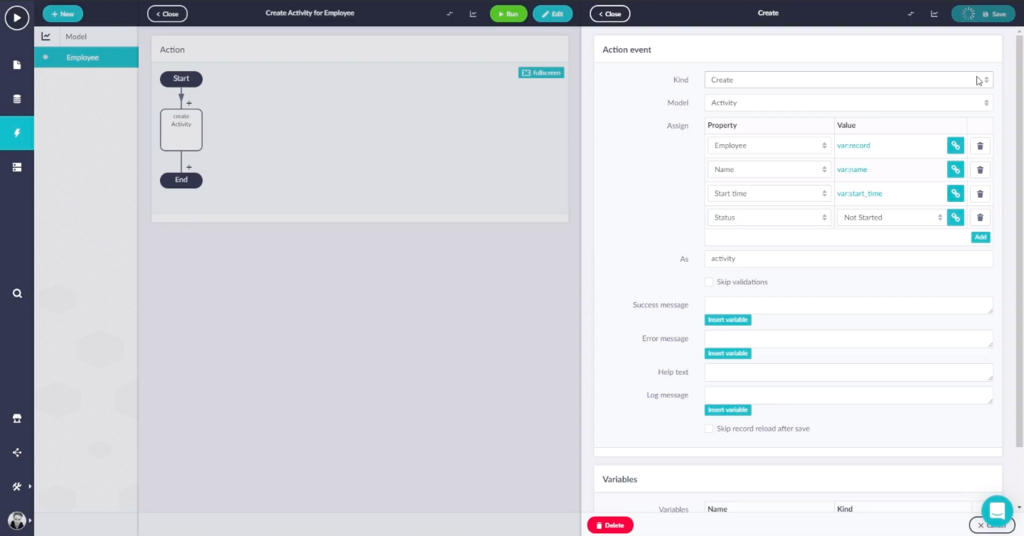
The main area is the Canvas, where you'll place and connect your building blocks. On the right, you'll see a panel that lets you browse all the available building blocks, called Nodes. When you select a node on the canvas, this panel changes to show its specific settings. At the top, you'll find controls to save, activate, and test your workflow.
Workflows and Nodes
In n8n, everything revolves around two core concepts: workflows and nodes.
Workflow
noun
A sequence of connected nodes that automate a process. It always starts with one or more trigger nodes.
A node is a single building block in your automation. It performs one specific action, like reading a file, sending an email, or adding a row to a spreadsheet. You connect nodes to pass data from one step to the next.
There are two main types of nodes:
- Trigger Nodes: These start a workflow. A trigger could be a set schedule (like every Monday at 9 AM), a new message in a chat app, or a submitted web form.
- Regular Nodes: These perform an action. They take data from the previous node, do something with it, and pass it to the next one.
By connecting a trigger node to one or more regular nodes, you create a complete, automated process.
Cloud vs. Self-Hosted
You have two main options for using n8n. You can use n8n's cloud service or host it yourself on your own server.
n8n Cloud is the quickest way to get started. They manage the technical side of things, so you can just sign up and start building workflows. This is great for convenience and ease of use.
Self-hosting gives you more control. You run n8n on your own infrastructure. This option is ideal if you have specific data privacy requirements or want to customize the environment. It requires more technical setup but offers maximum flexibility.
Now that you understand the basic concepts, you're ready to start building your own automations.