Mysticism and Music the 13 Saints of Rosalía's LUX
Sacred Flesh and Relics
The Saint and the Star
The body of a pop star is public property. It’s dissected, desired, and consumed. The body of a saint, however, is a site of radical devotion, a vessel for the divine achieved through extreme physical sacrifice. On her album LUX, Rosalía collapses this distance, exploring how the pressures of modern stardom echo the ascetic lives of Catholic mystics.
Consider , the first person from the Americas to be canonized as a saint. Born Isabel Flores de Oliva in 1586 Peru, she was renowned for her beauty. Fearing it would lead her into vanity and sin, she went to extreme lengths to disfigure herself. She rubbed pepper on her face to cause blisters, wore a heavy silver crown with inward-facing spikes hidden beneath roses, and isolated herself in a small hut in her family's garden. For Rose, renouncing her physical self was not an act of self-hatred, but a powerful claim of agency. She was seizing control of the only thing she truly owned—her body—and dedicating it entirely to a spiritual purpose, away from the male gaze and societal expectations.
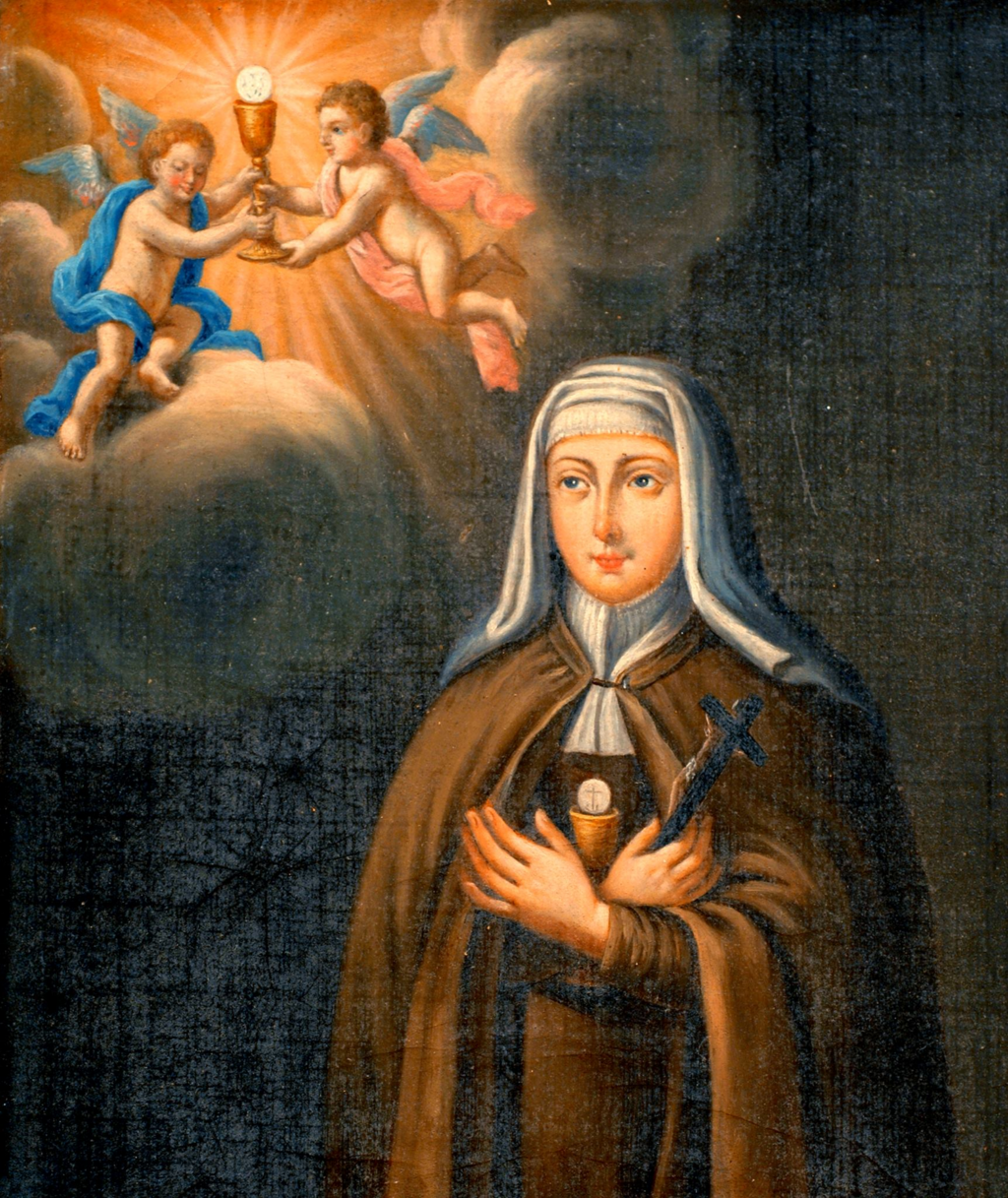
This idea of the self as a holy offering is central to the track 'Reliquia.' In Catholicism, relics are the physical remains of a saint—a bone, a lock of hair, a piece of clothing—venerated by the faithful as a tangible link to the divine. Rosalía transforms this concept for the digital age. She sings of her voice, her image, and her art as pieces of herself that are distributed and consumed by her audience.
Each performance, each photo, each sound bite becomes a sacred fragment, a 'relic' of the artist. The pop star’s body is broken and shared, not for communion with God, but for connection with fans. It’s a modern form of hagiography where the life of the saint is replaced by the curated image of the celebrity.
The Privilege of Poverty
Another figure looming over LUX is Saint Clare of Assisi, a 13th-century Italian noblewoman who renounced her immense wealth to follow Saint Francis. Clare’s devotion was defined by her embrace of absolute poverty. She saw material possessions as a trap and spiritual freedom as the ultimate treasure. She fought the papacy for decades to secure what became known as the Privilegium Pauperitatis, or the —the right for her order of nuns, the Poor Clares, to own nothing at all. This wasn't just humility; it was a radical political and spiritual statement.
This 'divine madness' fuels the operatic track 'Mio Cristo Piange Diamanti' ('My Christ Weeps Diamonds'). The song rejects earthly jewels for spiritual ones. The soaring vocals and dramatic composition convey an ecstatic faith, a state where worldly loss becomes transcendent gain. The weeping Christ doesn't cry tears of sorrow, but of diamonds, suggesting that true value is found in sacrifice and divine love.
Through these saints, Rosalía examines the paradox of the modern female artist. Like Rose and Clare, she must exercise extreme discipline over her body and her life—not just for her art, but to survive the crushing weight of public adoration. The body becomes a relic, and poverty becomes a privilege, as the artist sacrifices the private self to create a sacred public image.
Ready to test your knowledge?
According to the text, what was Saint Rose of Lima's primary motivation for her acts of extreme physical sacrifice?
How does the album LUX connect the concept of a Catholic relic to a modern pop star?
By channeling the stories of these historical women, Rosalía frames the pop star's existence not as mere entertainment, but as a form of modern martyrdom and devotion.