Music Industry and Creator Economy Shifts
Music Industry Overview
The Traditional Music Industry
For decades, the music industry operated on a well-defined model. At its heart was the relationship between the artist and the record label. This structure dictated how music was created, marketed, and sold to listeners. Think of it as a pipeline, with a few powerful gatekeepers controlling the flow.
This diagram shows the classic path a song would take from an idea to a listener's ears. The record label sat at the center of this universe, acting as a combination of a bank, a marketing firm, and a logistics company.
Key Players and Their Roles
Several key players make this system work, each with a specific job.
Record Labels: These are the power brokers. Labels sign artists to recording contracts, providing them with an advance—a loan to live on and record an album. In exchange, the label typically owns the master recordings. They fund everything from studio time to music video shoots and then market the final product to the public. The "Big Three" major labels are Universal Music Group, Sony Music Entertainment, and Warner Music Group.
Artists: The creators. They write and perform the songs. In the traditional model, an artist's primary goal was to get a record deal, as it was nearly impossible to achieve widespread success without the financial backing and industry connections of a major label.
Producers: The sonic architects. A music producer's role is to shape the sound of an album. They work closely with the artist in the recording studio, guiding the performances, making decisions about instrumentation, and overseeing the technical side of recording and mixing.
Distributors: The logistics experts. Once an album is recorded, mixed, and manufactured, distributors get it into stores. They handle the shipping of physical media like CDs and vinyl to retailers around the world. In the digital age, they also deliver music files to online stores and streaming services.
Advance
noun
A sum of money paid by a record label to an artist at the beginning of a contract. It is typically recoupable, meaning the artist must pay it back from their future royalties before they earn any additional money.
How the Money Flows
The ultimate goal, of course, is to sell music. Revenue in the traditional industry came from several distinct streams, though the importance of each has shifted dramatically over time.
| Revenue Stream | Description | Key Era |
|---|---|---|
| Physical Sales | Revenue from selling CDs, vinyl records, and cassette tapes. | 1950s - Early 2000s |
| Digital Downloads | Revenue from selling individual tracks or albums on platforms like iTunes. | Mid 2000s - Mid 2010s |
| Streaming | Royalties generated when a user plays a song on a service like Spotify or Apple Music. | Mid 2010s - Present |
| Live Performance | Income from ticket sales, merchandise, and sponsorships for concerts and tours. | Always important; crucial today |
| Publishing | Royalties earned when a song's composition is used, such as on the radio, in a film, or by another artist. | Always important |
For much of the 20th century, physical sales were king. The entire industry was built around getting people to buy a physical copy of an album. As technology changed, so did the primary source of income, moving from physical discs to digital files and, eventually, to streams.
Live performances have always been a part of an artist's career, but as album sales declined, touring became the most important and reliable revenue stream for many musicians.
A History of Technological Shifts
The music industry has never stood still. Its history is a story of constant adaptation to new technologies, each one changing how we listen to and purchase music.
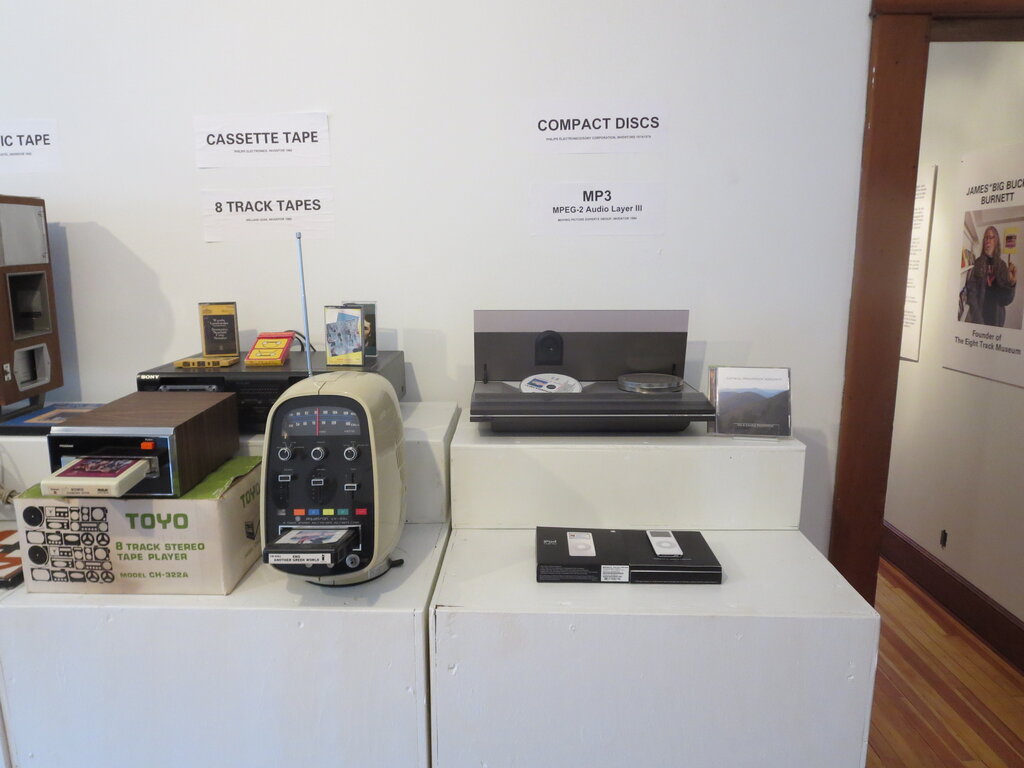
The era of vinyl records gave way to the portability of cassettes, which were then replaced by the high-fidelity sound of compact discs (CDs). For a time, the CD was the industry's cash cow, generating massive profits.
Then the internet arrived. The late 1990s and early 2000s brought widespread digital piracy through platforms like Napster, which completely upended the industry's business model. Album sales plummeted as people shared music for free.
The industry's first successful adaptation was the launch of the iTunes Store in 2003, which legalized and monetized digital downloads. For about a decade, paying $0.99 for a song became the new standard. But another shift was just around the corner: streaming. Services like Spotify and Apple Music changed the model from ownership (buying an album) to access (paying a monthly fee for a vast library).
Technological changes in the music industry and the ways in which consumers culturally embrace these changes are important yet overlooked components of pop song history.
This transition to streaming fundamentally altered royalty structures and revenue streams, creating new challenges and opportunities for everyone involved.
Ready to check your understanding? Let's see what you've learned.
In the traditional music industry model, what was the primary role of a record label?
Who is the 'sonic architect' responsible for guiding an artist in the studio and shaping the sound of a record?
The traditional music industry model, built on the power of record labels and the sale of physical media, has been reshaped by technology. While the core players remain, their roles and relationships continue to evolve in the digital age.