Music Harmony Essentials
Musical Notation
Reading Music
Music has its own written language. Just like letters form words, musical symbols on a page tell a musician what to play, how fast, and how loud. This system is called musical notation, and it all starts with a simple set of five lines and four spaces.
This framework is called the staff. It's the canvas where music is written.
Notes are placed on the lines or in the spaces of the staff. The higher a note's position, the higher its pitch. But how do you know which line or space corresponds to which specific note? For that, we need a guidepost called a clef.
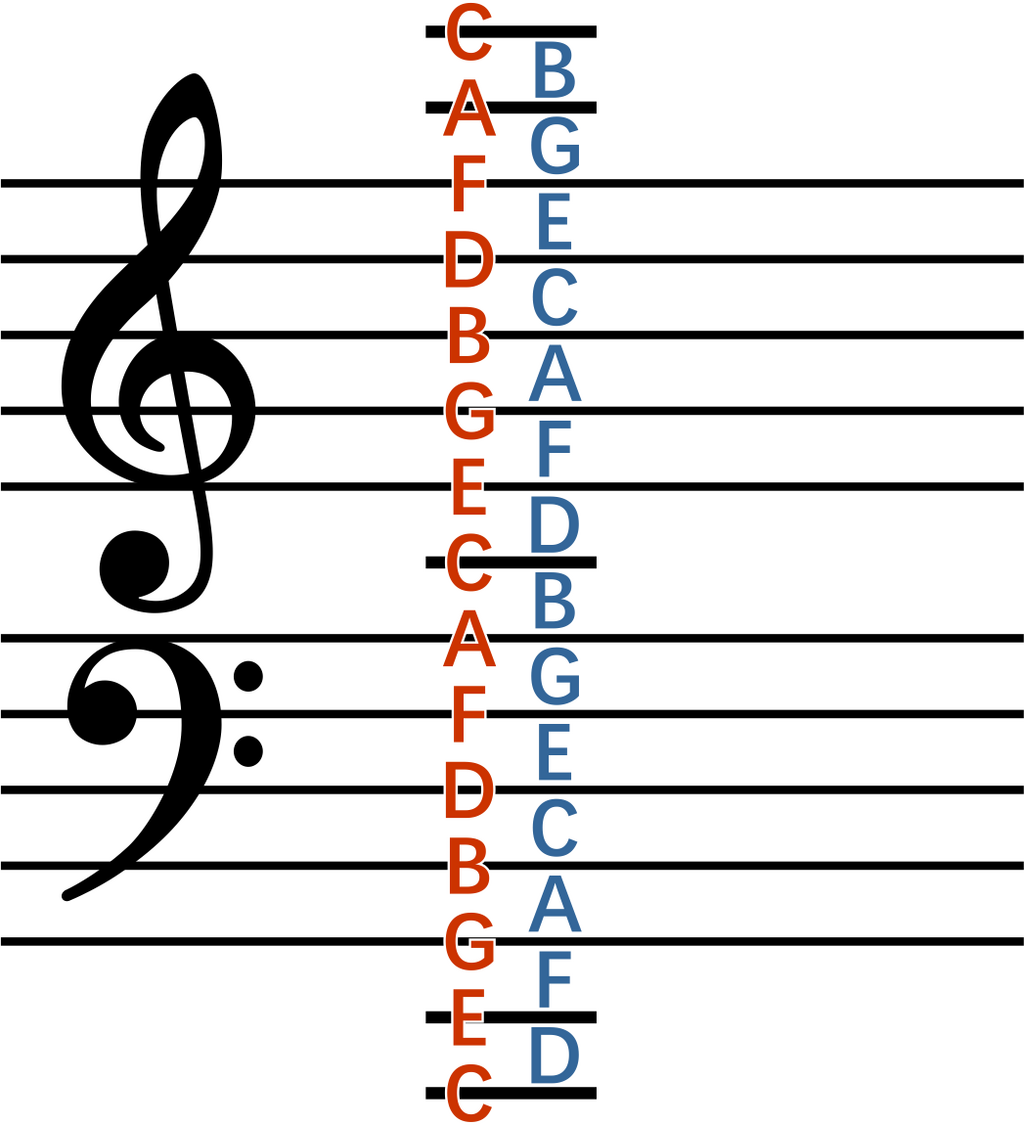
The two most common clefs are the treble clef and the bass clef. The treble clef, also known as the G-clef, curls around the second line from the bottom, marking it as the note G. It's typically used for higher-pitched instruments like the flute, violin, or a singer's soprano voice. The bass clef, or F-clef, has two dots surrounding the fourth line from the bottom, marking it as F. It’s used for lower-pitched instruments like the cello, bass guitar, or a tuba.
When you see these two staves joined together, as they often are in piano music, it's called the grand staff. The note right in the middle, between the two staves, is appropriately named Middle C.
Rhythm and Silence
Pitch is only half the story. Music also needs rhythm. In notation, the shape of a note tells you how long to hold it. This duration is called the note value.
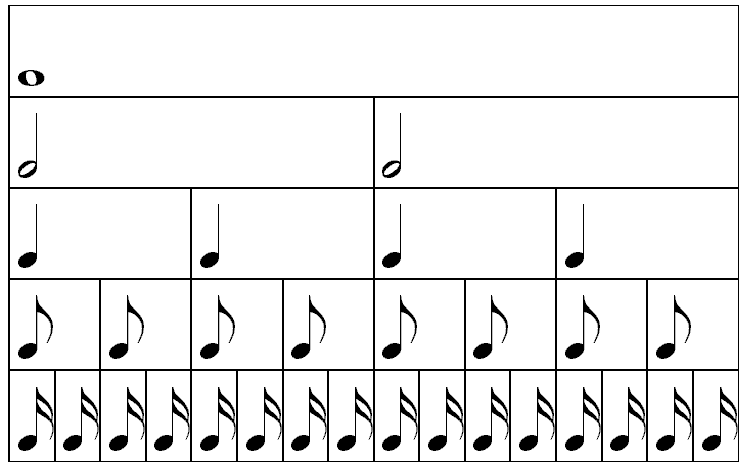
The basic unit is the whole note. A half note is held for half the duration of a whole note. A quarter note is held for a quarter of the duration, and so on. This pattern continues with eighth notes, sixteenth notes, and even shorter values.
Just as important as the sounds are the silences between them. These are marked by symbols called rests. Every note value has a corresponding rest that signifies the same duration of silence.
| Note | Rest | Name |
|---|---|---|
| 𝅝 | 𝄻 | Whole |
| 𝅗𝅥 | 𝄼 | Half |
| 𝅘𝅥 | 𝄽 | Quarter |
| 𝅘𝅥𝅮 | 𝄾 | Eighth |
| 𝅘𝅥𝅯 | 𝄿 | Sixteenth |
These notes and rests are organized into units of time called measures, which are separated by vertical lines on the staff called bar lines. A time signature at the beginning of the music tells us how to count the beats in each measure.
The time signature looks like a fraction. The top number tells you how many beats are in a measure. The bottom number tells you what kind of note gets one beat.
For example, in 4/4 time, the most common signature, there are four beats per measure, and a quarter note (indicated by the bottom 4) gets one beat. So, a measure in 4/4 time could have four quarter notes, or two half notes, or any combination that adds up to four quarter-note beats. In 3/4 time, often used for waltzes, there are three beats per measure, with the quarter note still getting one beat.
Setting the Key
Finally, before the music even begins, we need to know which notes are the default for the piece. This is established by the key signature, a collection of sharp (♯) or flat (♭) symbols placed on the staff right after the clef.
A sharp raises a note's pitch by a half step, while a flat lowers it by a half step. Instead of writing a sharp or flat next to every single affected note throughout a piece, the key signature sets the rule from the start. For example, if you see a sharp on the F line in the key signature, every F you play should be an F-sharp, unless specified otherwise.
The number of sharps or flats in the key signature tells you the key of the piece, like C major (no sharps or flats) or G major (one sharp).
Understanding these basic building blocks—the staff, clefs, notes, rests, and signatures—is the first step to fluency in the language of music. With them, you can begin to decode the masterpieces of the past and even write your own.