Muscle Growth Explained
Muscle Anatomy
The Muscle Blueprint
Skeletal muscles, the engines of our bodies, are more than just single blocks of tissue. They are intricate, organized structures, built from smaller and smaller components, much like a thick rope is woven from individual threads.
At the highest level, you have the muscle itself. This entire muscle is composed of bundles called fascicles. Each fascicle, in turn, is a bundle of the fundamental units of muscle: the muscle fibers. These fibers are the actual muscle cells, long and cylindrical, and they're responsible for the contractions that produce movement.
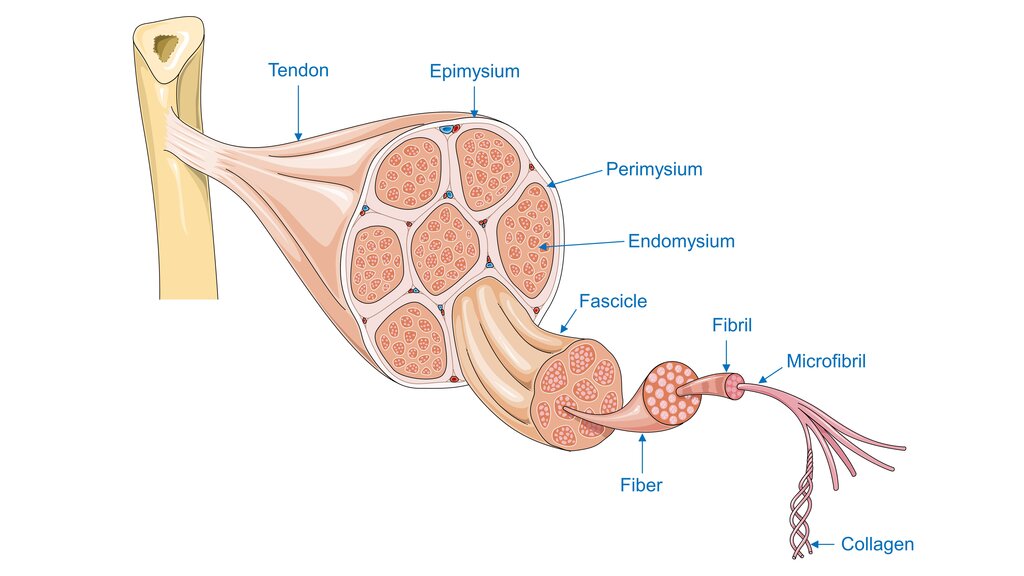
This whole structure is held together and organized by layers of connective tissue. Think of it as a biological packing material. A tough outer layer called the epimysium wraps the entire muscle. The perimysium surrounds each individual fascicle, and a delicate layer called the endomysium encases each muscle fiber. These tissues aren't just for support; they provide pathways for nerves and blood vessels to reach the muscle fibers, delivering commands and nutrients.
Inside the Muscle Fiber
Let's zoom in on a single muscle fiber. This isn't your typical cell. It's long, thin, and contains multiple nuclei. Inside each fiber are even smaller strands called myofibrils. These are the engines within the engine, and they do the actual work of contraction.
Myofibrils are made up of repeating sections called sarcomeres, which are the smallest contractile units of a muscle. When your brain tells a muscle to move, a chemical signal causes these sarcomeres to shorten. Millions of sarcomeres shortening at once is what creates the overall muscle contraction.
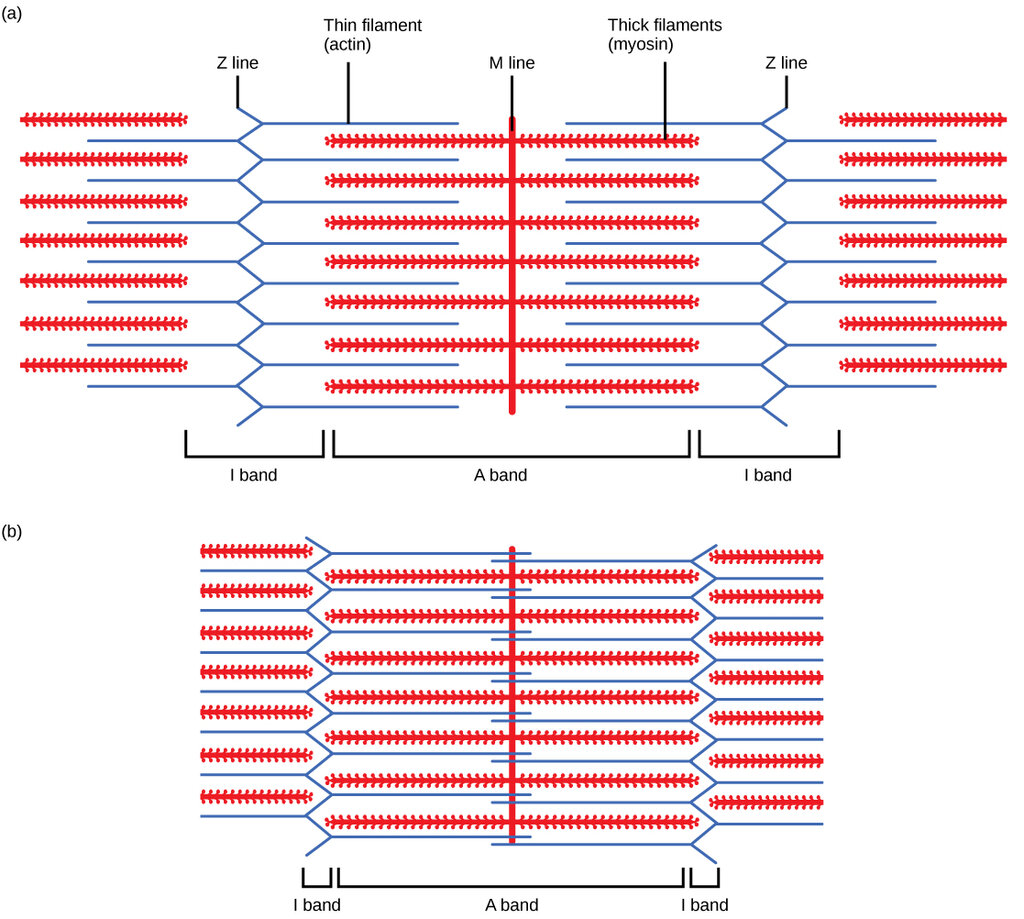
A muscle contraction is the cumulative effect of millions of tiny sarcomeres getting shorter.
Two Types of Fibers
Not all muscle fibers are created equal. They are generally categorized into two main types: Type I and Type II, each suited for different kinds of work. Most muscles contain a mix of both, but the ratio can vary from person to person and muscle to muscle.
Type I fibers are also known as slow-twitch fibers. They contract slowly but are incredibly resistant to fatigue. They're rich in myoglobin, a protein that stores oxygen, which gives them a reddish color. These fibers are the marathon runners of your muscular system, built for endurance.
Type II fibers, or fast-twitch fibers, are the sprinters. They contract quickly and generate a lot of force, but they tire out rapidly. They have less myoglobin, appearing paler. These fibers are essential for powerful, explosive movements like lifting heavy weights or jumping.
| Feature | Type I (Slow-Twitch) | Type II (Fast-Twitch) |
|---|---|---|
| Contraction Speed | Slow | Fast |
| Force Production | Low | High |
| Fatigue Resistance | High | Low |
| Primary Energy Source | Aerobic (Oxygen) | Anaerobic (Glycogen) |
| Appearance | Red | White/Pale |
Understanding this distinction is key. An elite marathoner's leg muscles will have a higher proportion of Type I fibers, allowing them to run for hours. In contrast, a powerlifter's muscles will be dominated by Type II fibers, enabling them to produce maximum force for a short period.
Let's review these core concepts before moving on.
Now, let's check your understanding of muscle structure and fiber types.
Which of the following correctly lists the components of a skeletal muscle from the largest structure to the smallest?
What is the name of the connective tissue that surrounds an individual muscle fiber?
Having a solid grasp of this anatomy—from the whole muscle down to the individual fibers—is the first step in understanding how muscles respond and grow.