Multimodal Agentic AI Explained
Introduction to Multimodal AI
What Is Multimodal AI?
Think about how you experience the world. You see, hear, read, and feel things all at once. You watch a movie by processing images and sound together. You understand a friend's joke through their words, tone of voice, and facial expression. Your brain seamlessly combines these different streams of information, or modalities, to form a complete picture.
Multimodal AI is built on the same idea. Instead of working with just one type of data, like text or images, it's designed to process and understand information from multiple sources at the same time. It's an approach that allows AI to interpret the world in a richer, more human-like way.
More Than the Sum of Its Parts
Why is combining data types so important? Because a single modality often doesn't tell the whole story. An AI that can only read text might analyze the script of a movie, but it would miss the emotion conveyed by an actor's voice or the suspense built by the soundtrack. A picture of a birthday party shows a happy scene, but adding audio of people singing reveals more context.
Multimodal capabilities mean AI models can process and combine multiple data types—text, images, audio and video—simultaneously.
By integrating different data types, the AI gains a deeper, more nuanced understanding. The combination of modalities can reveal patterns and connections that wouldn't be visible from any single source. This creates a more robust and accurate picture of a situation, much like how our combined senses give us a full understanding of our surroundings.
The Senses of AI
Multimodal systems work with several common types of data. Each one provides a unique layer of information.
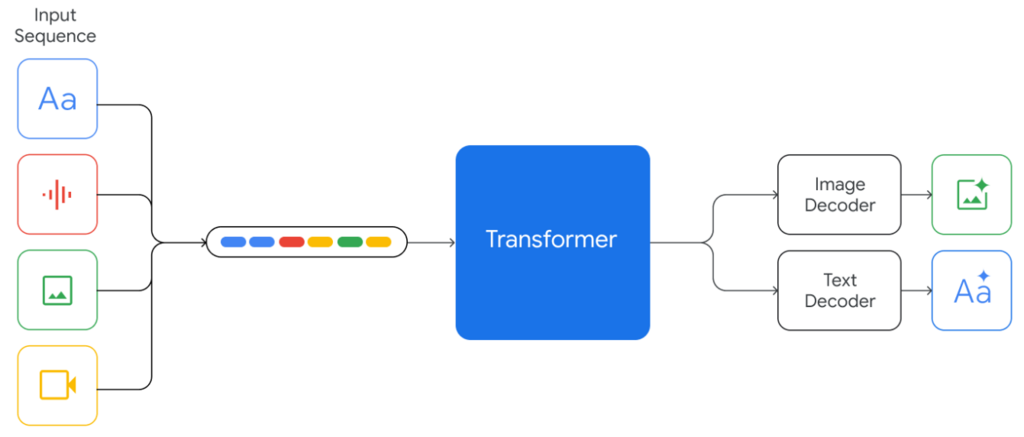
Visual data includes images and videos. This is the AI's sense of sight, allowing it to recognize objects, faces, scenes, and actions.
Auditory data covers all types of sound, from speech and music to ambient noise. It gives the AI a sense of hearing, enabling it to understand spoken words, identify sounds, and even interpret the emotion in someone's voice.
Textual data is written language. This is the foundation for understanding context, meaning, and the relationships between concepts expressed in words.
Sensor data is a broad category that includes information from various sensors, like temperature, pressure, location from GPS, or motion data from an accelerometer. This gives an AI awareness of its physical environment and conditions.
By combining these different streams of information, multimodal AI begins to understand the world in a way that’s much closer to our own.