Multilingual E-learning Development
Introduction to E-Learning
What Is E-Learning?
E-Learning
noun
A learning system based on formalized teaching but with the help of electronic resources. While teaching can be based in or out of the classrooms, the use of computers and the Internet forms the major component of E-learning.
Simply put, e-learning is learning done on a digital device, like a computer or smartphone. It breaks down the traditional classroom walls, offering incredible flexibility. You can learn anytime, anywhere, as long as you have an internet connection. This makes education more accessible to people with busy schedules or those who live far from schools.
One of the biggest advantages is personalization. E-learning platforms can adapt to your pace. If you grasp a concept quickly, you can move on. If you need more time, you can review materials as often as you like. This approach is often more cost-effective than traditional education, cutting down on expenses like travel and physical textbooks.
Formats of E-Learning
E-learning isn't a one-size-fits-all solution. It comes in several formats, each with its own structure and level of interaction. The two most common types are self-paced and instructor-led.
| Feature | Self-Paced Learning | Instructor-Led Learning |
|---|---|---|
| Schedule | Flexible; learn on your own time | Fixed schedule with set class times |
| Pacing | Learner controls the speed | Instructor sets the pace for the group |
| Interaction | Mostly with content; some forums | Real-time interaction with instructor and peers |
| Best For | Independent learners, busy schedules | Learners who prefer structure and live discussion |
There is also a popular hybrid model called blended learning. This approach combines online digital media with traditional classroom methods. A student might watch an online lecture at home and then come to a physical classroom for a hands-on workshop or group discussion. It aims to give learners the best of both worlds.
Anatomy of a Great Course
Just putting information online doesn't automatically create a great learning experience. The most effective e-learning courses are carefully planned and structured. They don't just present facts; they guide the learner through a journey of discovery.
Instructional design is the backbone of effective e-learning.
This journey is mapped out using instructional design, which is the practice of creating effective, engaging, and appealing learning experiences. It's about making deliberate choices about what content to include, how to present it, and how to help learners practice and apply their new knowledge.
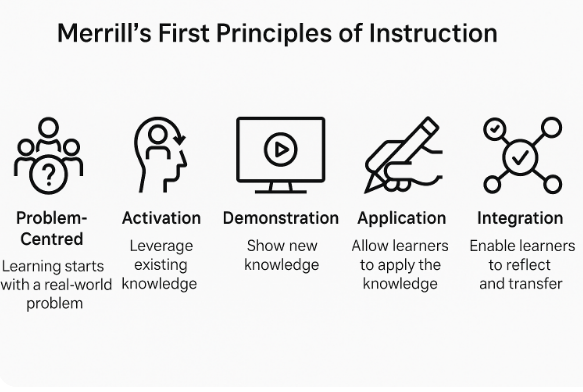
Many instructional design models exist, but most share core principles. A good course typically:
- Starts with a real-world problem. This grabs the learner's attention and provides context.
- Activates existing knowledge. It connects new information to what the learner already knows.
- Demonstrates the new skill. It shows, rather than just tells.
- Lets the learner apply the skill. It provides opportunities for practice.
- Integrates the skill. It helps the learner connect their new knowledge to their own life.
Keeping Learners Hooked
A well-designed course is a great start, but keeping learners engaged from start to finish is the real challenge. Unlike a physical classroom, an e-learning course competes with endless digital distractions.
The key to engagement is turning passive viewing into active participation.
To do this, course creators use a variety of strategies. Multimedia integration is crucial. Using a mix of videos, audio clips, interactive diagrams, and text keeps the content fresh and appeals to different learning styles. Think of a history lesson that includes a short documentary clip or a science module with an interactive simulation.
Interaction is another vital component. This can mean quizzes that provide immediate feedback, discussion forums where learners can talk with each other, or assignments that require them to solve realistic problems. When learners feel involved and can see their progress, they are much more likely to stay motivated and complete the course.
Ready to check your understanding?
A course requires students to watch online video lectures before attending a weekly in-person lab session. This approach is best described as:
What is the primary goal of instructional design in the context of e-learning?
Understanding these fundamentals provides a solid foundation for creating or choosing an e-learning course that truly works.