Multilateral Calculation in Finance
Introduction to Multilateral Calculation
Beyond Two Countries
When countries trade or invest with each other, the simplest interactions involve just two nations. This is called a bilateral relationship. For example, we can look at the value of goods Brazil sells to Portugal. But the global economy is far more complex than a series of one-to-one deals.
Most financial and economic activity involves many countries at once. To understand this web of connections, we use multilateral calculation. It’s a method for analyzing economic interactions among three or more countries simultaneously. It helps us see the complete picture of international trade and finance, rather than just isolated pairs.
multilateral
adjective
Agreed upon or participated in by three or more parties, especially the governments of different countries.
Think of it like a group of friends splitting the cost of a trip. If it’s just two friends, it's simple. But if five friends go, and one person pays for the rental car, another buys the groceries, and a third covers the hotel, figuring out who owes what becomes a multilateral problem. You need to account for all the payments to see where everyone stands.
In international finance, this is crucial. It allows economists to track massive flows of money, goods, and services across the globe, understand a country's overall economic position, and maintain stability in the financial system.
A Brief History
For a long time, economic analysis focused heavily on bilateral trade balances. But after World War II, the world became much more interconnected. Leaders recognized that global economic stability required cooperation and a broader perspective.
This led to the creation of institutions like the International Monetary Fund (IMF) and the World Bank in 1944. Their purpose was to help manage the international financial system, and a key part of that job was looking at the system as a whole. This required new tools and a new way of thinking, moving from a bilateral to a multilateral view.
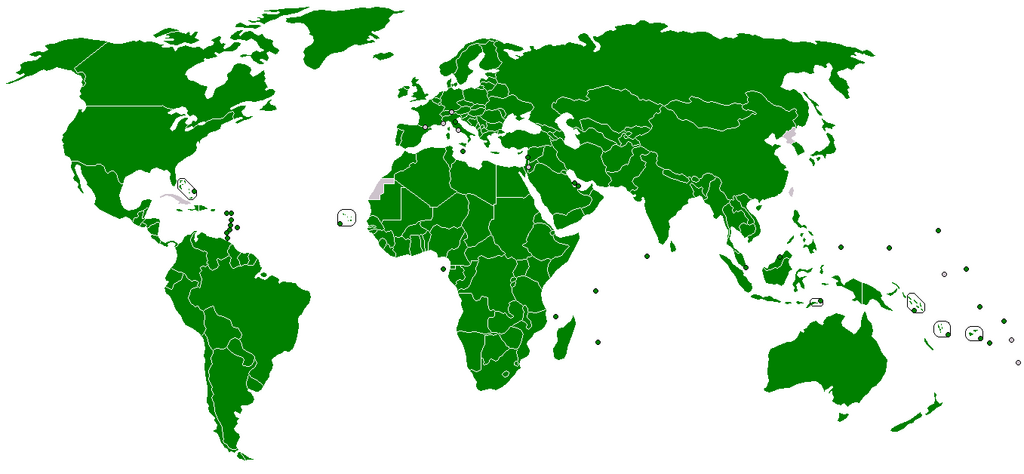
As globalization accelerated, with supply chains stretching across continents and capital flowing freely between nations, multilateral calculations became essential. You can't understand the health of the global economy by looking at just two countries at a time anymore.
Core Principles
Multilateral calculation is built on a few foundational ideas. The first is aggregation, which means combining data from many different sources to get a single, comprehensive view. Instead of analyzing Germany's trade with the U.S. and its trade with Japan separately, we bundle them together to understand Germany's total trade position.
A second key principle is netting. In a complex system of payments between many countries, it would be inefficient for every country to settle every single debt individually. Netting simplifies this by calculating the net amount each country owes or is owed by the system as a whole.
Imagine Country A owes Country B 💲50 million, Country B owes Country C 💲50 million, and Country C owes Country A 💲50 million. Instead of three separate transactions, netting reveals that no money needs to change hands. The debts cancel each other out.
This diagram shows a slightly more complex example. On the left, three countries have bilateral obligations. Through multilateral netting, shown on the right, the web of payments is simplified into a single transaction.
Finally, a core principle is consistency. On a global scale, the books must balance. The total of all countries' exports must equal the total of all countries' imports. Every dollar of credit must be matched by a dollar of debt. Multilateral calculations provide a framework to ensure this consistency and to identify statistical discrepancies when they arise, which helps improve the quality of economic data worldwide.
Time to check what you've learned.
What is the primary focus of multilateral calculation in economics?
The creation of which institutions after World War II signaled a major shift towards a multilateral view of the global economy?
These foundational concepts are the building blocks for understanding the complex financial relationships that define our modern global economy.