Multifaceted Analysis of Commercial Transactions
Business Objectives
Start With the Why
Every commercial transaction, whether it's a simple equipment purchase or a massive corporate merger, begins with a question: Why are we doing this? The answer to that question is the business objective. It's the strategic goal that drives the entire process.
Think of it like building a house. You don't just start buying lumber and pouring concrete. First, you decide what you need: a family home, a rental property, a vacation cabin. That core purpose dictates the blueprint, the budget, and every decision that follows. Business transactions work the same way. The objective is the blueprint for the deal.
Be clear about your business purpose and objectives.
Clear objectives provide direction. Are you trying to increase market share, enter a new geographic region, acquire a specific technology, or simply boost revenue? Each of these goals will lead to a very different type of transaction. Without a well-defined objective, a company risks wasting resources on deals that don't align with its long-term strategy.
Spotting the Right Opportunities
Once you know your 'why,' the next step is to scan the horizon for the 'what' and 'where.' Assessing market opportunities is about finding the right commercial transaction that aligns with your strategic goals. It’s not about chasing every shiny object, but about systematically identifying possibilities that fit your blueprint.
This involves looking outward. What are your competitors doing? Where are the gaps in the market? What new customer needs are emerging? A local coffee shop aiming to grow might analyze neighborhood demographics. Does a new residential area lack a quality cafe? Is a competitor in a prime location struggling? Answering these questions helps pinpoint the most promising path forward.
A structured approach like a SWOT analysis can be incredibly useful here. By identifying your company's Strengths and Weaknesses (internal factors) and mapping them against market Opportunities and Threats (external factors), you can evaluate potential deals more clearly. An opportunity that plays to your strengths and mitigates a threat is far more attractive than one that exposes a weakness.
Counting the Cost
An opportunity might align perfectly with your strategy, but it must also make financial sense. Evaluating the financial implications of a transaction is a critical reality check. This goes far beyond the sticker price.
You have to consider the total cost of the transaction. This includes not only the purchase price but also integration costs, potential operational disruptions, and any follow-on investments required. For example, buying a smaller company involves more than the acquisition price; you'll also spend money merging its technology, staff, and culture with your own.
The most important part of the evaluation is forecasting the return on investment (ROI). How will this transaction contribute to the bottom line, and over what period? This involves projecting future revenues, cost savings, and synergies.
Let’s look at two simple profit calculations. Accounting profit is what most people think of: revenue minus explicit, out-of-pocket costs. Economic profit, however, is more insightful for decision-making. It also subtracts implicit costs, which represent the value of the next-best alternative you're giving up (the opportunity cost).
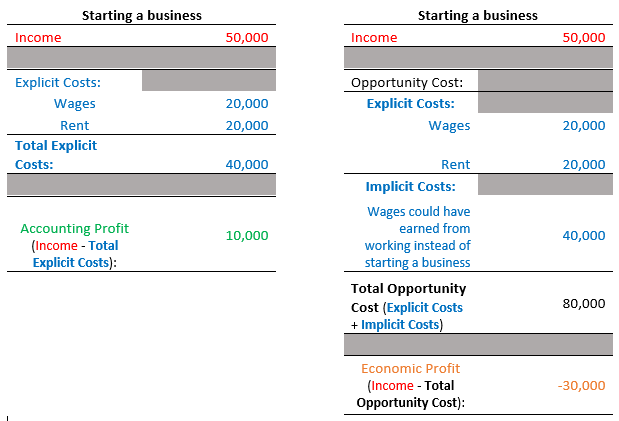
Considering both types of profit helps you make a smarter choice. A deal might look profitable on paper (positive accounting profit), but if you could have earned more by investing the same resources elsewhere (negative economic profit), it might not be the best move for your business.
What is the primary role of a business objective in a commercial transaction?
A SWOT analysis helps a company evaluate potential deals by mapping its internal Strengths and Weaknesses against external ______ and Threats.
By carefully defining objectives, assessing opportunities, and evaluating financial outcomes, businesses can ensure their commercial transactions are not just busywork, but purposeful steps toward achieving their strategic goals.