Multidisciplinary Systems Thinking Mastery
Cosmic Interconnectedness
The Universal Weave
Science and spirituality often seem to travel on separate tracks. One relies on empirical data and mathematical models, the other on introspection and ancient wisdom. Yet, when we look closely at the nature of reality, these tracks begin to curve toward each other, pointing to a shared destination: a universe of profound, radical interconnectedness.
In physics, the quest for a "Unified Field Theory" has long sought a single framework to explain all fundamental forces. Systems thinking takes a similar approach, viewing the world not as a collection of separate objects, but as an integrated whole. From this perspective, everything—from a forest ecosystem to a global economy—is part of a single, complex system. The divisions we perceive are useful fictions, not fundamental truths.
This idea finds a startling parallel in modern physics. describes a phenomenon where two or more particles become linked in such a way that their fates are intertwined, no matter how far apart they are. Measuring a property of one particle instantly influences the corresponding property of the other. It's as if the space between them doesn't exist, a direct challenge to our classical intuition of a world made of separate, independent parts.
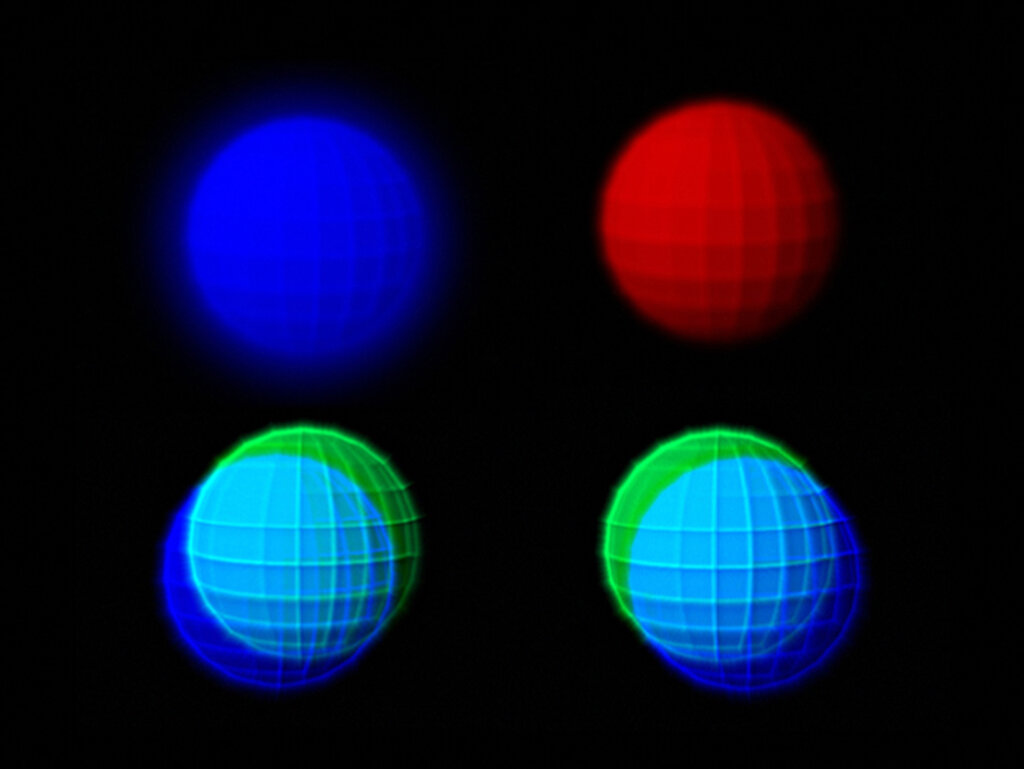
This scientific discovery echoes what many spiritual traditions have taught for millennia. In Mahayana Buddhism, the metaphor of Indra's Net paints a beautiful picture of this interconnected reality. Imagine a vast net stretching out infinitely in all directions. At every node where the threads cross, there is a jewel that reflects all the other jewels in the net. Each jewel is distinct, yet its existence is defined by the reflections of all the others.
When we look at any single jewel, we see the entire net. In the same way, each individual contains the reflection of the whole universe.
The Pattern That Connects
This idea of an underlying unity was central to the work of anthropologist and systems theorist , who urged us to look for "the pattern which connects." He argued that we tend to focus on the 'things' in the world—the trees, the people, the companies—while ignoring the relationships and information flows between them. For Bateson, the true reality wasn't in the objects, but in the pattern of their connections.
To see this pattern, we must shift our perception. Think about the cup of coffee on your desk. A mechanical view sees it as an isolated object. A systems view sees it as a node in a vast web of causality. It is connected to the farmer who grew the beans, the rain that fell on the fields, the global shipping network that transported it, the ceramicist who made the cup, and the economic forces that set its price. All these invisible 'strings' converge in that simple object.
Systems thinking attends to the connections between things, events and ideas.
From Ego to Eco
Recognizing this interconnectedness is more than an intellectual exercise. It involves a fundamental shift in identity, from an ego-centric to an eco-centric awareness. An ego-centric view sees the 'self' as a separate, competing unit. An eco-centric view, or 'Systems Being', sees the self as a temporary pattern in a constant flow of energy and information—a node in the cosmic net.
This shift isn't about losing your individuality. It's about understanding that your individuality arises from your relationships. Like a jewel in Indra's Net, you are unique, but your uniqueness reflects the whole universe. Living from this awareness changes how we act. We begin to see that harming any part of the system ultimately harms ourselves, and that nurturing the whole is the deepest form of self-care.
Let's see how well you've grasped these connected ideas.
What does the phenomenon of quantum entanglement directly challenge?
The spiritual metaphor of Indra's Net, where each jewel reflects all others, is analogous to which scientific concept mentioned in the text?
By bridging these scientific and spiritual perspectives, we move toward a more holistic understanding of our place in the cosmos. We are not just in the universe; we are of it.