Multi-Agent AI Systems
Introduction to Multi-Agent Systems
Beyond a Single Mind
Most of the time, when we think about artificial intelligence, we picture a single, powerful brain tackling a problem. But what if a problem is too big, too complex, or too spread out for one AI to handle alone? That's where the idea of a team comes in. Welcome to the world of Distributed Artificial Intelligence (DAI), a field that solves problems by breaking them down and assigning the pieces to a group of cooperating agents.
A Multi-Agent System (MAS) is the practical application of this idea. It's a system composed of multiple autonomous agents that interact with each other and their environment to achieve common or individual goals. Think of it like a highly skilled construction crew building a house. You have plumbers, electricians, carpenters, and a project manager. Each is an expert in their own right (autonomous), but they must communicate and coordinate to build the house successfully. No single worker knows how to do everything, but together, they can accomplish the complex task.
A Multi-Agent System (MAS) is a group of autonomous agents that interact with each other and their environment to achieve individual and/or collective goals.
This approach brings several key advantages. Knowledge and problem-solving are distributed across the system, meaning there's no single point of failure. This makes the system more resilient, or robust. It's also scalable; you can often improve the system's capabilities simply by adding more agents, just like adding more workers to a construction site can speed up the project.
The Players on the Team
So what exactly is an "agent" in this context? An agent is an autonomous entity that can perceive its environment through sensors and act upon that environment through actuators to achieve its goals. To build an effective team, you need different kinds of players with different skills. In MAS, agents are often categorized by how they make decisions.
Reactive Agent
noun
An agent that makes decisions based purely on its current perception of the environment, without any internal memory of past events or future plans. It follows simple condition-action rules.
Think of a reactive agent as a sprinter. When the starting gun fires (the stimulus), they run (the action). They don't think about their second lap or the weather tomorrow; they just react to the present moment. A simple thermostat is a reactive agent. If the temperature drops below a set point, it turns on the heat. Simple, fast, and effective for simple tasks.
Deliberative Agent
noun
An agent that possesses an internal model of the world and uses it to plan its actions. It considers the past and potential future states to achieve its goals.
Deliberative agents are the chess players of the AI world. They maintain an internal map of their environment and think several steps ahead. Before making a move, they consider how it will affect the state of the world and their long-term goals. A Mars rover planning its path to a rock sample is a deliberative agent, analyzing terrain maps to find the safest and most efficient route.
Finally, there are hybrid agents, which combine the best of both worlds. They have the quick reflexes of a reactive agent for immediate needs but also possess the planning capabilities of a deliberative agent for long-term goals. A self-driving car is a great example. It must react instantly to a pedestrian stepping into the road (reactive) while simultaneously planning the overall route to its destination (deliberative).
Working Together
Having a team of skilled agents isn't enough; they need to be able to work together. This is where coordination and negotiation come in. Coordination is the process of managing dependencies between agents' activities to ensure the team achieves its goal efficiently. It prevents agents from interfering with each other, like ensuring two robots don't try to occupy the same space at the same time in a warehouse.
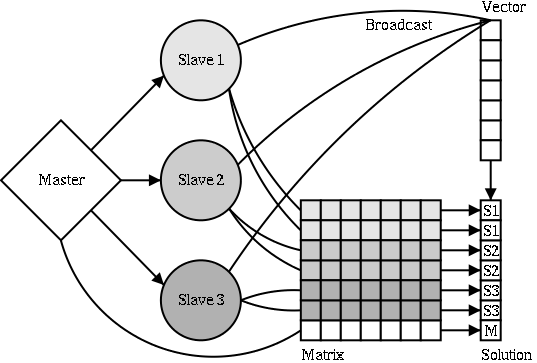
Negotiation is how agents resolve conflicts and come to agreements. Imagine two delivery drones that both want to recharge at the only available station. Through negotiation, they can decide who goes first based on factors like battery level or delivery urgency. This ability to communicate and compromise is what allows a group of autonomous individuals to function as a cohesive and powerful whole.
Effective collaboration in multi-agent systems requires communicating goals and intentions between agents.
Ultimately, the power of multi-agent systems lies in their ability to mirror the way many complex systems in the real world work, from insect colonies to human economies. By distributing intelligence, we can build AI systems that are more flexible, robust, and scalable than any single mind could ever be.
Time to check your understanding of these foundational ideas.
Which of the following best describes a Multi-Agent System (MAS)?
A simple thermostat that turns on the heat when the temperature falls below 20°C is an example of what kind of agent?
By understanding these core concepts, you've laid the groundwork for exploring the more complex and powerful applications of multi-agent systems.