Muay Thai Technical Mastery and Tactics
Optimizing Kinetic Chains
The Body as a Whip
Power in Muay Thai doesn't come from your arms or legs. It comes from the ground. A powerful strike is a masterclass in energy transfer, a chain reaction starting from your feet and ending at your fist, shin, elbow, or knee. This entire sequence is called the kinetic chain—and mastering it is the difference between a slap and a knockout.
Think of it like cracking a whip. The handle moves a short distance, but that energy amplifies as it travels down the leather, creating a sonic boom at the tip. Your body works the same way. The initial force is generated by pushing off the ground and rotating your hips. This rotation travels up your core, whips your shoulder forward, and finally accelerates your arm into the target. Each link in the chain adds momentum and velocity.
The key is synchronization. For a right cross, your right hip, right shoulder, and right fist should move in a coordinated wave. The hips lead, the shoulder follows, and the arm is the last piece of the puzzle. An inefficient chain has leaks—energy is lost if your core is loose, your foot is flat, or your arm fires before your hips have committed. Every strike, from a jab to a roundhouse kick, relies on this ground-up power generation.
Pivots and Positioning
Efficient movement is the foundation of both power and defense. The pivot is your engine. When you throw a roundhouse kick, you don't just lift your leg; you pivot on the ball of your standing foot. This pivot allows your hips to open up completely, maximizing the range of motion and the rotational force you can generate. A kick thrown without a proper pivot is weak and puts immense strain on your knee.
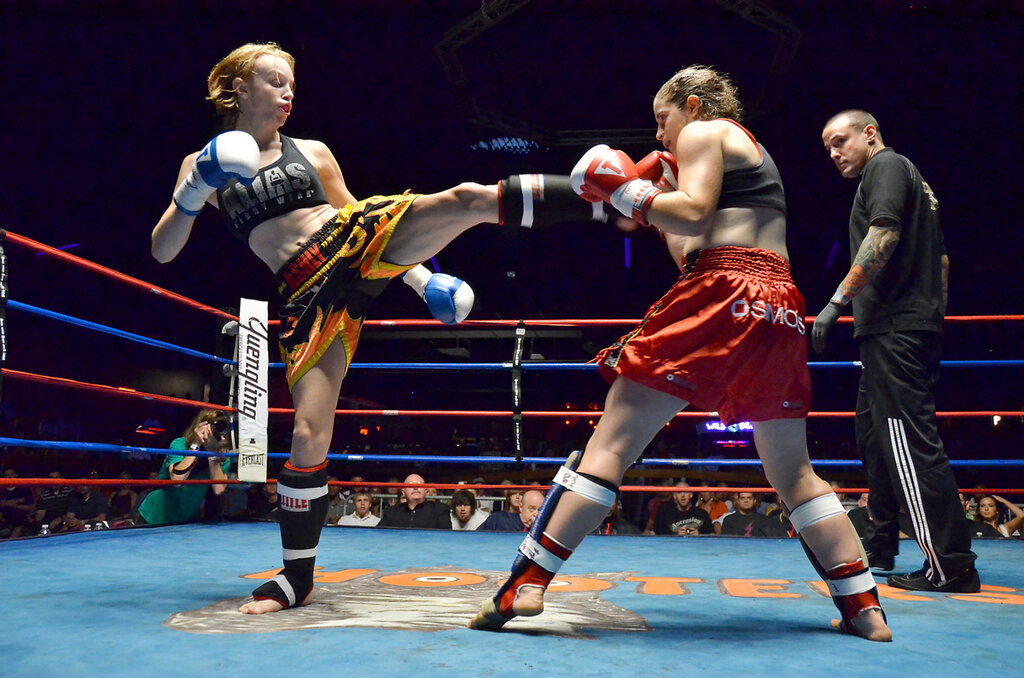
Weight distribution is just as critical, especially for recovery. After throwing a strike, you must be able to return to your stance instantly. If you overcommit your weight on a punch, you'll be off-balance and vulnerable to a counter. The goal is to transfer your weight into the strike, but not past it. Your center of gravity should remain stable, allowing you to flow seamlessly from offense to defense.
Practice this: After throwing a cross, you should be able to immediately lift your front leg for a check without falling backward. This confirms your weight is properly centered.
The Art of the Unseen Strike
The most dangerous strike is the one your opponent doesn't see coming. This is where minimizing your comes into play. Telegraphing is any preparatory movement that signals your intention—a subtle shoulder twitch before a punch, a backward step before a kick, or even just tensing your muscles.
To reduce telegraphing, practice striking from a relaxed state. Power comes from speed, not muscular tension. Tense muscles are slow muscles. Your strikes should feel loose and fluid right up until the point of impact. This is often called the 'whip' effect. Your arm or leg is relaxed on the way out, and you only clench your fist or tense the muscles at the very last moment. This makes the strike faster, more powerful, and harder to read.
Similarly, the corkscrew mechanism of a cross is about more than just hitting with your knuckles aligned. As your arm extends, your forearm and fist rotate, palm turning down. This rotation engages the shoulder and back muscles more completely, adding a final snap of power and tightening the entire kinetic chain at the moment of impact. It turns a simple push into a devastating, penetrating blow.
Now, let's test your understanding of these kinetic principles.
What is the most accurate description of the "kinetic chain" in Muay Thai?
Why is pivoting on the ball of the standing foot crucial when throwing a roundhouse kick?
Mastering these concepts transforms your techniques from simple movements into an efficient, powerful system. Every limb becomes a weapon, delivered with speed and precision.