Muay Thai Fundamentals for Beginners
Origins and Rituals
From Battlefield to Ring
Muay Thai wasn't always a sport. Its roots lie in an ancient battlefield art called Muay Boran, which means "ancient boxing." For centuries, Siamese soldiers used this brutal, no-holds-barred system for survival in warfare. It was a complete fighting system, including not just strikes but also grappling, joint locks, and even weapons.
Over time, as warfare changed, Muay Boran evolved. In the early 20th century, it began to transform into the modern sport we know today. Rings were introduced, timed rounds were set, and fighters started wearing boxing gloves instead of wrapping their hands in rope. This shift made the art safer and turned it into a regulated competition, paving the way for its global popularity.
Muay Boran
noun
The ancestor of modern Muay Thai, a comprehensive and often brutal combat system developed for warfare by the Siamese military.
The Art of Eight Limbs
What makes Muay Thai unique is its core concept: the "Art of Eight Limbs." While boxers use two points of contact (their fists) and other martial arts might focus on four (fists and feet), Muay Thai practitioners use eight.
Think of the body as a collection of natural weapons. The eight limbs are:
- Two fists (like daggers)
- Two elbows (like maces)
- Two knees (like spears)
- Two shins (like shields or clubs)
This approach allows for a wide array of attacks and defenses, making it an incredibly versatile and effective striking art.
Muay Thai is referred to as “The Art of Eight Limbs”; and using eight points of contact the body mimics weapons of war.
More Than Just a Fight
In Thailand, Muay Thai is deeply woven into the cultural and spiritual fabric of the country. A fight is not just a physical contest; it's a ceremony steeped in tradition and respect. Before any match begins, fighters perform important rituals that honor their teachers, their families, and the history of the sport itself.
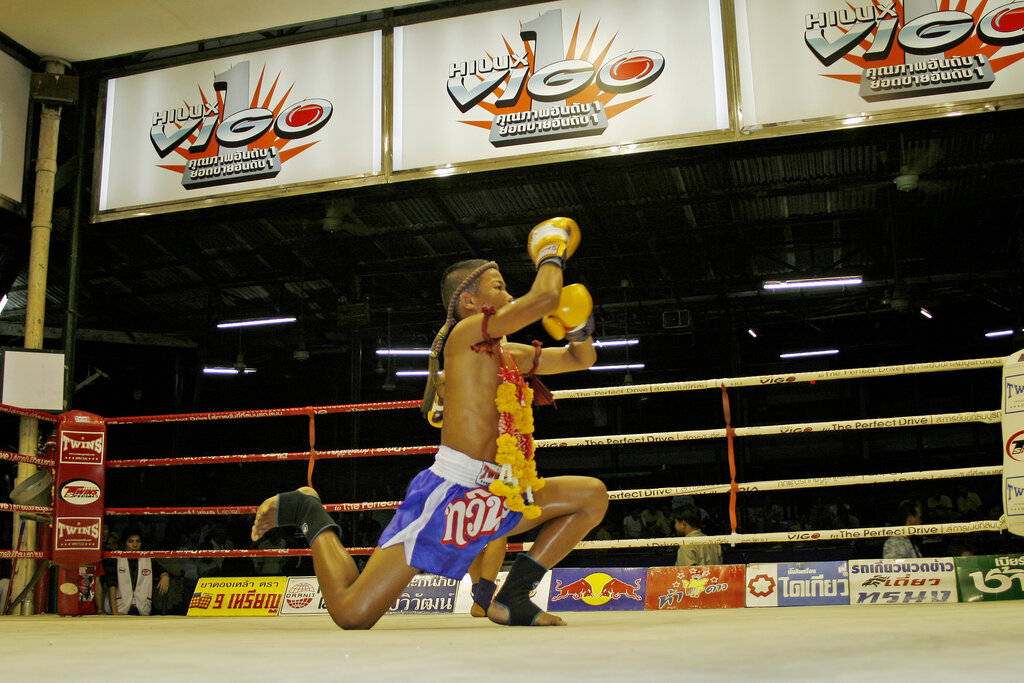
The most visible of these rituals is the Wai Khru Ram Muay. This is a slow, graceful dance performed inside the ring before the fight. Let's break down the name:
- Wai: A traditional Thai greeting showing respect.
- Khru: The Thai word for teacher.
- Ram Muay: Means "boxing dance."
So, the Wai Khru Ram Muay is literally a "respect to the teacher boxing dance." Each fighter's dance is unique, taught by their gym, and it serves multiple purposes. It's a way to pay homage to their lineage of teachers, a prayer for safety and victory, and a way to warm up and focus their mind for the battle ahead.
During this ritual, fighters wear specific traditional items. These are not just for show; they carry deep symbolic meaning.
| Item | Worn | Symbolism |
|---|---|---|
| Mongkhon | Headband | Represents the gym, the teacher, and the fighter's lineage. Worn only during the pre-fight ritual. |
| Pra Jiad | Armbands | Traditionally worn for good luck and protection. Can be worn throughout the entire fight. |
Understanding and respecting these traditions is a fundamental part of learning Muay Thai. When you step into a gym, you're not just learning to fight; you're becoming part of a long and proud history.
Ready to test your knowledge? Let's see what you've learned about the roots of this powerful martial art.
What is the ancient battlefield art from which modern Muay Thai originated?
The term "Art of Eight Limbs" refers to the use of fists, elbows, knees, and shins.
With this foundation in the history and culture of Muay Thai, you're ready to start exploring the physical techniques of the art.