mRNA Technology Explained
Introduction to mRNA
The Cell's Messenger
Every living cell is a bustling city of activity. At the heart of this city, in a central library called the nucleus, are the master blueprints for everything the cell needs to build and do. These blueprints are made of DNA. But just like a rare book in a library, the DNA blueprints can't be checked out. They must stay protected in the nucleus.
So how do the instructions get from the protected library to the construction sites where things are built? The cell uses a molecular courier service. It makes a temporary copy of a specific blueprint, a short message that can travel. This messenger is called messenger RNA, or mRNA.
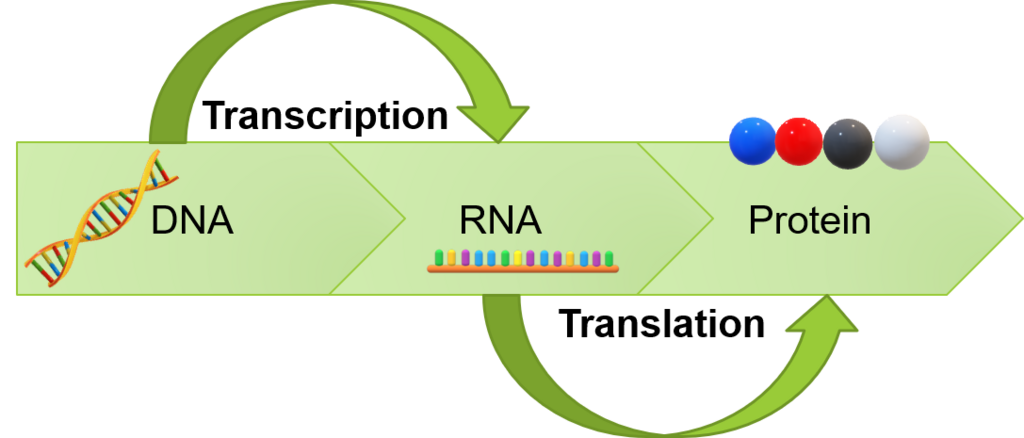
This flow of information, from DNA to RNA to protein, is the fundamental process of life. It's how the genetic code written in your DNA gets turned into the functional molecules, like enzymes and structural components, that make you who you are.
Anatomy of a Message
At a glance, an mRNA molecule looks a bit like a single strand of DNA. It's a long chain made of smaller units called nucleotides. Each nucleotide contains a sugar, a phosphate group, and a nitrogenous base. This string of nucleotides forms a flexible sugar-phosphate backbone.
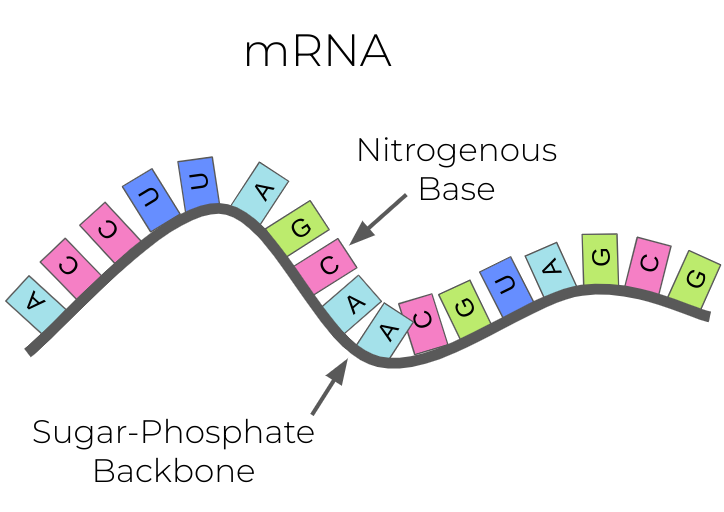
The real information is in the sequence of the bases. Just as letters form words, the order of these bases forms a genetic message. There are four bases in RNA:
- Adenine (A)
- Guanine (G)
- Cytosine (C)
- Uracil (U)
This is a key difference from DNA, which uses thymine (T) instead of uracil. When the cell makes an mRNA copy of a DNA blueprint, every 'A' in the DNA is matched with a 'U' in the mRNA.
From Blueprint to Protein
The creation of an mRNA molecule is called transcription. An enzyme called RNA polymerase slides along a gene in the DNA, reading the sequence and building a complementary mRNA strand. It's like a scribe carefully copying a single recipe out of a giant cookbook.
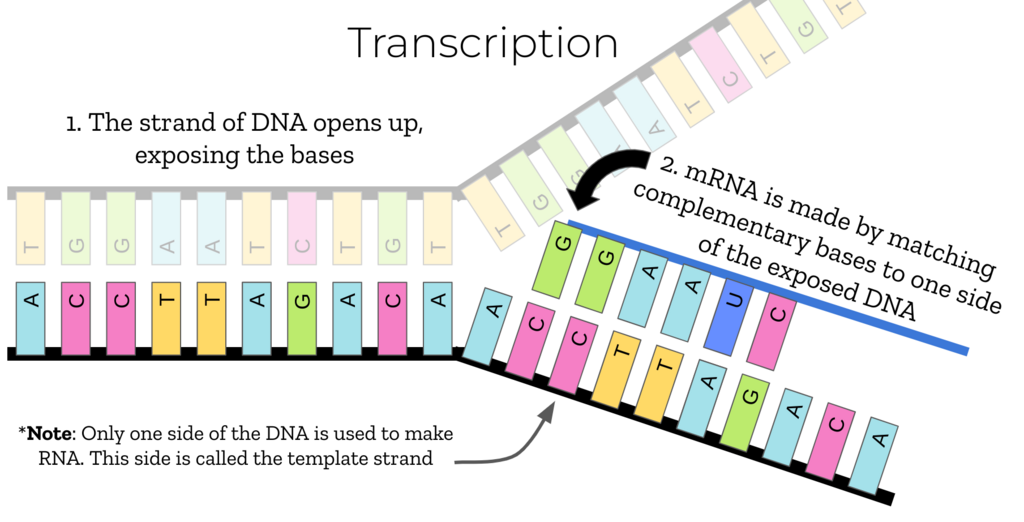
Once transcribed, this mRNA message doesn't linger in the nucleus. It travels out into the main part of the cell, the cytoplasm, in search of a ribosome. Ribosomes are the cell’s protein factories. They are the molecular machines that will read the message and build the protein.
This next step is called translation. The ribosome clamps onto the mRNA strand and reads its sequence of bases three at a time. Each three-base sequence is called a codon. Think of codons as three-letter words in the genetic language. For example, the codon AUG signals the ribosome to start building, and it also codes for the amino acid methionine.
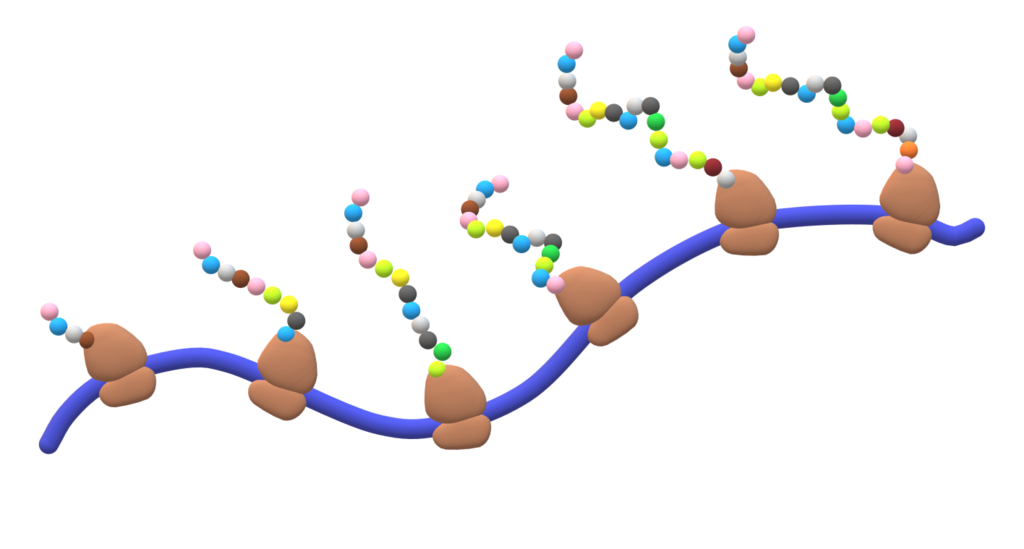
As the ribosome moves down the mRNA, it reads each codon and adds the corresponding amino acid to a growing chain. Another type of RNA, called transfer RNA (tRNA), is responsible for bringing the correct amino acids to the ribosome. The ribosome links them together, one by one, like beads on a string. When the ribosome reaches a 'stop' codon, it releases the finished protein chain.
DNA holds the blueprint. mRNA carries the instructions. Ribosomes build the protein.
The final protein then folds into a specific three-dimensional shape, which determines its function. It might become an enzyme to speed up a chemical reaction, a structural component of the cell, or a signal to communicate with other cells.
Ready to test your knowledge? This quiz will cover the key concepts of mRNA's structure and its role in the cell.
What is the primary function of messenger RNA (mRNA)?
The process of creating an mRNA molecule from a DNA template is called __________.
Understanding this messenger molecule is key to understanding modern biology. It is the vital link that turns the static library of our genes into the dynamic, living reality of our cells.