MRI Innovation and the Ezra Business Model
MRI Economic Infrastructure
The High Price of a Clear Picture
Magnetic Resonance Imaging provides incredibly detailed views inside the body without using ionizing radiation. But this diagnostic power comes at a significant cost, one that extends far beyond the machine's initial purchase price. The economic structure of traditional MRI is built on high capital expenditures and even higher operational costs, creating a system where high prices are necessary to stay afloat.
| System Type | Magnetic Field Strength | Typical CAPEX |
|---|---|---|
| Standard MRI | 1.5 Tesla (1.5T) | $1.2M - $1.8M |
| High-Field MRI | 3.0 Tesla (3T) | $2.0M - $3.0M |
The capital expenditure, or CAPEX, for an MRI system is substantial. A standard 1.5T machine, the workhorse of most radiology departments, costs well over a million dollars. A high-field 3T system, which offers higher resolution images for more complex diagnostic needs, can easily double that initial investment. But this is just the beginning of the financial commitment.
Building the Bunker
An MRI machine cannot simply be placed in any room. It requires a specially constructed environment, known as an MRI suite, to function safely and effectively. One of the first challenges is the machine's immense weight. A typical MRI scanner weighs between 40,000 and 80,000 pounds, requiring floors to be heavily reinforced to support the load, an often-overlooked structural expense.
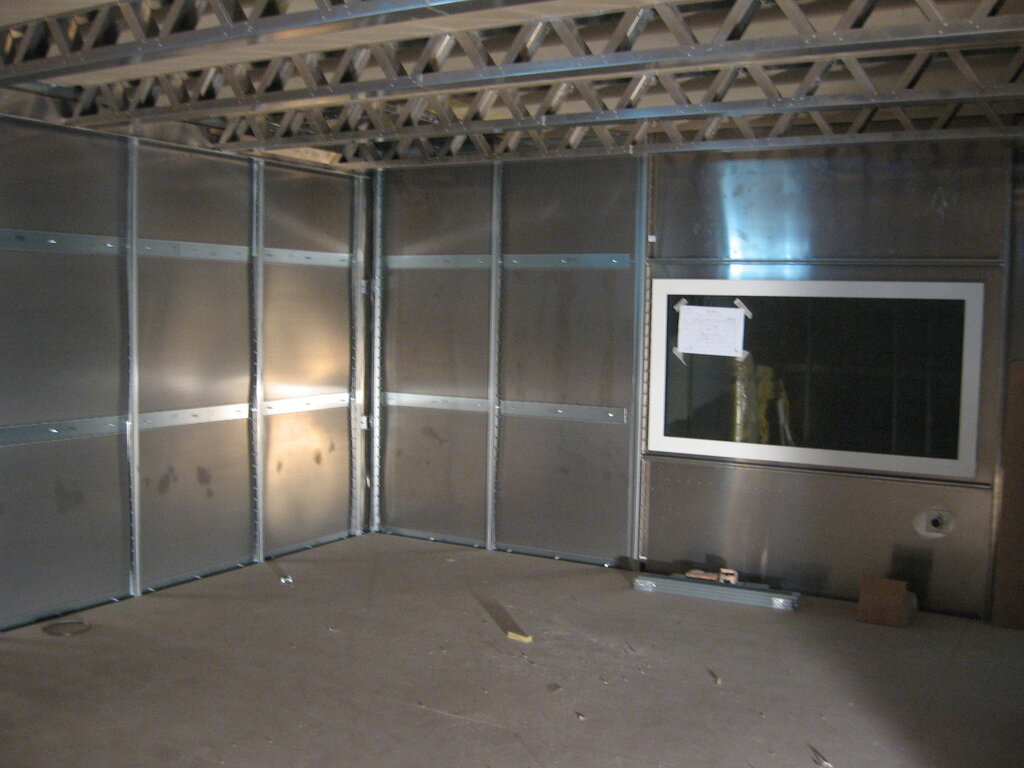
To prevent outside radio frequency waves from interfering with the scanner's sensitive equipment and distorting the images, the entire suite must be enclosed in a Faraday cage. This radiofrequency (RF) shielding is essentially a room built within a room, with copper-lined walls, floor, and ceiling. This specialized construction alone can cost up to $100,000.
Finally, the powerful superconducting magnets generate a tremendous amount of heat. If this magnet were to suddenly lose its superconductivity in an event called a "quench," the supercooled liquid helium inside would rapidly boil and expand into a gas, displacing all the oxygen in the room. To prevent this from becoming a lethal event, a dedicated quench vent must be installed to safely pipe the helium gas out of the building. These installation complexities add significant hidden costs to the initial purchase.
The Cost of Cold
The operational expenditure (OPEX) of an MRI system is dominated by one critical, and increasingly volatile, resource: liquid helium. To maintain the superconductivity of the magnet coils, they must be kept at a temperature of approximately 4 Kelvin (–269°C or –452°F). Liquid helium is one of the only substances on Earth cold enough to do the job.
Each MRI machine requires a large reservoir of it, typically between 1,500 and 2,000 liters. This isn't a one-time fill. Some helium inevitably boils off over time and needs to be replenished.
The global helium supply is limited, making its price highly volatile. A refill can cost anywhere from $30 to $50 per liter, meaning a single top-off can run into the tens of thousands of dollars. This ongoing expense is a massive driver of the high operational cost of running an MRI facility.
High fixed costs from the machine and its installation, combined with high variable costs from cryogen cooling, create a powerful economic pressure.
This financial reality shapes the entire business model of diagnostic imaging. With low patient throughput due to long scan times and high fixed costs, clinics must charge high prices per procedure, typically ranging from $1,000 to $5,000. This leads to a business-to-business (B2B) model where providers negotiate reimbursement rates primarily with insurance companies, not patients. The high costs create a bottleneck, limiting access and placing a heavy financial burden on the healthcare system as a whole.
What is the primary purpose of a Faraday cage in an MRI suite?
Which of the following is the most significant and volatile operational expense (OPEX) for an MRI facility?
Understanding these economic drivers is the first step in seeing why new approaches to MRI technology are so desperately needed.