MQTT Protocol Mastery
Introduction to MQTT
A Protocol for Tiny Messages
Imagine you're running a massive oil pipeline across a desert. You have thousands of sensors measuring pressure, temperature, and flow. The problem? These sensors are simple, low-powered devices, and the network connection is often slow and unreliable. How do you get their data back to a central server efficiently?
This was the exact problem two engineers faced in the late 1990s. Their solution was a new communication protocol: Message Queuing Telemetry Transport, or MQTT.
MQTT
noun
A lightweight messaging protocol for small sensors and mobile devices. It's designed for high-latency, low-bandwidth, and unreliable networks.
The core idea behind MQTT is to be as lightweight as possible. It minimizes the amount of data sent over the network, which saves bandwidth and battery life. This makes it perfect for the Internet of Things (IoT), where billions of small, connected devices need to talk to each other without overwhelming the network or draining their power sources.
The Publish-Subscribe Model
Most of the internet you use works on a request-response model. Your browser requests a webpage, and a server responds by sending it. If you want to know if the page has changed, you have to ask again.
MQTT works differently. It uses a publish-subscribe, or "pub/sub," pattern. Instead of devices talking directly to each other, they all talk through a central hub called a broker.
Here's how it works:
- Publishers: Devices that have information to share. A publisher sends a message to the broker. For example, a temperature sensor publishes the current room temperature.
- Subscribers: Devices that want to receive information. A subscriber tells the broker what it's interested in. For example, a smart display subscribes to temperature updates.
- Topics: A way to label messages. The publisher sends its message to a specific topic, like
home/livingroom/temperature. The subscriber listens for messages on that same topic. - Broker: The central messenger. It receives messages from publishers and forwards them to any subscribers interested in that topic.
The key is that the publisher doesn't know or care who the subscribers are. It just sends its message. Likewise, subscribers don't know who the publisher is. They just listen for messages on a topic they care about.
Made for the Internet of Things
This pub/sub architecture is a perfect match for IoT. Imagine a smart home. A door sensor (a publisher) doesn't need to know about the lights, the security camera, or the notification system on your phone. It just publishes a single, tiny message to the topic home/frontdoor/status with the value open.
The broker then does the work. It sees the message and forwards it to all the subscribed devices. The smart light system might turn on the porch light. The security system might start recording. Your phone app might send you a push notification. Each of these is a subscriber, and they all react to the same message without ever needing to communicate directly with the door sensor.
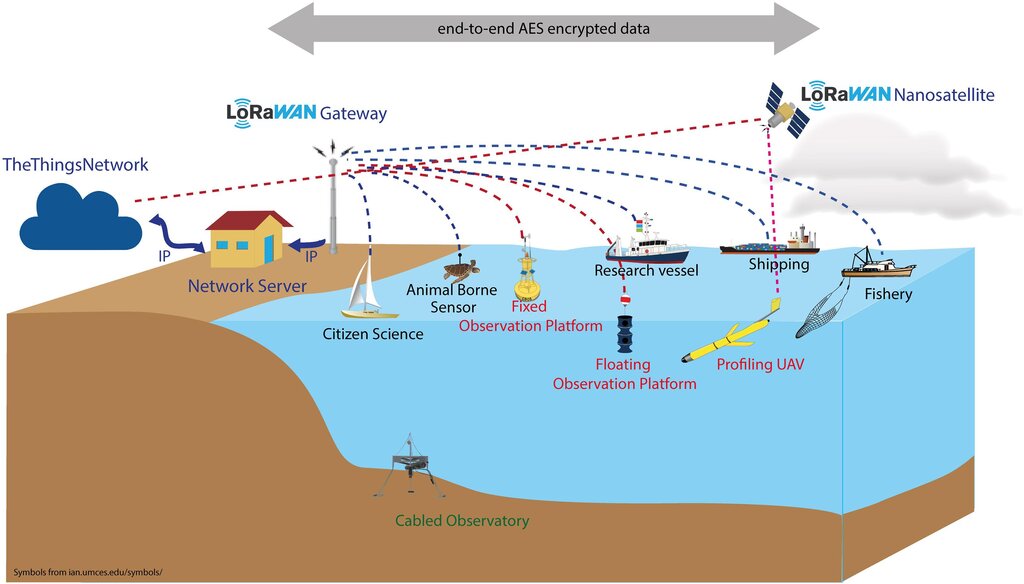
This decoupling of devices makes the entire system more flexible and scalable. If you add a new smart alarm system, you just subscribe it to the home/frontdoor/status topic. You don't need to reprogram the door sensor at all.
Because MQTT messages are so small and the protocol requires little overhead, it's incredibly efficient. This is crucial for battery-powered devices that need to conserve every bit of energy and for networks where bandwidth is limited.
Time to check your understanding.
What was the primary motivation for creating the MQTT protocol?
In the MQTT architecture, which component is responsible for receiving messages from publishers and forwarding them to the appropriate subscribers?
Now you know the basics of what MQTT is and how its publish-subscribe model works. It's a simple but powerful tool that makes much of the modern connected world possible.