MQTT Brokers vs APIs
Introduction to MQTT
A Language for Smart Devices
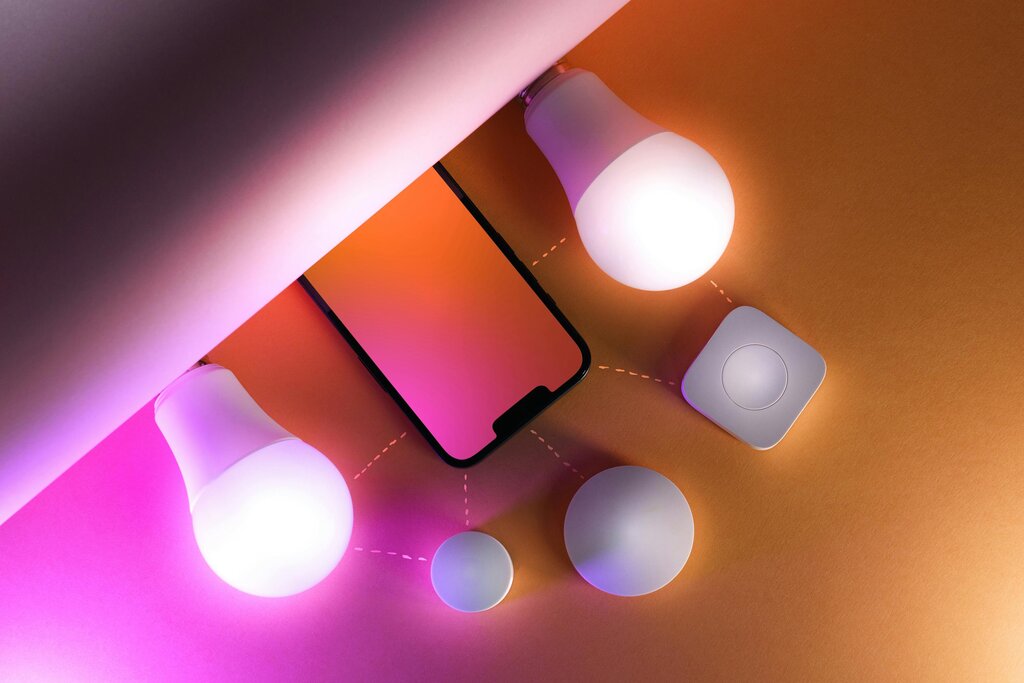
Many of the smart devices we use every day, from light bulbs to environmental sensors, need a way to talk to each other and to central applications. But these devices are often small, with limited power and processing capability, and they might operate on unreliable networks. They can't afford to waste energy or data on complex communication.
This is where MQTT comes in. MQTT stands for Message Queuing Telemetry Transport. It's a messaging protocol designed specifically for the Internet of Things (IoT). Its main goal is to be extremely lightweight and efficient, making it perfect for sending small packets of data between devices without draining their batteries or clogging the network.
The Publish-Subscribe Model
Unlike the typical request-response model you see when your web browser asks a server for a webpage, MQTT uses a different pattern called publish-subscribe, or "pub-sub."
In this model, devices don't talk directly to each other. Instead, they communicate through a central hub called a broker. A device can either publish messages to the broker or subscribe to receive messages from it.
Messages are organized by topics. A topic is like a channel or a category label. Publishers send messages to a specific topic, and subscribers tell the broker which topics they're interested in. The broker's job is to filter all incoming messages and deliver them only to the clients that have subscribed to the relevant topics.
The key idea is decoupling. The device publishing the message (the publisher) doesn't know or care which devices (the subscribers) will receive it. It just sends the information to the correct topic.
For example, a temperature sensor in your living room could publish a reading every minute to the topic home/livingroom/temperature. Your smartphone app and your smart thermostat could both subscribe to this topic. When the broker receives a new temperature reading, it immediately forwards it to both the app and the thermostat. The sensor doesn't need to know their addresses or even that they exist.
Roles of Clients and Broker
In an MQTT system, there are only two types of components: clients and a broker.
The Broker is the central server. It's the heart of the system, responsible for receiving all messages, filtering them by topic, and sending them out to all subscribed clients. The broker manages the connections and ensures messages are delivered correctly.
A Client is any device or application that connects to the broker. This could be a tiny sensor, a smart light switch, or a full-fledged mobile application. A client can act as a publisher, a subscriber, or both. Our temperature sensor is a publisher. Our smartphone app is a subscriber. But the app could also be a publisher if it sends a command to turn on a light, for example.
Why MQTT is Great for IoT
The design of MQTT offers several key advantages for IoT applications.
Choose MQTT for lightweight transmission with a publish-subscribe model, ideal for numerous devices communicating intermittently.
First, it's lightweight. The protocol adds very little data overhead to the messages, which saves bandwidth and processing power. This is critical for small devices running on battery power.
Second, the publish-subscribe model makes the whole system scalable and flexible. You can add new sensors (publishers) or new apps (subscribers) at any time without having to reconfigure the existing devices. They just need to know the broker's address and the topic names.
Finally, MQTT is designed to work over unreliable networks. It has built-in features that help ensure messages are delivered even if a device temporarily loses its connection. This reliability is essential for applications where data loss is not an option.
What is the primary communication pattern used by the MQTT protocol?
In an MQTT system for a smart home, a thermostat regularly sends the current temperature to a central hub. A mobile app then displays this temperature. What is the role of the thermostat in this interaction?
This simple yet powerful protocol is a foundational technology for connecting the billions of devices that make up the Internet of Things.