Most Popular Programming Language Today
Introduction to Programming Languages
What Is a Programming Language?
A programming language is a set of instructions that tells a computer what to do. Think of it like a recipe. The recipe gives you a list of ingredients and a series of steps to follow to bake a cake. Similarly, a programming language provides a set of rules and commands that a developer uses to write a program, which is just a series of steps for the computer to execute.
At their core, all programming languages serve one fundamental purpose: to bridge the communication gap between humans and computers. Humans think in words and abstract ideas, while computers only understand electrical signals representing ones and zeros.
Programming languages act as a translator. They allow us to write commands in a way that is relatively easy for us to read and understand. Then, special programs called compilers or interpreters convert these human-readable commands into the binary code that a computer's processor can execute. Every app on your phone, website you visit, and game you play was built using a programming language.
A Brief History
The first programming languages weren't very user-friendly. In the 1940s and 50s, programmers had to write instructions using complex strings of ones and zeros, a tedious and error-prone process. Soon, languages like Fortran and COBOL emerged, which were a huge leap forward. They allowed programmers to use commands that looked more like algebraic formulas or plain English, making programming much more accessible.
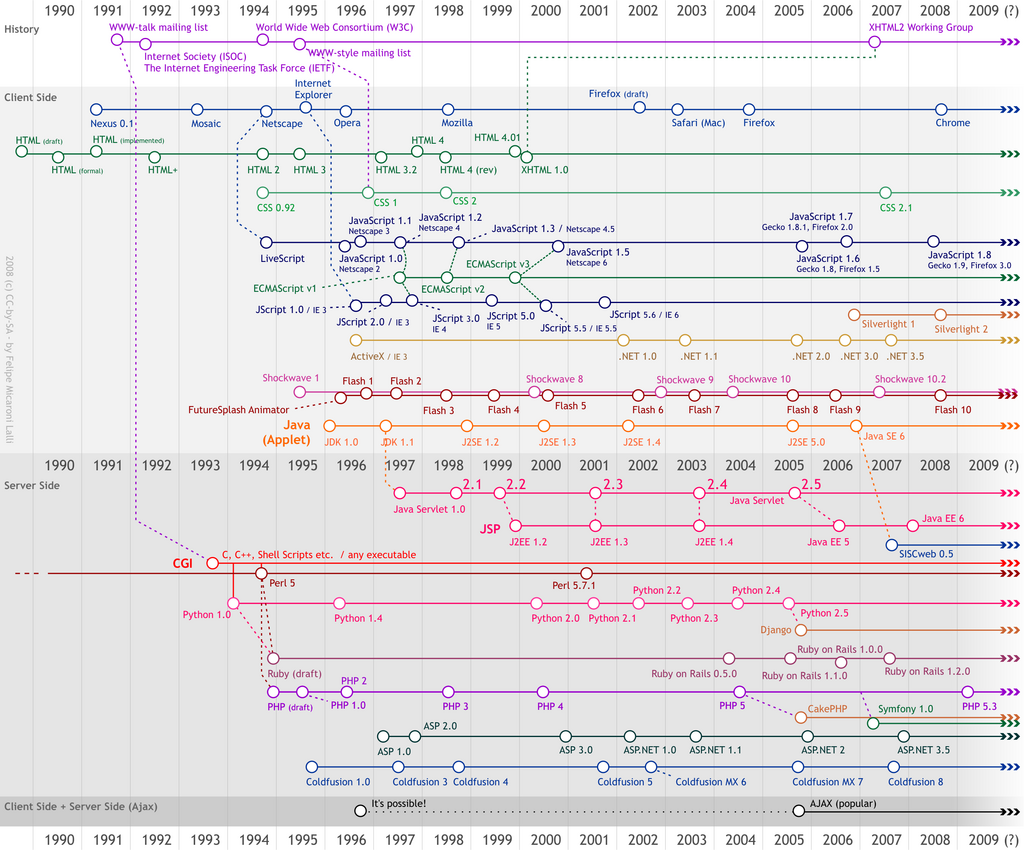
The 1970s brought us the C programming language, which became incredibly influential. It offered a powerful combination of high-level readability and low-level control over the computer's hardware. Many modern operating systems, including parts of Windows, macOS, and Linux, are built with C.
Since then, thousands of languages have been created. Each new language often tries to solve a problem with an older one, such as making code easier to write, run faster, or be more secure. Today, languages like Python, JavaScript, and Java are popular because they are versatile and have massive communities supporting them.
Choosing the Right Tool
There is no single "best" programming language. Just like a carpenter has different tools for different tasks, a programmer chooses a language based on the job at hand. A language perfect for building a website might be a poor choice for programming a self-driving car.
Remember: programming languages are tools. The best developers know which tool to use for the job and, more importantly, how to pick up a new tool when they need to.
Several factors determine a language's popularity and suitability for a project:
- Ecosystem: Does the language have a large collection of pre-written code (libraries) that can speed up development?
- Community: Is there a large, active community of developers who can help answer questions and contribute to the language?
- Performance: How quickly and efficiently does the code run? This is critical for tasks like game development or high-frequency trading.
- Job Market: Is the language in high demand by employers?
Different domains of software development tend to favor different languages.
| Domain | What It Is | Common Languages |
|---|---|---|
| Web Development | Building websites and web applications. | JavaScript, Python, Ruby, PHP |
| Data Science & AI | Analyzing data and building machine learning models. | Python, R, SQL |
| Mobile Development | Creating apps for smartphones and tablets. | Swift (for iOS), Kotlin (for Android) |
| Game Development | Creating video games for consoles, PCs, and mobile. | C++, C# |
| Systems Programming | Writing low-level code for operating systems or device drivers. | C, C++, Rust |
Now let's test your understanding of these fundamental concepts.
What is the primary role of a programming language?
Early programming languages like Fortran and COBOL were a significant improvement over their predecessors because they...
Understanding what programming languages are and why so many exist is the first step in your journey as a developer. They are the essential tools for creating the software that powers our world.