Mortgage Refinancing Math
Mortgage Basics
What Is a Mortgage?
Buying a home is one of the biggest purchases most people ever make. Since few have that much cash on hand, they get a special type of loan called a mortgage.
A mortgage is a loan from a bank or other financial institution that helps a borrower purchase a home. The key feature is that the property itself serves as collateral for the loan. If the borrower fails to make payments, the lender can take possession of the property in a process called foreclosure.
A mortgage is a loan specifically designed for purchasing real estate, where the property serves as collateral.
Think of it as a secured loan. The bank is more willing to lend a large sum of money because they have a way to recover their funds if things go wrong. This agreement is formalized in a legal document you sign when you buy your home.
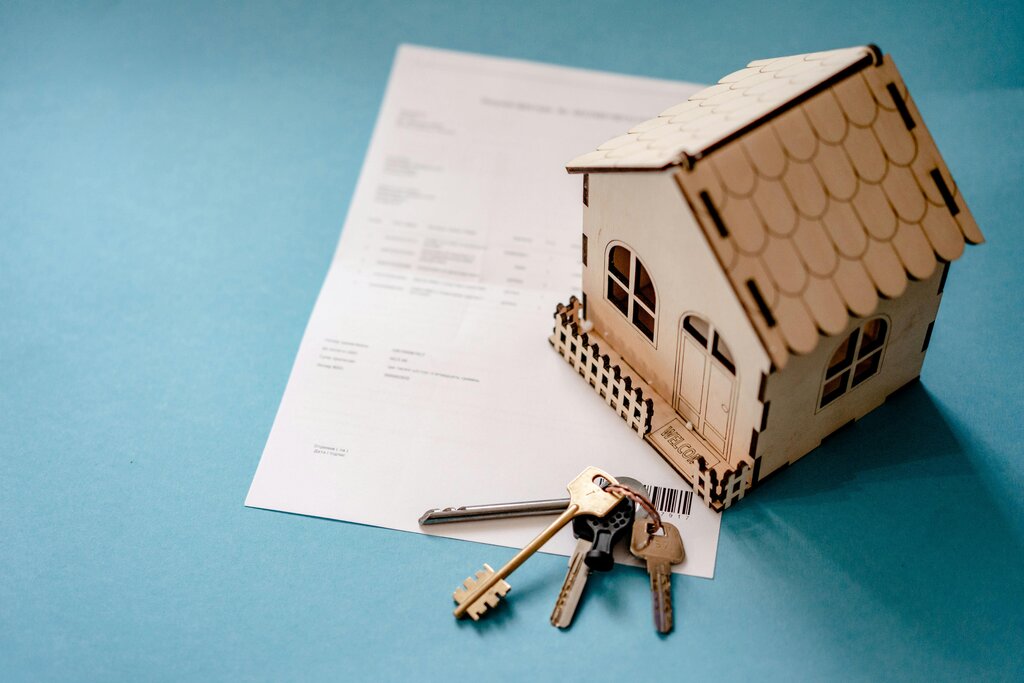
The Parts of a Mortgage
Every mortgage is made up of the same basic components. Understanding them is key to understanding your loan. The two most fundamental parts are the principal and the interest.
Principal
noun
The total amount of money you borrow from the lender to purchase the property. If you buy a house for $350,000 and make a $50,000 down payment, your principal is $300,000.
The other critical component is interest.
Interest
noun
The fee charged by the lender for the use of their money. It's typically expressed as an annual percentage rate (APR). This is how lenders make a profit from the loan.
When you make your monthly mortgage payment, a portion of it goes toward paying off the interest accrued that month, and the rest goes toward reducing your principal balance. Early in the loan, more of your payment goes to interest. As time goes on, that balance shifts, and more goes toward the principal.
Loan Term and Amortization
The loan term is simply the length of time you have to repay the mortgage. The most common terms in the United States are 15 and 30 years. A shorter term, like 15 years, means higher monthly payments but less total interest paid. A 30-year term offers lower monthly payments but costs more in interest over the life of the loan.
The process of paying off this debt over time is called amortization.
Amortization
noun
The process of spreading out a loan into a series of fixed payments. Each payment covers both interest and principal, gradually paying down the loan balance.
Lenders provide an amortization schedule, a table detailing every payment over the entire loan term. It shows exactly how much of each payment goes to interest versus principal and the remaining balance after each payment.
An amortization schedule provides a complete roadmap of your mortgage payments from the first month to the last.
Let's look at the first few months of an amortization schedule for a $300,000 loan with a 30-year term and a 6% interest rate. The monthly payment would be about $1,798.65.
| Payment # | Total Payment | Interest Paid | Principal Paid | Remaining Balance |
|---|---|---|---|---|
| 1 | $1,798.65 | $1,500.00 | $298.65 | $299,701.35 |
| 2 | $1,798.65 | $1,498.51 | $300.14 | $299,401.21 |
| 3 | $1,798.65 | $1,497.01 | $301.64 | $299,099.57 |
Notice how the amount paid toward interest decreases slightly each month, while the amount paid toward principal increases. This slow and steady process is how you build ownership in your home, one payment at a time.
What is the defining characteristic of a mortgage that makes it a 'secured loan'?
In the early years of a typical mortgage, the largest portion of your monthly payment goes toward what?