Montessori for Adolescents
Introduction to Montessori Philosophy
A Child-Centered World
At its heart, Montessori education is a simple but radical idea: the learning process should follow the child, not the other way around. Developed by Dr. Maria Montessori, an Italian physician, this approach begins with a deep respect for children as capable individuals who possess a natural drive to learn and explore.
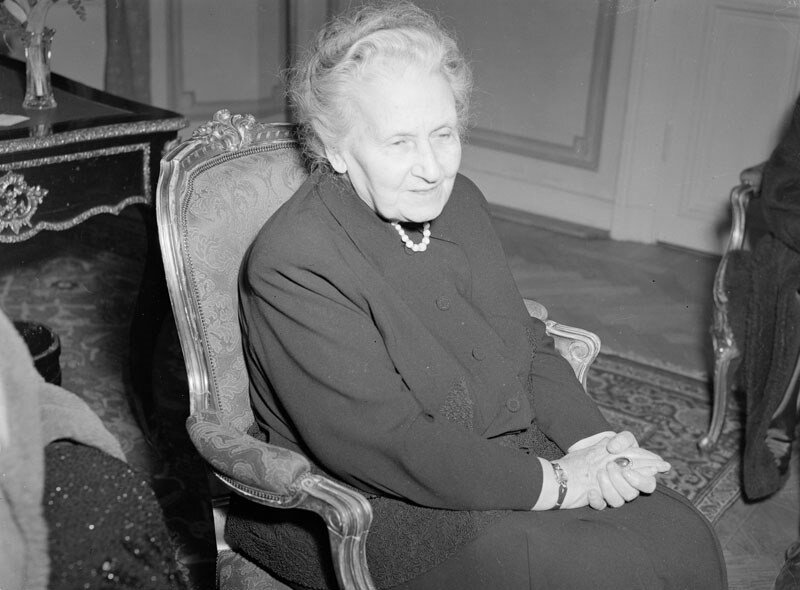
This perspective shifts the focus from a teacher depositing knowledge into a student to a child actively constructing their own understanding. Dr. Montessori observed that children, especially from birth to age six, possess what she called an "absorbent mind." Like a sponge, they soak up information, culture, and language from their surroundings effortlessly and without conscious thought. This is why a toddler can learn a language simply by being immersed in it, while an adult often has to study grammar and vocabulary with great effort.
Windows of Opportunity
Within this period of the absorbent mind, children go through several "sensitive periods." These are temporary windows of time when a child is intensely fascinated with a specific skill or area of knowledge. During a sensitive period, a child can learn the targeted skill with exceptional ease and passion.
A child might become obsessed with arranging items in a straight line, showing a sensitivity to order. Another might constantly climb and jump, driven by a sensitivity to movement. Others may suddenly show an intense interest in tiny objects or the sounds of language.
These periods are not planned; they are part of a natural developmental timetable. The goal in a Montessori setting is to recognize these windows and provide the right activities to match the child's internal drive. Once a sensitive period passes, the opportunity for that kind of effortless learning diminishes.
The Prepared Environment
Because children learn by interacting with their surroundings, the environment itself becomes a critical teaching tool. A Montessori classroom is not just a room with tables and chairs; it's a "prepared environment" meticulously designed to meet the developmental needs of the children who use it.
In Montessori education, the classroom environment is more than just a space for learning—it’s a key tool that supports the child’s development, curiosity, and independence.
Everything is child-sized, from the tables and chairs to the shelves. Materials are organized logically and are easily accessible, inviting children to choose their own work. The space is calm, orderly, and beautiful, which helps children develop a sense of peace and concentration. Each material on the shelf has a specific purpose and is designed to teach a single concept, allowing the child to correct their own errors without adult intervention.

This leads to a different role for the teacher. Instead of being the center of attention at the front of the room, the Montessori teacher is a guide. Their job is to carefully observe each child, understand their individual needs and sensitive periods, and connect them with the right materials at the right time. They prepare the environment, demonstrate how to use the materials, and then step back to allow the child's natural curiosity to take over.
Let's check your understanding of these foundational ideas.
According to Montessori philosophy, what is the primary role of the teacher?
The concept of the "absorbent mind" refers to a young child's ability to:
These core principles—respect for the child, the absorbent mind, sensitive periods, and the prepared environment—form the foundation of the entire Montessori approach.