Money Smarts for Young Minds
Introduction to Money
What Is Money?
At its core, money is a tool that makes buying and selling things easier. Without it, we'd be stuck in a system of barter, trading goods and services directly. If you were a baker who wanted shoes, you'd have to find a shoemaker who wanted bread right at that moment. This problem is called the 'double coincidence of wants,' and it makes trade extremely inefficient.
Money solves this problem by acting as a universally accepted medium of exchange. The baker can sell bread to anyone for money, then use that money to buy shoes from any shoemaker. It simplifies everything. To work properly, anything used as money must serve three main functions:
| Function | Description |
|---|---|
| Medium of Exchange | An item buyers give to sellers when they want to purchase goods. |
| Unit of Account | A yardstick people use to post prices and record debts. |
| Store of Value | An item that people can use to transfer purchasing power from the present to the future. |
From Barter to Banknotes
The earliest societies relied on bartering. As communities grew, the limitations of direct trade became obvious. Finding someone who has what you want and wants what you have is difficult and time-consuming.
To overcome this, societies developed commodity money. This is an object with value outside of its use as money. Think of salt, cattle, shells, or grain. These items were useful on their own but also became a standard for trade because everyone in the community agreed they had value.
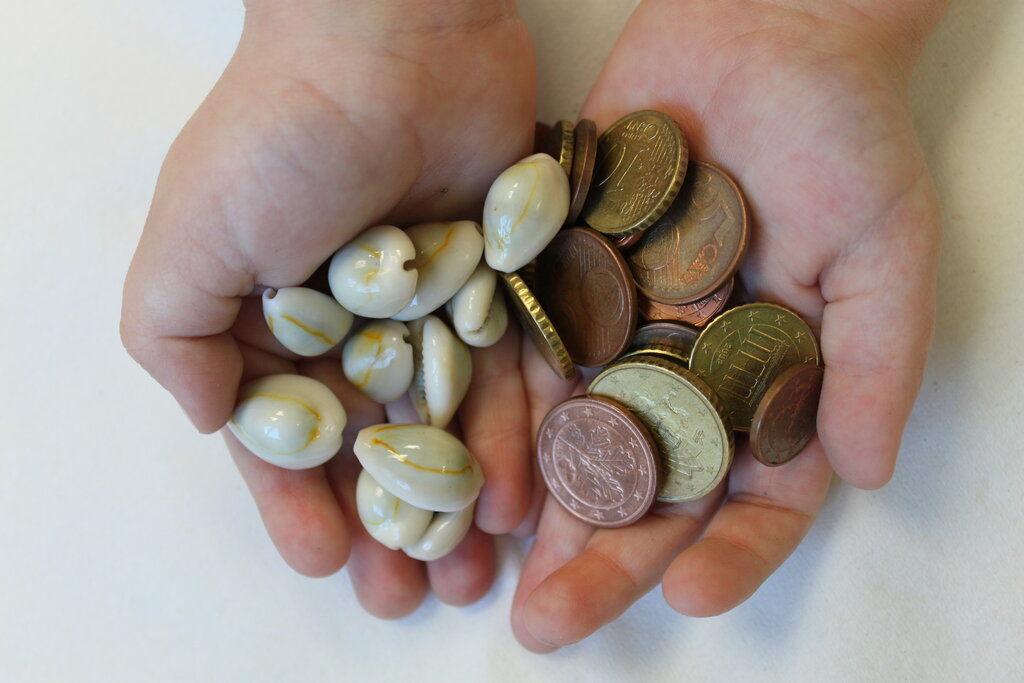
Over time, precious metals like gold and silver became the preferred commodity money because they were durable, portable, and easily divisible. Carrying around heavy bags of gold wasn't practical, so this led to the creation of representative money. These were certificates or tokens that could be exchanged for a certain amount of a commodity, like gold or silver held in a bank vault.
Eventually, most societies moved to fiat money. This is the money we use today.
fiat money
noun
Money that is not backed by a physical commodity but has value because a government has declared that it is legal tender.
Its value comes from the trust and confidence people have in the government that issues it. Your dollar bill isn't valuable because of the paper it's printed on; it's valuable because you and everyone else believe it can be exchanged for goods and services.
Money Today
Today, money exists in several forms. The most familiar is physical currency—the banknotes and coins in your wallet. But most of the money in the world isn't physical at all.
The majority of money exists as digital records in bank computer systems. When you use a debit card, pay a bill online, or receive a direct deposit, you're using digital money.
This digital money includes the balance in your checking and savings accounts. Credit cards are a bit different; they represent a short-term loan from a bank rather than your own money. More recently, cryptocurrencies like Bitcoin have emerged as a new, decentralized form of digital money, though their role and stability are still evolving.
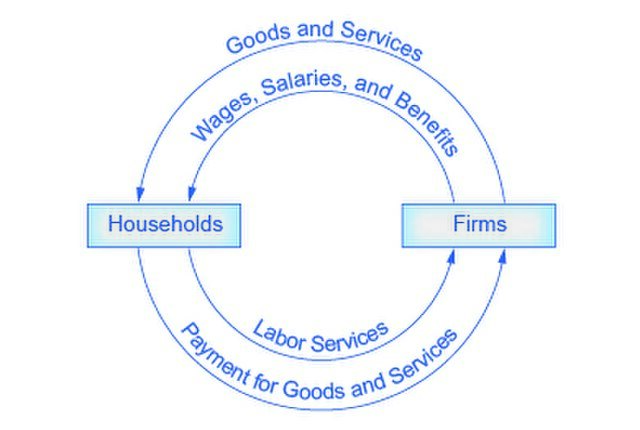
Regardless of its form, money is the lifeblood of an economy. It flows between people and businesses, allowing for the complex transactions that underpin modern society. It enables specialization, where individuals can focus on a specific job, confident that their wages can be used to purchase all the other goods and services they need.
Now, let's test your understanding of these core concepts.
What fundamental problem in a barter system does the introduction of money solve?
Which of the following is the best example of commodity money?
Understanding what money is and how it evolved is the first step toward mastering your own finances. It's the foundation upon which all other financial concepts are built.