Money Masterclass from Scratch to Expertise
Value and Trust
Trading Fish for Coconuts
Let's picture a small island with two residents. One is a skilled fisher, and the other is great at climbing trees to gather coconuts. On a good day, they can simply barter. The fisher trades a fish for a few coconuts, and both are happy. It's direct, simple, and works perfectly.
But what happens when the fisher has a surplus of fish, but the coconut collector isn't hungry for fish that day? Maybe they want to repair their hut instead. The trade can't happen. The fisher has something of value, but can't exchange it for what they need. This problem is called the "double coincidence of wants." For a barter trade to work, both parties must have what the other desires at the exact same time. It's a surprisingly high bar and makes trade very inefficient.
The Three Jobs of Money
To solve this, our islanders need something that can perform three specific jobs. Let's say they decide to use rare, durable seashells as a go-between. The fisher can now sell fish for shells, even if the coconut collector has nothing to trade at that moment. Later, the fisher can use those shells to buy coconuts, or wood for their hut from a third person. The shells act as an intermediary, breaking the rigid requirements of barter.
Medium of Exchange
noun
An intermediary instrument or system used to facilitate the sale, purchase, or trade of goods between parties.
Soon, the islanders start pricing everything in shells. A fish is worth three shells. A coconut is one shell. A bundle of wood is ten shells. The shells become a common measuring stick for value. Instead of remembering complex exchange rates (how many coconuts is a fish worth? how many fish for a bundle of wood?), everyone can price their goods and services against a single standard.
Unit of Account
noun
A standard numerical monetary unit of measurement of the market value of goods, services, and other transactions.
Finally, the fisher can now save. Fish spoil, so hoarding fish is a bad way to store wealth. The shells, however, are durable. The fisher can accumulate shells from good fishing days and save them for the future, confident that they will hold their value. This allows for planning, saving, and investment.
Store of Value
noun
An asset that can be saved, retrieved, and exchanged at a later time, and be predictably useful when retrieved.
One of the most critical roles of money is its ability to act as a store of value, preserving purchasing power over time.
Money vs. Currency
This brings us to a crucial distinction. What makes the shells valuable? It's not the shells themselves, but the shared agreement and trust among the islanders that they represent value and will be accepted by others. This underlying trust is money.
The physical shells are the currency. Currency is the tangible object—the coin, the paper note, the digital entry—that we use to transfer the intangible concept of money.
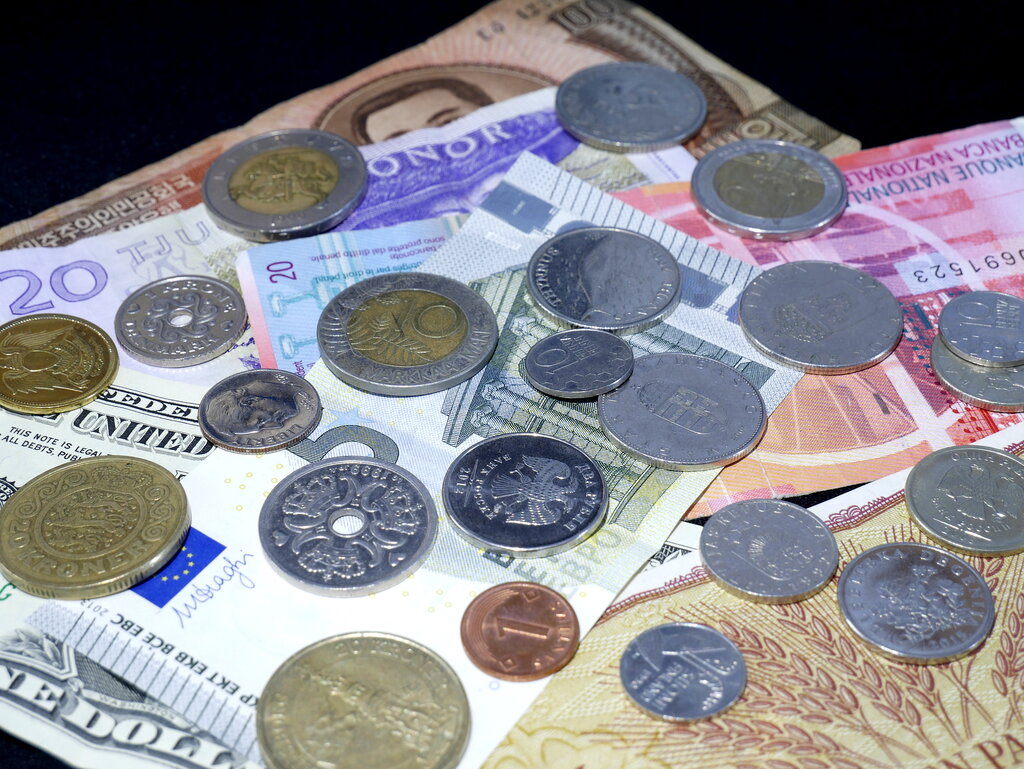
Money is the concept of value that we all agree on. Currency is the token we pass around to represent that value. When you check out online, the dollars and cents are the unit of account. The act of paying is the medium of exchange. The digital record of your bank balance is a store of value. Behind every transaction is that ancient social agreement on what has value and why.
Money is the trust. Currency is the tool.
What is the primary problem with a barter system, as illustrated by the fisher and the coconut collector?
In the story, the physical seashells used for trade are an example of __________, while the shared trust that they have value is an example of __________.
Understanding these core functions is the first step to seeing how our entire economic system is built upon them.