Monetizing with Artificial Intelligence
Introduction to AI
What Is AI?
Artificial Intelligence is about making machines smart. The goal is to create systems that can perform tasks that normally require human intelligence, like learning, reasoning, and problem-solving. Instead of following a rigid set of instructions, an AI system can analyze information, identify patterns, and make decisions on its own.
Artificial Intelligence
noun
The theory and development of computer systems able to perform tasks that normally require human intelligence, such as visual perception, speech recognition, decision-making, and translation between languages.
Think of it this way: a basic calculator follows explicit instructions. You tell it to add 2 and 2, and it gives you 4. An AI, on the other hand, might be shown thousands of cat photos and learn to recognize a cat in a new picture it has never seen before. It learns from experience, much like we do.
A Quick History
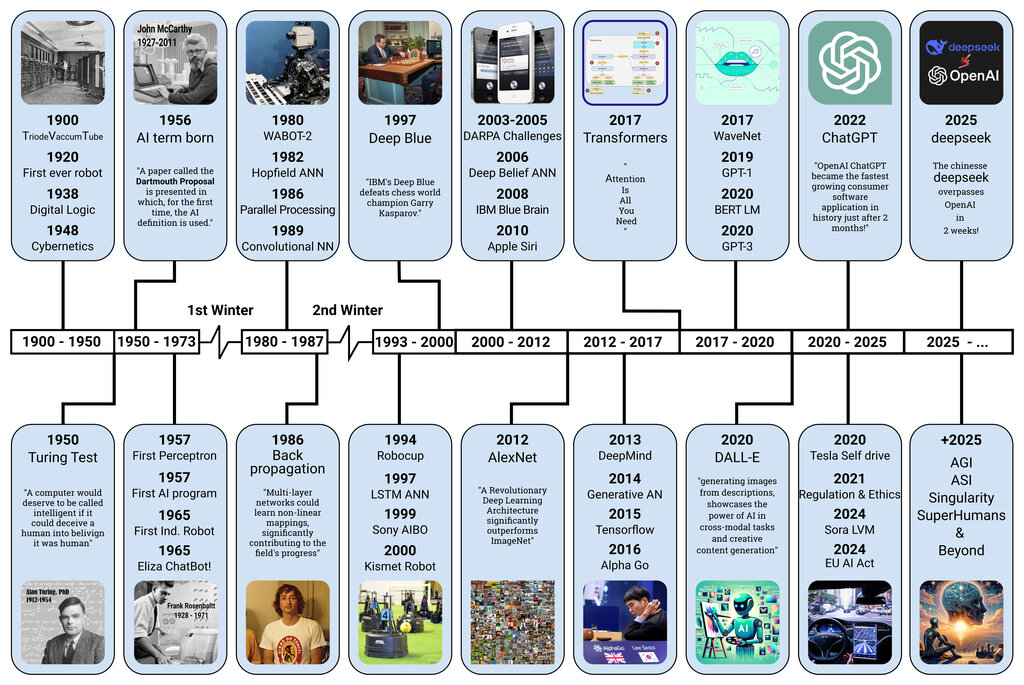
The idea of intelligent machines has been around for centuries, but the modern field of AI began in the 1950s. Early AI research focused on rule-based systems. Programmers would try to write down every possible rule for a task, like playing chess. This was incredibly complex and brittle. If the AI encountered a situation not covered by its rules, it would fail.
A major shift came with the rise of machine learning. Instead of hand-crafting rules, developers created algorithms that could learn rules from data. This approach led to breakthroughs, from IBM's Deep Blue beating a world chess champion in 1997 to the sophisticated AI tools we use today.
Types of AI
When people talk about AI, they're usually referring to one of two categories: narrow AI or general AI.
Artificial Narrow Intelligence (ANI) is designed to perform a single, specific task. This is the only type of AI we have successfully created so far. Your favorite navigation app, the spam filter in your email, and the recommendation engine that suggests what to watch next are all examples of narrow AI. They are incredibly good at their one job, but they can't operate outside of it. A chess-playing AI can't write a poem or diagnose a disease.
Artificial General Intelligence (AGI) is the kind of AI you often see in movies. It's a hypothetical machine with the ability to understand, learn, and apply knowledge across a wide range of tasks at a human level. An AGI could switch from translating languages to composing music to solving complex scientific problems. Building an AGI remains a distant goal for researchers.
How AI Learns
The engine driving modern AI is machine learning. Instead of being programmed for a task, a machine learning model is trained on vast amounts of data. This allows it to learn without human intervention.
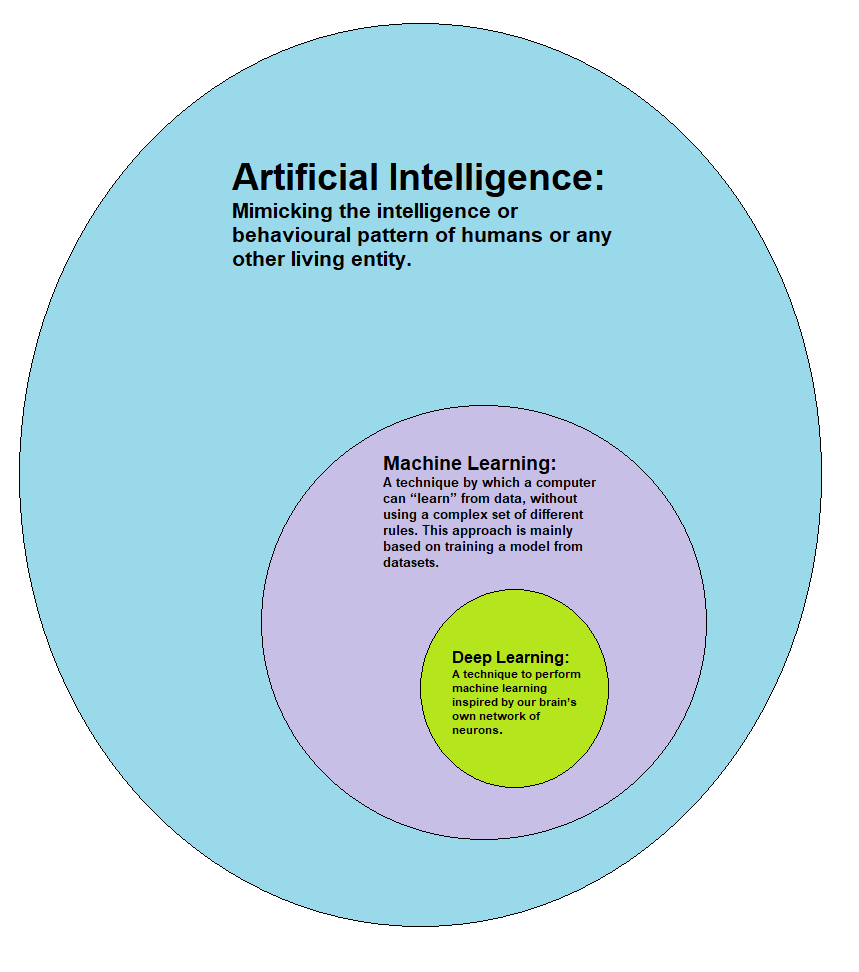
Machine Learning (ML) is a subset of AI. It uses algorithms to parse data, learn from it, and then make a determination or prediction about something in the world. For example, an ML model for spam detection is trained on millions of emails, learning which features (like certain words or sender addresses) are associated with spam. Over time, it gets better and better at filtering your inbox.
Deep Learning (DL) is a more advanced subset of machine learning. It's based on artificial neural networks, which are inspired by the structure of the human brain. Deep learning is particularly powerful for finding complex patterns in unstructured data like images, sound, and text. It's the technology behind facial recognition and natural language processing in voice assistants.
AI is the broad goal of creating intelligent machines. Machine learning is a way to achieve that goal by learning from data. Deep learning is a specialized type of machine learning that uses complex neural networks.
These foundational concepts are the building blocks of the AI tools and applications that are changing how we work and live.
Time to check your understanding of these core AI concepts.
What is the fundamental goal of Artificial Intelligence?
What was the major conceptual shift that propelled modern AI development forward?
Understanding these basics is the first step. With this foundation, you can begin to explore how AI is applied in the real world.