Monetizing Artificial Intelligence
Understanding AI Technologies
What Is Artificial Intelligence?
Artificial intelligence, or AI, is a broad field of computer science focused on creating machines that can perform tasks that typically require human intelligence. This includes things like learning, reasoning, problem-solving, perception, and understanding language.
Think of it less like a sci-fi robot and more like a very powerful tool. AI isn't a single thing, but a collection of technologies that can be trained to recognize patterns, make predictions, and even create new content. It powers everything from the recommendation engine that suggests your next favorite show to the navigation app that finds the quickest route home.
Artificial Intelligence
noun
The theory and development of computer systems able to perform tasks that normally require human intelligence.
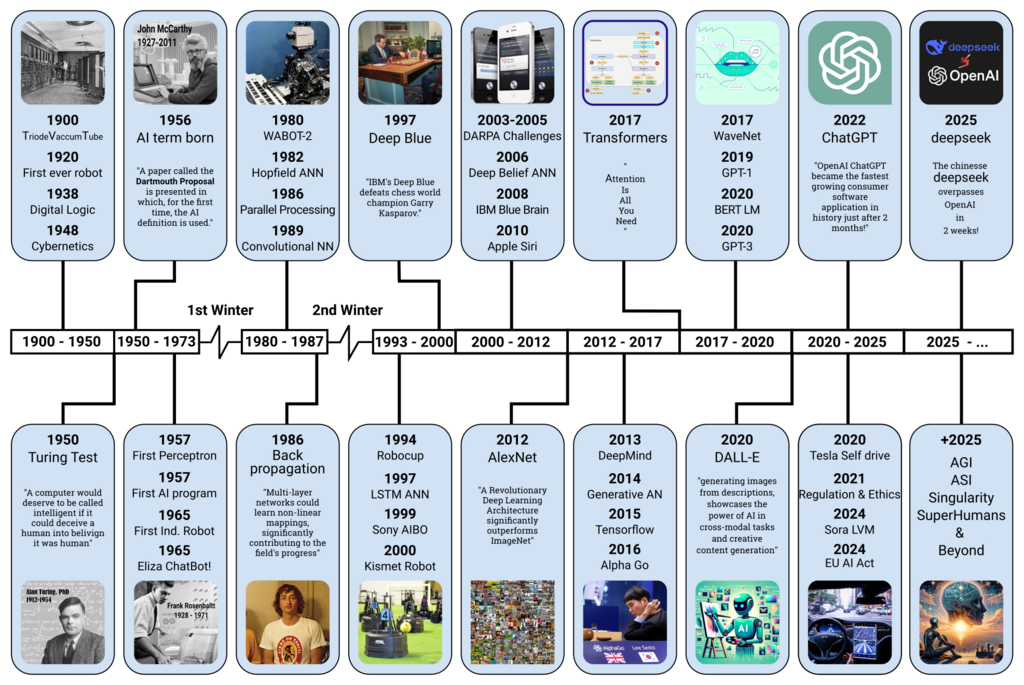
The dream of creating intelligent machines is not new. It has roots in ancient myths, but the scientific journey began in the mid-20th century. Computer scientist Alan Turing proposed a test for machine intelligence in 1950, and the term "artificial intelligence" was coined at a Dartmouth College workshop in 1956. Early progress was slow, marked by periods of excitement followed by funding cuts, known as "AI winters."
Over the decades, breakthroughs in computing power and the availability of vast amounts of data have fueled rapid advancements, leading to the powerful AI tools we see today.
The Building Blocks of AI
AI doesn't just appear out of thin air. It's built on a few core components that work together. At its heart, an AI system is a sophisticated pattern-matching machine.
Here's what each part does:
- Data: This is the lifeblood of most modern AI. It's the information—images, text, numbers, sounds—that the system learns from. The more high-quality, relevant data an AI has, the better it becomes at its task.
- Algorithms: These are the step-by-step instructions or rules that tell the computer how to learn from the data. The algorithm sifts through the data to find patterns, relationships, and insights.
- AI Model: The output of the learning process is a "model." You can think of a model as the AI's distilled knowledge, a complex digital structure that represents the patterns found in the data.
- Computing Power: Training an AI model, especially a large one, requires immense computational resources. Powerful processors are needed to run complex algorithms on massive datasets.
Meet the AI Family
Artificial Intelligence is the parent category for a range of different methods and subfields. You'll often hear terms like Machine Learning and Deep Learning used interchangeably with AI, but they have distinct meanings.
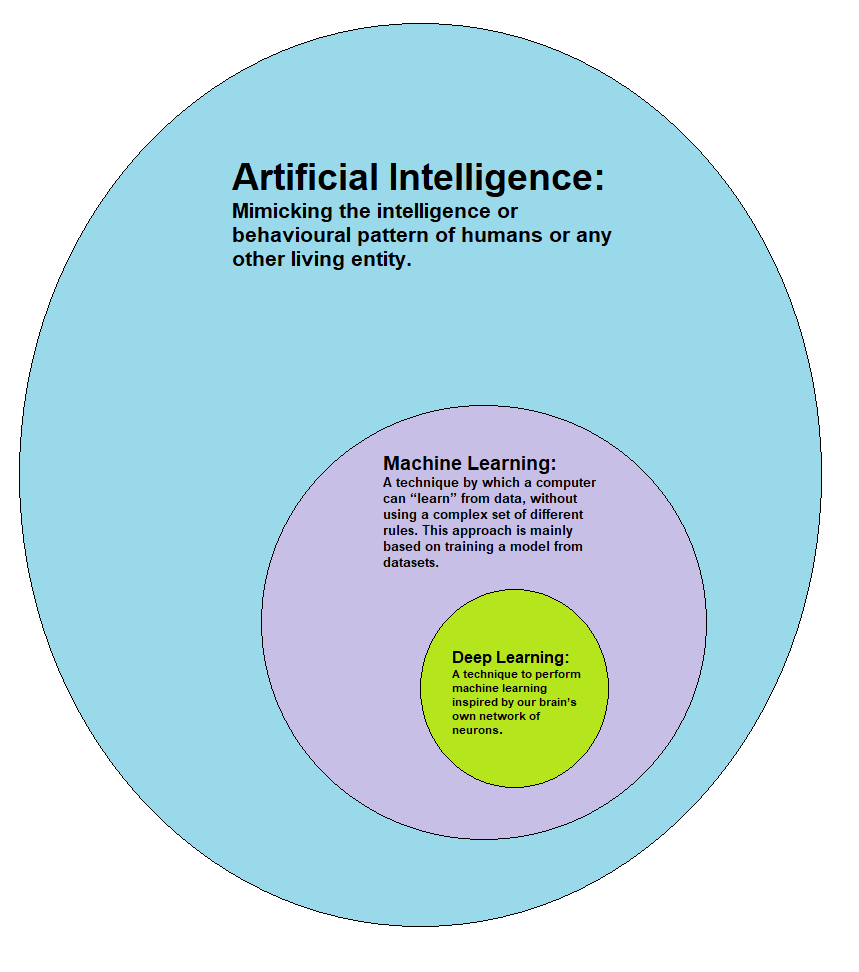
Machine Learning (ML) is a subset of AI. Instead of being explicitly programmed with rules, ML algorithms learn directly from data. They are trained on a dataset to find patterns, and then they use those patterns to make predictions on new, unseen data. For example, a machine learning model can learn to identify spam emails by being shown thousands of examples of spam and non-spam messages.
Deep Learning is a specialized subfield of machine learning. Its algorithms are inspired by the structure and function of the human brain, using complex, multi-layered structures called artificial neural networks. Deep learning is the powerhouse behind many recent AI breakthroughs, like advanced image recognition and natural-sounding text-to-speech.
Natural Language Processing (NLP) is another key area of AI that focuses on the interaction between computers and human language. NLP enables machines to read, understand, interpret, and generate human language. It's the technology behind virtual assistants like Siri and Alexa, as well as language translation apps.
Current Trends
The field of AI is moving at a breakneck pace. One of the most significant recent trends is the rise of Generative AI. These are models, often based on deep learning, that can create new, original content. This includes writing essays, generating realistic images from text descriptions, composing music, and writing code.
Another key trend is the increasing accessibility of AI tools. What once required a team of specialists and massive computing infrastructure is now available through cloud services and open-source software. This democratization is empowering developers and businesses of all sizes to build AI-powered applications.
From understanding language to creating art, AI's capabilities are expanding into new and complex domains.
Now that we've covered the basics, let's test your knowledge.
Which of the following best describes the relationship between Artificial Intelligence (AI), Machine Learning (ML), and Deep Learning?
What is the primary role of an "algorithm" in an AI system?
Understanding these core concepts provides a solid foundation for exploring the practical applications and implications of artificial intelligence.