Monetizing AI Agency Services
Understanding AI Service Models
Services Behind the Software
Artificial intelligence isn't just a piece of software you buy off the shelf. Bringing AI into a business is a process, and it's usually delivered through a combination of services. These services help companies figure out what they need, build it, and keep it running smoothly.
Think of it like building a custom home. You don't just buy a pile of lumber; you hire professionals to guide you. The world of AI services is similar, generally breaking down into three main phases: consulting, implementation, and support.
AI Consulting: The Blueprint
AI consulting is the strategic planning phase. It's where experts help a business answer the big questions: What problems can AI solve for us, and why should we use it? The goal is to create a clear roadmap before any code gets written.
A consultant's job is to align the potential of AI with the company's actual goals. This involves workshops, data audits, and market analysis to find the most valuable opportunities. They act as strategic guides, ensuring the company invests in the right solutions for the right reasons.
To effectively implement AI, organizations must develop a clear, strategic plan that aligns AI initiatives with broader business objectives.
Key activities in AI consulting include:
- Opportunity Identification: Pinpointing specific business processes, like customer service or inventory management, where AI can have the biggest impact.
- Feasibility Assessment: Determining if the company has the right data and resources to make an AI project successful.
- Roadmap Development: Creating a step-by-step plan for AI adoption, from a small pilot project to a company-wide initiative.
AI Implementation: The Build
Once the blueprint is set, it's time to build. AI implementation is the hands-on process of designing, developing, and integrating the AI solution into the company's existing systems. This is where data scientists and engineers take the strategic plan and turn it into a working product.
This phase is highly technical. It involves gathering and cleaning data, training machine learning models, and ensuring the new AI tool works seamlessly with the software employees already use.
| Consulting | Implementation |
|---|---|
| Focus | Strategy & Planning |
| Question | What should we do? |
| Output | Roadmaps, business cases |
| Team | Strategists, analysts |
Implementation is where the ideas from the consulting phase become real. It requires a deep understanding of both the business goals and the technical details to create a solution that actually solves the intended problem.
Support and Maintenance: The Upkeep
An AI model is not a static product; it's a dynamic system that needs ongoing attention. After an AI solution is launched, it enters the support and maintenance phase. This is crucial for ensuring the model remains accurate, effective, and secure over time.
Think of an AI that predicts customer purchasing trends. Market conditions change, new products are launched, and customer behavior evolves. The model must be monitored and retrained with new data to keep its predictions relevant. Without this upkeep, its performance will degrade, a problem known as "model drift."
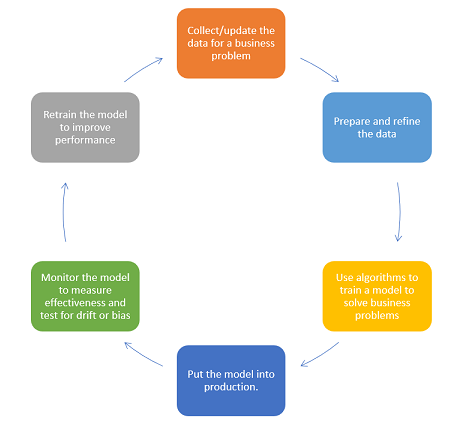
Support services typically include:
- Performance Monitoring: Tracking the AI's accuracy and business impact.
- Model Retraining: Updating the model with new data to adapt to changing conditions.
- Technical Support: Fixing bugs and ensuring the system runs without issues.
Matching Services to Needs
Not every business needs all three services in equal measure. The right mix depends on their internal capabilities and where they are in their AI journey.
A company that is new to AI might start with a heavy focus on consulting to build a solid strategy. A business with a clear vision and a strong technical team might only need help with implementation. Meanwhile, a company with several AI models in production will require robust support and maintenance services to protect its investment.
The key is to see these services as building blocks. By understanding what each one offers, a business can choose the right partners and support to turn its AI ambitions into tangible results.
Ready to check your understanding?
Which phase of AI services is primarily focused on strategic planning and answering the 'what' and 'why' of an AI project?
The degradation of an AI model's performance over time as new, real-world data differs from its training data is known as:
Each service model plays a distinct role in bringing AI to life within an organization, from initial strategy to long-term success.