Monetize Event Predictions with Polymarket
Introduction to Prediction Markets
What Are Prediction Markets?
Think of a prediction market as a stock market for future events. Instead of buying shares in a company, you buy shares in the outcome of an event. Will a specific candidate win an election? Will a movie break a box office record? Will a company launch a new product by a certain date? These are all questions a prediction market might tackle.
Prediction markets are powerful tools for forecasting future events by leveraging the collective knowledge of participants.
The core idea is to tap into the “wisdom of the crowd.” The theory is that a large group of informed people, each with their own bits of knowledge and analysis, can collectively make surprisingly accurate forecasts. By putting real money on the line, people are incentivized to share what they truly believe, not just what they hope will happen.
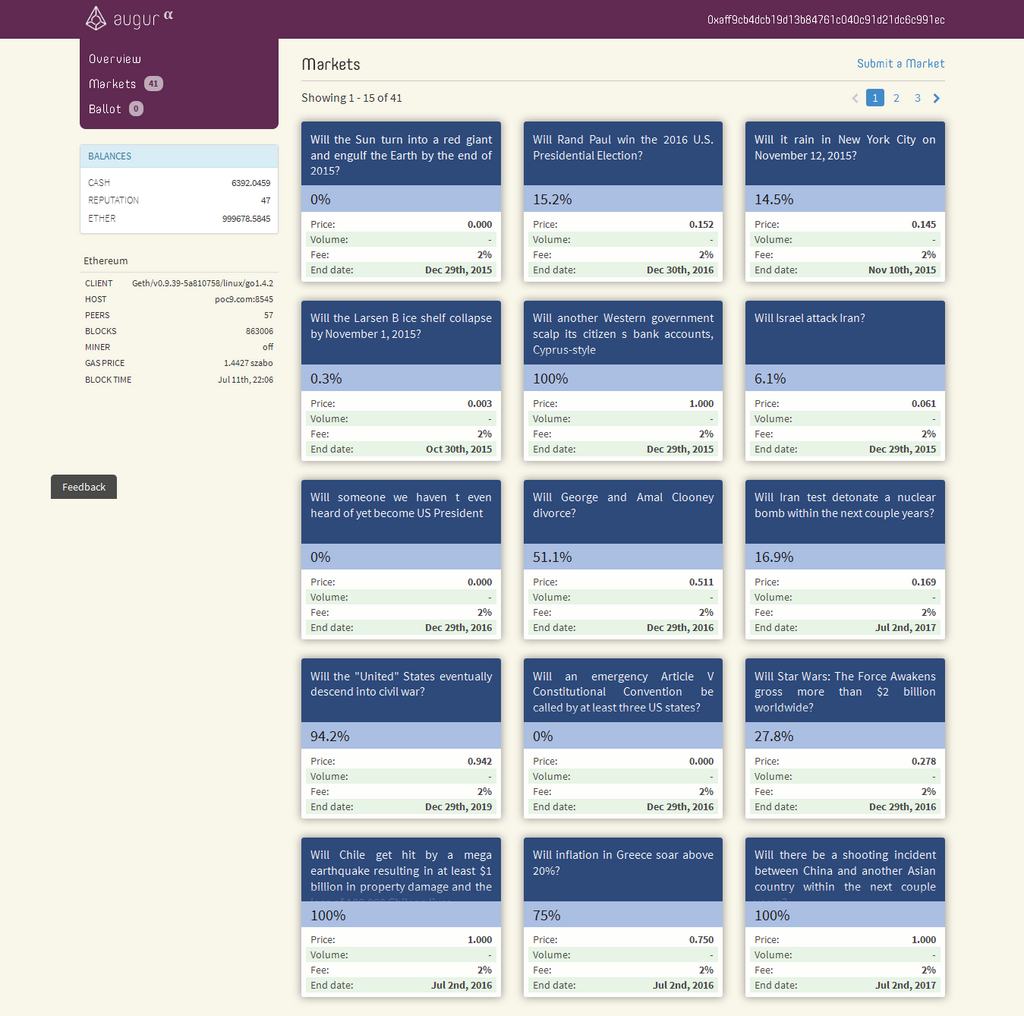
This process creates a living forecast that constantly updates as new information becomes available and people adjust their positions. Unlike a static poll, a prediction market is dynamic, reflecting the collective probability of an event happening in real time.
How Trading Works
The mechanics are straightforward. For any given event, there are shares representing each possible outcome. In the simplest case, it's a 'Yes' or 'No' question. You can buy 'Yes' shares if you think the event will happen, or 'No' shares if you think it won't.
The price of these shares fluctuates between $0 and $1. This price isn't arbitrary; it reflects the market's collective belief in the probability of that outcome. If 'Yes' shares for an event are trading at $0.70, it means the market estimates there is a 70% chance of that event occurring. A price of $0.25 would imply a 25% chance.
The share price is the forecast.
When the event's outcome is finally known, the market resolves. Shares for the correct outcome become worth $1 each, and shares for the incorrect outcome become worthless ($0). Your profit or loss is the difference between what you paid for your shares and their final value.
| You Buy | Share Price | Event Outcome | Share Value | Your Profit/Loss per share |
|---|---|---|---|---|
| 1 'Yes' Share | $0.60 | Yes | $1.00 | +$0.40 |
| 1 'Yes' Share | $0.60 | No | $0.00 | -$0.60 |
| 1 'No' Share | $0.40 | Yes | $0.00 | -$0.40 |
| 1 'No' Share | $0.40 | No | $1.00 | +$0.60 |
Of course, you don't have to hold your shares until the end. You can buy and sell them at any time before the market closes, profiting from shifts in the perceived probability as the event draws closer.
Having “skin in the game” is likely to be the key to the predictive power of prediction markets.
Why Decentralization Matters
Many modern prediction markets operate on decentralized platforms. This means they are built on blockchain technology, like the systems that power cryptocurrencies. Instead of a single company controlling the funds, setting the rules, and acting as the middleman, the market operates on a distributed network of computers.
This structure offers several key advantages over traditional, centralized systems:
- Global Access: Anyone with an internet connection can participate, creating a more diverse and potentially wiser “crowd.”
- Lower Fees: Without a central company taking a large cut, transaction costs are often much lower.
- Transparency: The rules of the market and all transactions are recorded on a public ledger, making the process open and verifiable.
- Censorship Resistance: No single entity can shut down a market or prevent certain topics from being traded on.
Decentralized platforms like Polymarket represent a significant evolution. By removing traditional barriers, they make prediction markets more accessible and efficient, allowing for the aggregation of information on a global scale.
What is the primary purpose of a prediction market?
In a prediction market, if 'Yes' shares for an event are trading at a price of $0.80, what does this imply?