Moment of Inertia Explained
Introduction to Rotational Motion
From Straight Lines to Circles
So far, we've mostly talked about things moving in straight lines. But the world is full of objects that spin, turn, and rotate. Think of a spinning top, a planet orbiting the sun, or a wheel on a car. This is called rotational motion, and it has its own set of rules.
Instead of measuring how far something has moved in meters, we measure how much it has turned. This is called angular displacement, and it's simply the angle an object has rotated through. We represent it with the Greek letter theta ().
Imagine a pizza spinning on a tray. If you track a single pepperoni slice, the angle it sweeps out from its starting point is its angular displacement.
While we're familiar with degrees, in physics, we almost always measure angles in radians. A full circle is $2π$ radians, which is equivalent to 360 degrees. Radians are useful because they naturally relate the angle of rotation to the distance traveled along the arc of the circle.
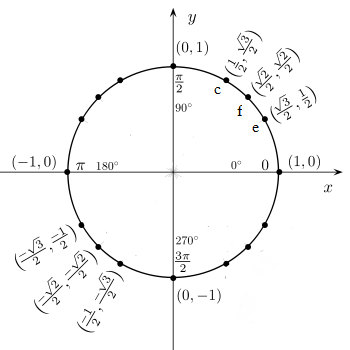
The relationship is simple: the arc length () an object travels is its angular displacement in radians () multiplied by the radius () of the circular path.
The Speed of Spin
Just as linear velocity describes how fast an object's position changes, angular velocity describes how fast its angle changes. It's the rate of change of angular displacement, represented by the Greek letter omega ().
If an object rotates through an angular displacement of in a time interval , its average angular velocity is:
The unit for angular velocity is radians per second (rad/s). A higher angular velocity means a faster spin.
Angular velocity is related to the linear (or tangential) velocity of a point on the rotating object. A point farther from the center of rotation has to travel a greater distance in the same amount of time, so it moves faster. The relationship is:
Here, is the tangential velocity, is the distance from the center of rotation, and is the angular velocity in rad/s.
Changing the Spin Rate
When the spin rate of an object changes, it has angular acceleration. This is the rate of change of angular velocity, represented by the Greek letter alpha (). It's the rotational equivalent of linear acceleration.
If the angular velocity changes by in a time interval , the average angular acceleration is:
The units are radians per second squared (). A positive angular acceleration means the object is spinning up, while a negative value means it's slowing down.
Like velocity, angular acceleration is related to its linear counterpart, tangential acceleration (). This is the acceleration of a point on the object along the direction of motion.
Equations of Rotational Motion
The relationships between displacement, velocity, and acceleration in rotational motion are identical to those for linear motion. This means we can use a parallel set of kinematic equations for situations with constant angular acceleration.
| Linear Motion (constant a) | Rotational Motion (constant α) |
|---|---|
If you know how to solve a linear kinematics problem, you can solve a rotational one. You just need to swap the variables.
The Cause of Rotation
In linear motion, a net force causes an object to accelerate. In rotational motion, the equivalent concept is torque. Torque is a twisting or turning force that causes an object to have an angular acceleration.
However, torque isn't just about how much force you apply. It also depends on where you apply the force and in what direction. Think about opening a heavy door. Pushing on the door right next to the hinges requires a huge amount of effort. But pushing on the side farthest from the hinges is much easier. The force is the same, but the torque is different.
Torque, represented by the Greek letter tau (), is calculated by multiplying the force () by the lever arm (), which is the distance from the pivot point to where the force is applied. Crucially, only the component of the force perpendicular to the lever arm creates torque.
Here, is the angle between the force vector and the lever arm. The maximum torque occurs when the force is applied perpendicularly (), because .
Just as Newton's second law () relates force to linear acceleration, there's a rotational equivalent that relates net torque to angular acceleration. We'll explore that relationship in more detail later.