Molecular Transformation of Oxygen to Ozone
Photolysis and Atomic Oxygen
The Sun's Energy Scissors
High above the Earth, in the stratosphere, a constant chemical drama unfolds. This process begins with diatomic oxygen (), the stable, familiar form of oxygen we breathe. In the thin air of the stratosphere, these molecules are bombarded by high-energy ultraviolet (UV) radiation from the sun.
Specifically, it's the most energetic portion of the UV spectrum, known as UVC, with wavelengths between 100 and 280 nanometres (nm), that drives the reaction. This isn't just any light. This radiation carries enough energy to act like a pair of molecular scissors, snipping the strong double bond that holds the two oxygen atoms together. This process is called photodissociation or photolysis.
The energy required to break this bond, known as the bond dissociation enthalpy, is about 498 kJ/mol. Wavelengths of light shorter than 242 nm carry enough energy per photon to overcome this barrier. The result is two individual oxygen atoms, each with an unpaired electron. These aren't stable atoms anymore; they're – highly reactive and eager to bond with other molecules.
An Altitude-Dependent Reaction
This whole process is critically dependent on altitude. Why does it happen primarily in the stratosphere and not closer to the ground?
It’s a balancing act between the availability of UVC radiation and the concentration of oxygen molecules.
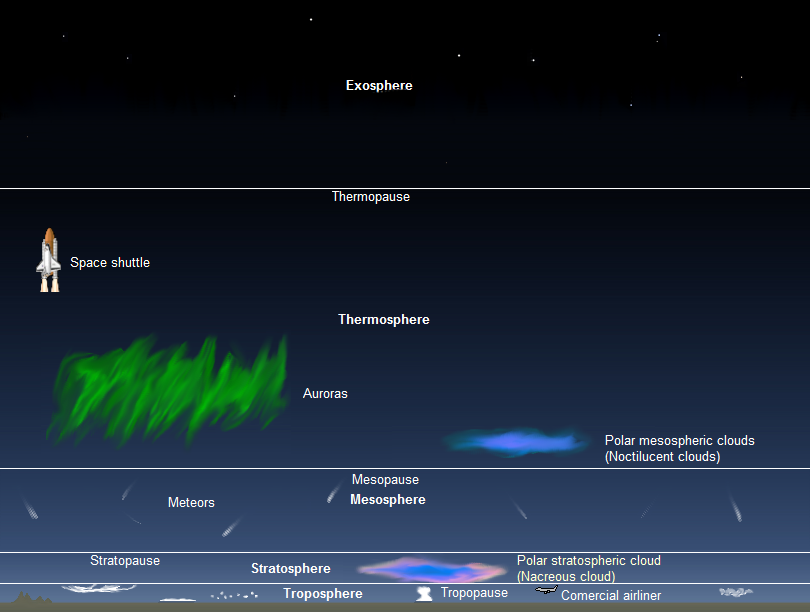
Higher up, in the mesosphere and beyond, there is plenty of intense UVC radiation, but the atmospheric pressure is extremely low. There are simply not enough molecules to absorb the incoming energy effectively.
At very high levels in the atmosphere (e.g., in the mesosphere), there is plenty of UV but too little O2 (simply because pressure decreases with height).
Lower down, in the troposphere where we live, the air is dense with . However, almost all the high-energy UVC radiation has already been absorbed by the oxygen and ozone in the stratosphere above. The stratosphere is the sweet spot where the concentration of oxygen is still significant and the flux of incoming UVC radiation is strong enough to drive photolysis on a massive scale.
This initial splitting of is the critical first step. It produces the raw ingredient—atomic oxygen—needed to build ozone (). This entire sequence of reactions is known as the and is fundamental to understanding the structure and stability of the ozone layer.
What is the specific type of solar radiation responsible for splitting diatomic oxygen () in the stratosphere?
The process by which UV radiation breaks the bond in an molecule is known as ________.
This crucial first reaction sets the stage for the formation of the ozone layer, which protects life on Earth by absorbing the vast majority of harmful UV radiation.