Molecular Mechanisms of DNA Replication
Replication Fork Dynamics
Opening the Helix
DNA replication doesn't begin at random points along the chromosome. Instead, specific proteins scan the DNA for a particular sequence known as an 'origin of replication'. Think of these origins as designated starting blocks for a race. In simple organisms like bacteria, there might be just one. In complex eukaryotes, a chromosome can have hundreds or even thousands, ensuring that the vast amount of genetic material can be copied quickly.
Once an origin is located, a group of initiator proteins binds to it, forming a pre-replication complex. This complex acts as a landing pad for the next key player: helicase. The arrival of helicase marks the official start of replication and the formation of the replication fork, the Y-shaped junction where the DNA double helix is actively being separated.
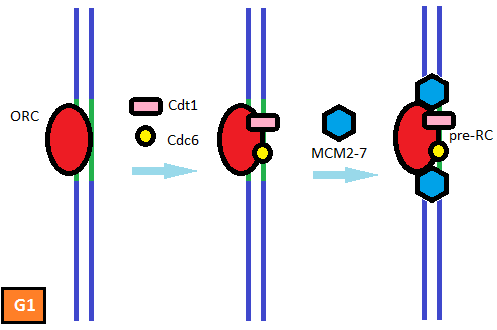
The Unzipping Enzyme
With the stage set, helicase gets to work. This motor protein functions like a molecular zipper, moving along the DNA and unwinding the double helix. It hydrolyses ATP to gain the energy needed to break the hydrogen bonds that hold the two strands together. As it powers forward, it creates two separate, single strands of DNA that can serve as templates for creating new strands.
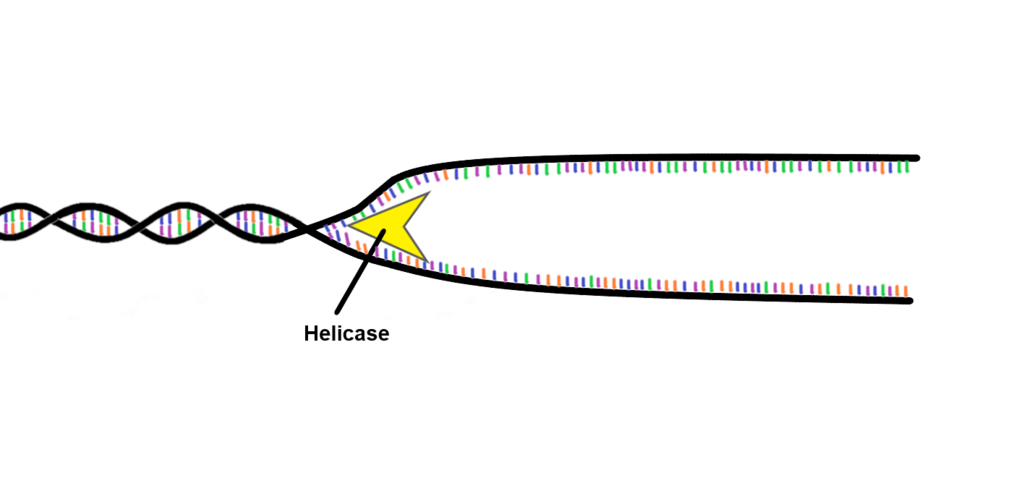
However, these newly separated strands are chemically inclined to snap back together. To prevent this and keep the templates accessible, single-strand binding proteins (SSBs) immediately coat the exposed DNA. They bind cooperatively, meaning the binding of one SSB makes it easier for the next one to attach nearby. This keeps the strands from re-annealing or forming secondary structures, ensuring the replication machinery has a clear and stable path.
Managing the Strain
Imagine trying to quickly separate the two strands of a tightly twisted rope. As you pull them apart in the middle, the ends of the rope will become even more tightly wound. The same thing happens to DNA. As helicase unwinds the helix, the DNA ahead of the replication fork becomes overwound, a state known as positive supercoiling. This creates immense torsional stress that could eventually halt replication entirely.
This torsional strain needs a release valve. Without one, the DNA would become so tangled that it could break.
This is where come in. These enzymes act as 'DNA untanglers'. They relieve supercoiling by temporarily cutting the DNA backbone, allowing the strands to rotate around each other, and then resealing the break. There are two main types:
- Type I topoisomerases cut a single strand of the DNA backbone.
- Type II topoisomerases cut both strands, pass another segment of the DNA through the gap, and then ligate the strands back together.
An important Type II topoisomerase in bacteria is DNA gyrase. It not only relieves positive supercoils but also actively introduces negative supercoils, which helps the unwinding process.
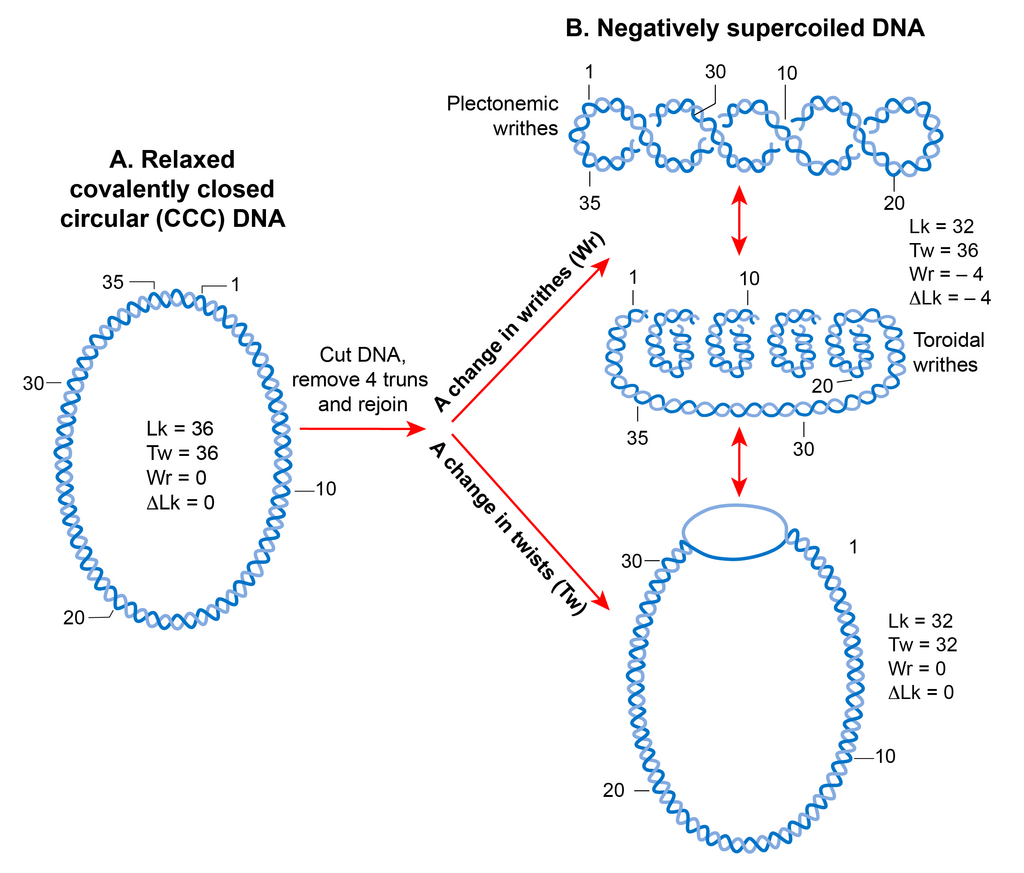
With the helix open, the strands stabilised, and the torsional strain managed, the DNA is now a perfect template, ready for DNA polymerase to begin synthesising new strands.
Time to check your understanding of the replication fork's key players.
What is the specific site on a chromosome where DNA replication is initiated?
What is the primary function of helicase in DNA replication?