Molecular Docking and Reverse Docking
Introduction to Molecular Docking
Virtual Matchmaking for Molecules
Imagine trying to find the one key that opens a very specific, complex lock. You have a box with millions of different keys. Testing them one by one would take forever. What if you could use a computer to scan each key and predict which ones are most likely to fit, without ever touching the lock? That's the basic idea behind molecular docking.
Molecular docking (MD) is a crucial task in drug design, which predicts the position, orientation, and conformation of the ligand when bound to a target protein.
In drug discovery, the “lock” is usually a large molecule in our body, like a protein, that is involved in a disease. This is called the receptor. The “key” is a small molecule, like a potential drug, which is called a ligand. Molecular docking is a computational method that predicts how a ligand will bind to a receptor. It's like a 3D simulation that tests the fit between two molecules.
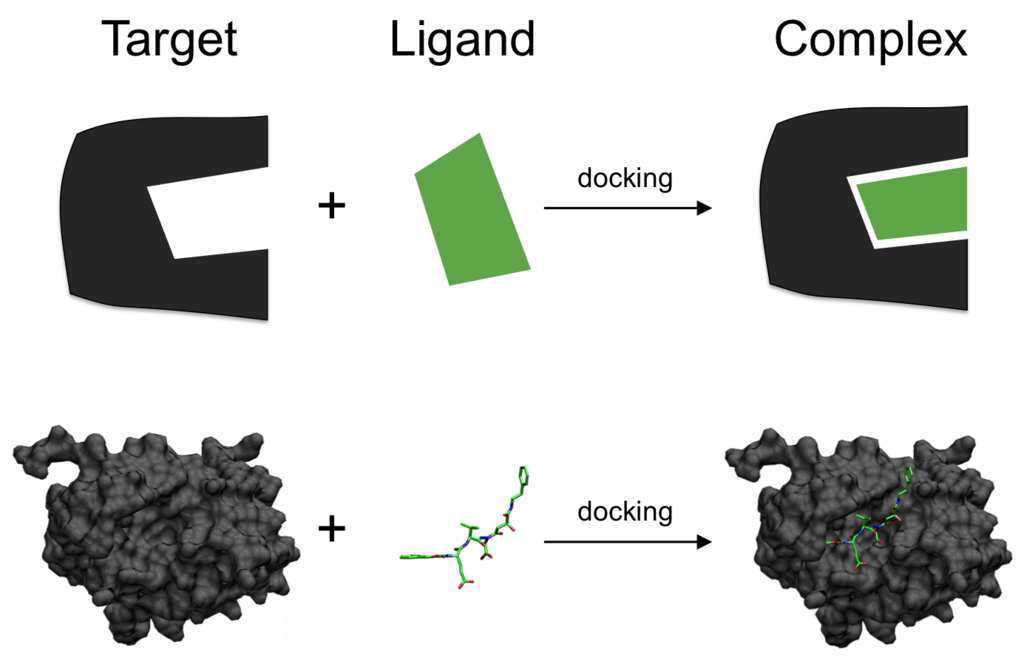
By running these simulations, scientists can quickly test thousands or even millions of potential drug compounds to see which ones might work, saving immense amounts of time and money in the early stages of research.
The Lock and Key Idea
One of the earliest models to describe this interaction is the “lock-and-key” model. It proposes that the active site of a protein (the receptor) has a specific, rigid shape, much like a lock. A potential drug molecule (the ligand) must have a complementary shape to fit perfectly into that site, just as a key fits into its lock.
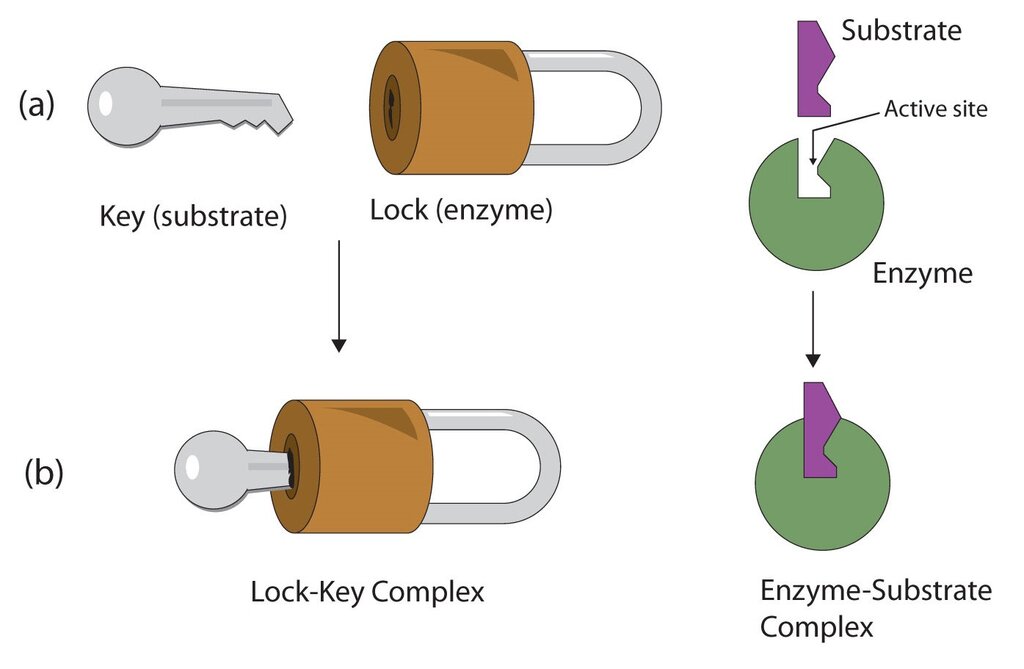
This perfect fit allows the ligand to interact with the receptor and trigger a biological response, like blocking a harmful process or activating a helpful one. While scientists now know that molecules are more flexible (a concept called “induced fit”), the lock-and-key model is still a powerful and simple way to understand the need for specific molecular shapes in drug design.
Measuring the Fit
It’s not enough for a key to just fit in the lock; it also has to be able to turn it. In molecular terms, the ligand and receptor must not only have complementary shapes but also form a stable connection. The strength of this connection is called binding affinity.
High binding affinity means the ligand binds tightly to the receptor. This is often a sign of a more effective drug, as a smaller dose might be needed to produce the desired effect.
How do docking programs measure this? They use sophisticated algorithms called scoring functions. After placing the ligand into the receptor’s binding site in various orientations, the scoring function calculates a score that estimates the binding affinity. This score is based on factors like the shape and chemical compatibility between the two molecules. A lower score usually indicates a better, more stable binding.
The cornerstone of computational drug design is the calculation of binding affinity between two biological counterparts, especially a chemical compound, i.e., a ligand, and a protein.
Finding Needles in a Haystack
The true power of molecular docking comes to life in a process called virtual screening. Imagine a massive digital library containing millions of different small molecules. Instead of synthesizing and testing each one in a lab, scientists can use docking to screen them computationally against a specific disease target.
The computer docks each molecule to the target protein and gives it a score. Molecules that score well are flagged as potential “hits.” This process rapidly narrows down a huge field of candidates to a much smaller, manageable number of promising compounds that can then be prioritized for real-world laboratory testing.
Virtual screening is a critical step in drug discovery, where millions of compounds are screened against biological targets to identify those that might have therapeutic effects.
Beyond just finding new drugs, docking helps scientists optimize existing ones. By understanding exactly how a molecule binds, they can make small chemical changes to improve its affinity, reduce side effects (by checking if it docks to other unintended proteins), and ultimately design safer, more effective medicines.
What is the primary purpose of a scoring function in molecular docking?
In the context of drug discovery, a target protein is typically referred to as the __________, and the potential drug molecule is the __________.
Molecular docking is a fundamental tool that has revolutionized the way we discover and develop new therapies, making the process faster, cheaper, and more intelligent.