Molecular Basis of Life and Heredity
Nucleic Acid Architecture
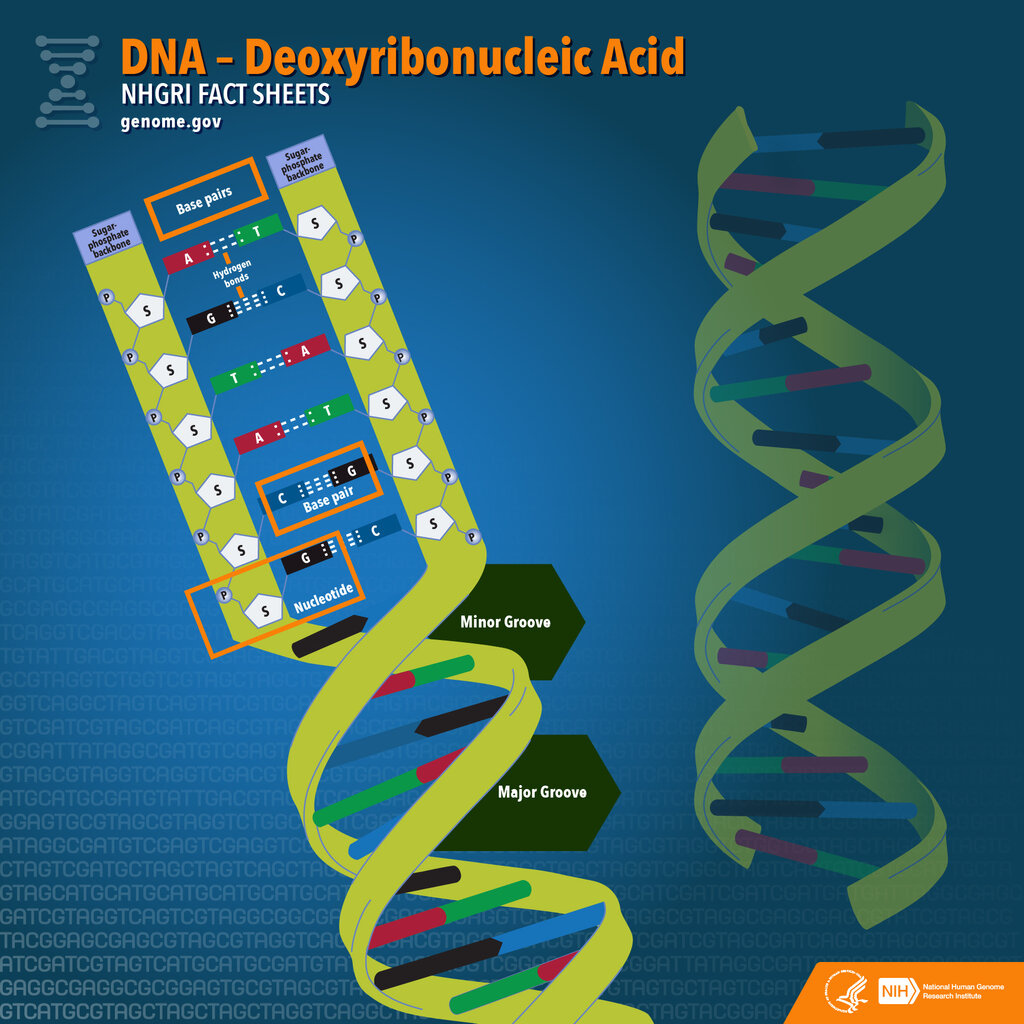
The Sugar-Phosphate Backbone
The long chains of DNA and RNA are built from individual units called nucleotides. What links these units together is a specific type of covalent bond known as a phosphodiester bond. This bond forms between the phosphate group of one nucleotide and the sugar of the next.
Specifically, the phosphate group, which is attached to the 5' (pronounced "five prime") carbon of a nucleotide's sugar, forms a link with the hydroxyl group on the 3' carbon of the neighboring nucleotide's sugar. This creates a repeating sugar-phosphate pattern that forms the backbone of the nucleic acid strand. This directional linking, from 5' to 3', gives each strand a distinct polarity. It's like a one-way street; information is read in a specific direction.
In DNA's famous double helix, two of these strands run alongside each other but in opposite directions. One strand runs 5' to 3', while its partner runs 3' to 5'. This arrangement is called anti-parallel, and it's crucial for the molecule's stability and its ability to replicate.
The Rungs of the Ladder
While the backbone provides the structural frame, the information is stored in the nitrogenous bases that form the "rungs" of the DNA ladder. These bases pair up in a very specific way: Adenine (A) always pairs with Thymine (T), and Guanine (G) always pairs with Cytosine (C). This rule is known as complementary base pairing.
The connections between these pairs are not strong covalent bonds like in the backbone, but weaker hydrogen bonds. An A-T pair is held together by two hydrogen bonds, while a G-C pair is held together by three. This difference in bonding has a significant impact on DNA stability. Regions of DNA rich in G-C pairs are more thermally stable than regions rich in A-T pairs because it takes more energy to break three hydrogen bonds than two.
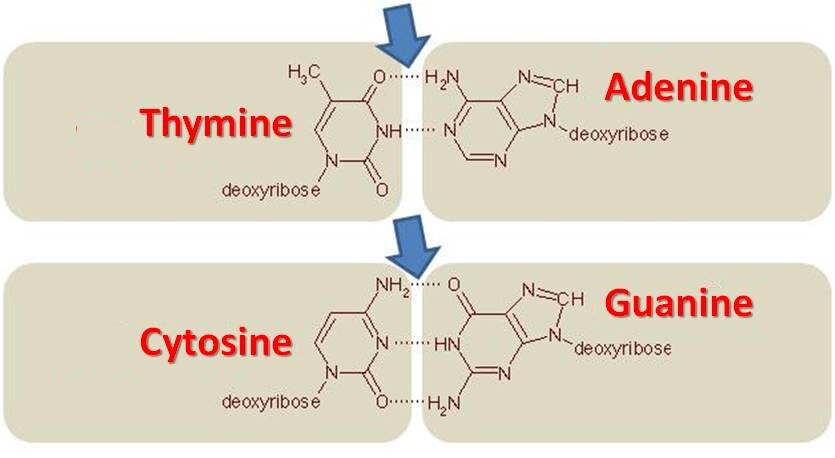
This pairing is also dictated by the size of the bases. Adenine and Guanine are purines and have a two-ring structure, making them larger. Cytosine and Thymine are pyrimidines, with a smaller, single-ring structure. A purine always pairs with a pyrimidine, which keeps the width of the DNA double helix uniform along its entire length. This consistent geometry is essential for the molecule's structural integrity.
DNA's Helical Landscape
The twisting of the two anti-parallel strands into a right-handed helix creates an uneven surface with distinct grooves. The wider of these is called the major groove, and the narrower one is the minor groove. This topography isn't just an accident of geometry; it's fundamental to how DNA functions.
The edges of the base pairs are more exposed in the major groove, creating a unique chemical signature for each sequence. This allows proteins, such as transcription factors, to "read" the DNA sequence without having to unwind the helix. They can recognize specific patterns of hydrogen bond donors, acceptors, and other chemical groups in the major groove and bind to them, initiating processes like gene expression. The minor groove is less information-rich but is also a site for protein binding.
RNA's Unique Architecture
RNA shares a similar sugar-phosphate backbone and nitrogenous bases, but with a few key differences that give it a vastly different role in the cell. First, its sugar is ribose, not deoxyribose. Ribose has a hydroxyl (-OH) group on its 2' carbon, a spot where deoxyribose has only a hydrogen atom. This extra -OH group makes RNA much more chemically reactive and less stable than DNA. It's more prone to breaking down, which is suitable for a molecule that often serves as a temporary message.
Second, RNA uses the base Uracil (U) instead of Thymine (T). Uracil still pairs with Adenine, but the chemical difference is one of several factors that distinguish RNA from DNA for cellular machinery. Finally, RNA is typically single-stranded. This freedom from a second strand allows it to fold back on itself, forming complex three-dimensional structures. These intricate shapes are critical for its function, enabling it to act as an enzyme (ribozymes), a structural component of ribosomes, or a carrier of amino acids (tRNA).
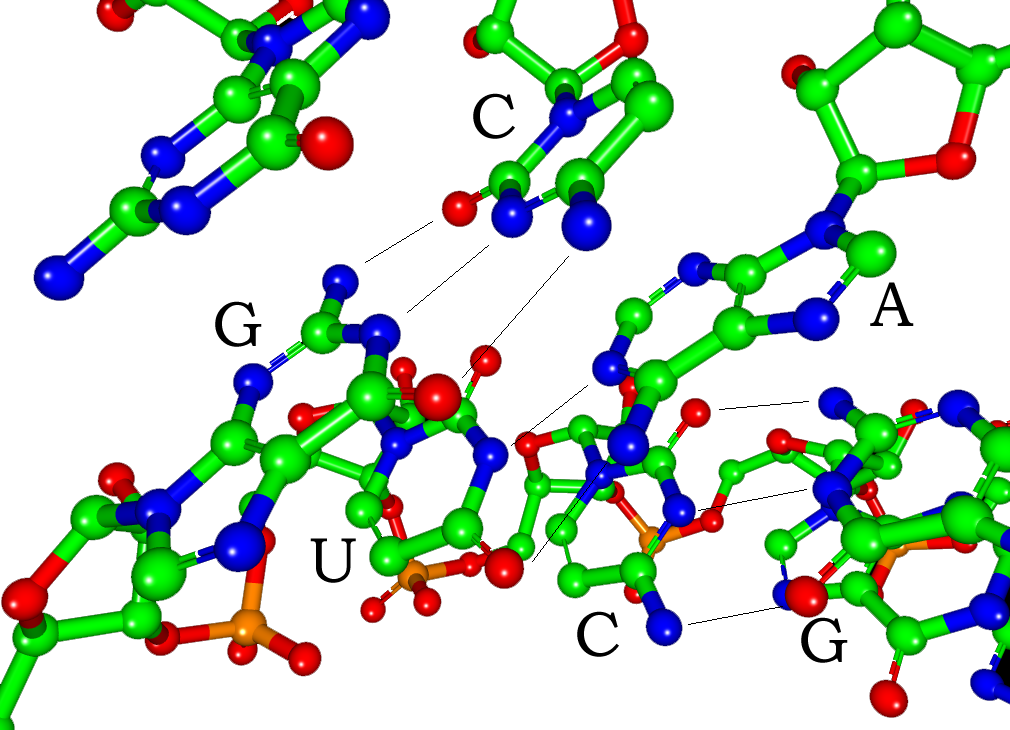
These unique structural features allow RNA to perform a wide variety of tasks that the more stable, rigid DNA double helix cannot. While DNA is the master blueprint, RNA is the versatile toolkit that carries out the instructions.
Let's test your understanding of nucleic acid architecture.
What type of bond connects the 5' carbon of one nucleotide to the 3' carbon of the next, forming the sugar-phosphate backbone of a nucleic acid?
Why are regions of DNA rich in Guanine-Cytosine (G-C) pairs more thermally stable than regions rich in Adenine-Thymine (A-T) pairs?
The specific chemical bonds and three-dimensional shapes of DNA and RNA are not just details; they are the foundation of how genetic information is stored, read, and put into action.