Modular Nuclear Reactors Explained
Introduction to Nuclear Energy
Splitting the Atom
At the heart of every atom is a nucleus, a dense core of protons and neutrons. Most of the time, this nucleus is stable. But for some heavy elements, like uranium, the nucleus can be split apart. This process, called fission, unleashes a tremendous amount of energy.
fission
noun
The act or process of splitting the nucleus of an atom into smaller parts, often producing free neutrons and photons, and releasing a very large amount of energy.
Nuclear fission doesn't happen on its own. It needs a trigger. Scientists start the process by firing a neutron at a uranium-235 atom, a specific isotope of uranium. When the neutron hits the nucleus, the uranium atom becomes unstable and splits into two smaller atoms, called fission fragments.
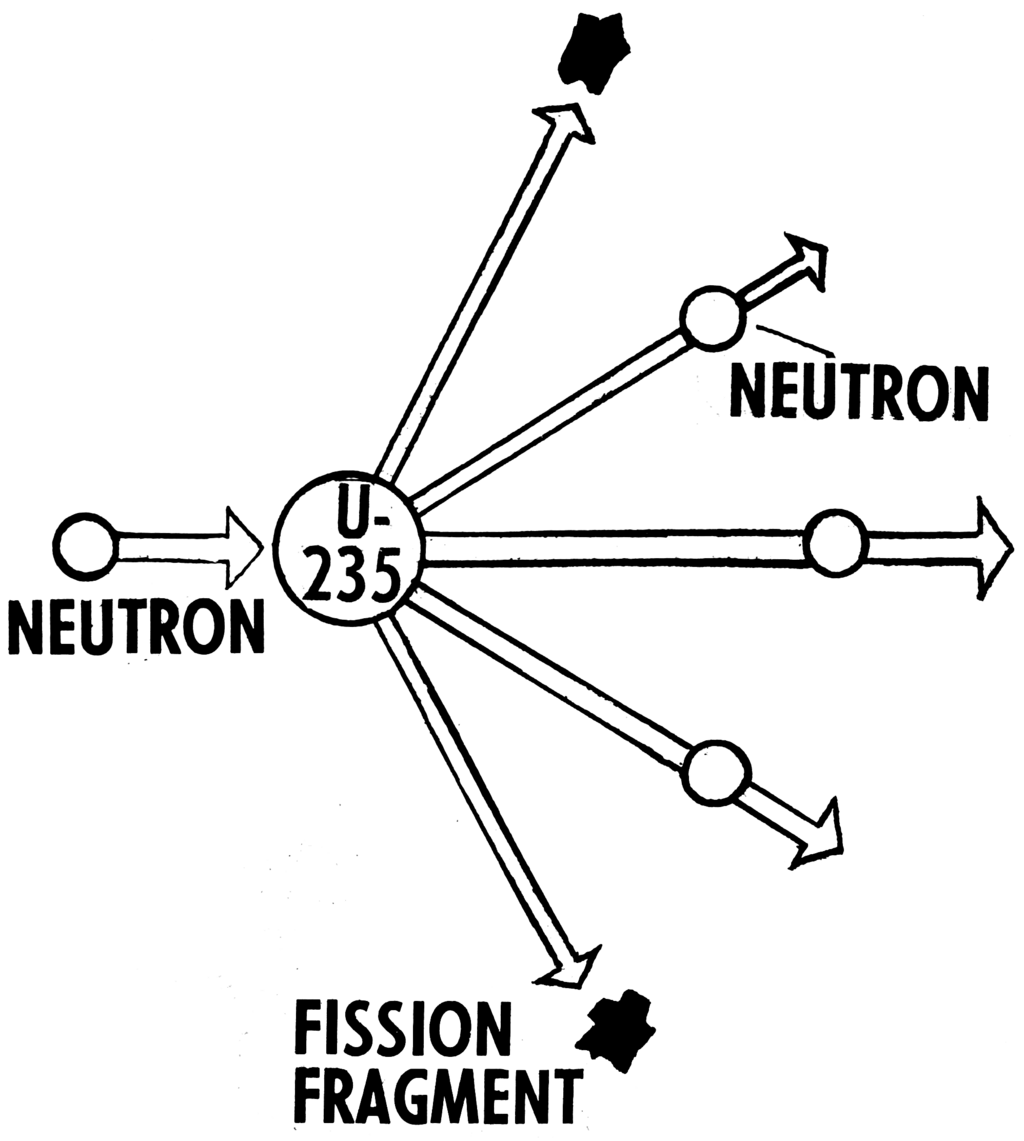
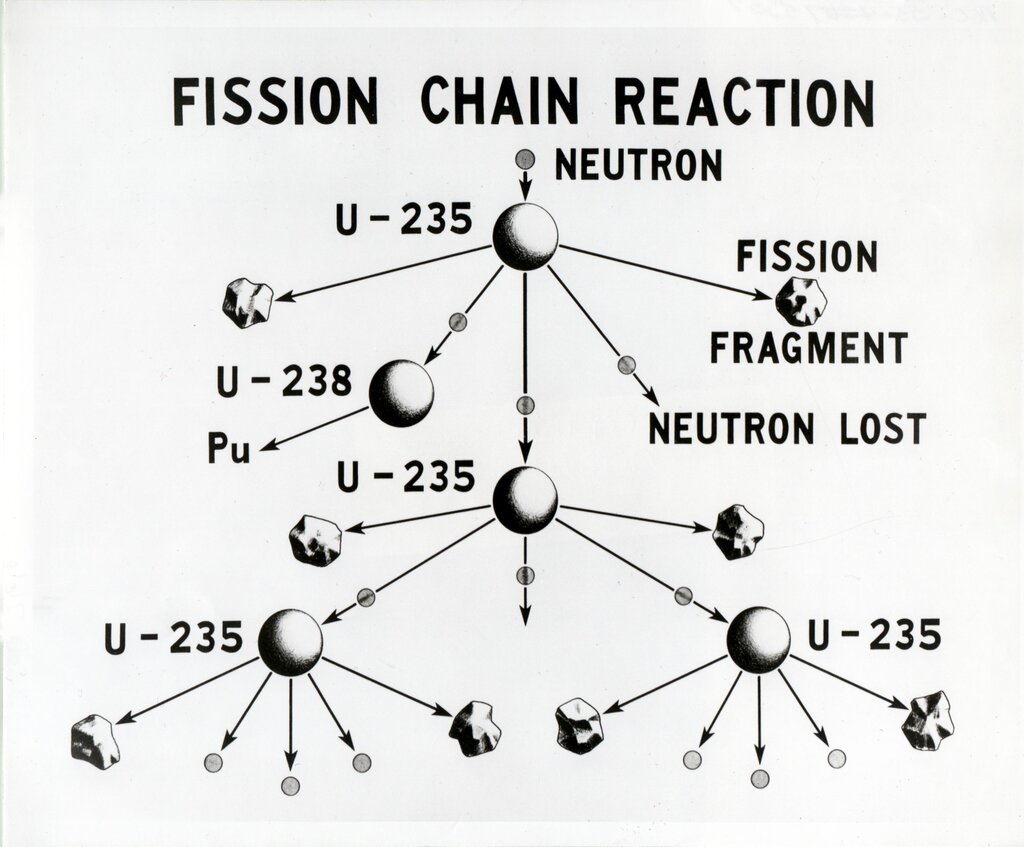
This splitting isn't clean. Besides the two smaller atoms, it also releases a huge burst of energy and two or three extra neutrons. These new neutrons can then fly off and strike other uranium atoms, causing them to split as well. This creates a self-sustaining chain reaction.
Where does all this energy come from? It comes from mass itself. If you were to weigh all the pieces after fission—the two smaller atoms and the extra neutrons—you'd find they weigh slightly less than the original uranium atom. This tiny amount of lost mass is converted directly into a massive amount of energy, as described by Albert Einstein's famous equation:
Here, is energy, is the lost mass, and is the speed of light. Because the speed of light is such a huge number, even a tiny bit of mass can create an incredible amount of energy.
Inside a Nuclear Reactor
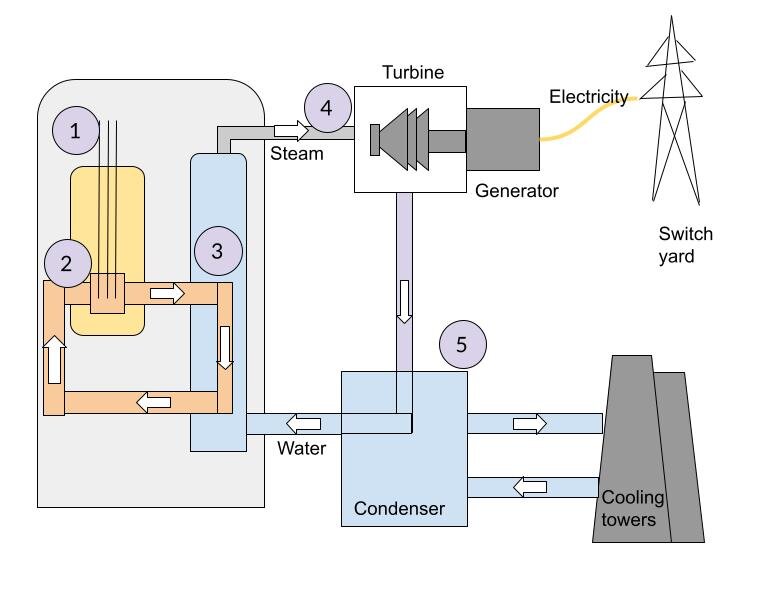
A nuclear power plant is essentially a sophisticated machine designed to control a fission chain reaction and use its energy to generate electricity. It harnesses the same process as a conventional power plant—using heat to boil water, create steam, and turn a turbine—but the heat source is nuclear fission instead of burning fossil fuels.
Nuclear power plants work by controlling a chain reaction to produce a steady stream of heat. This heat is what ultimately generates electricity.
The entire process takes place inside a series of strong, reinforced structures. Let’s look at the key components.
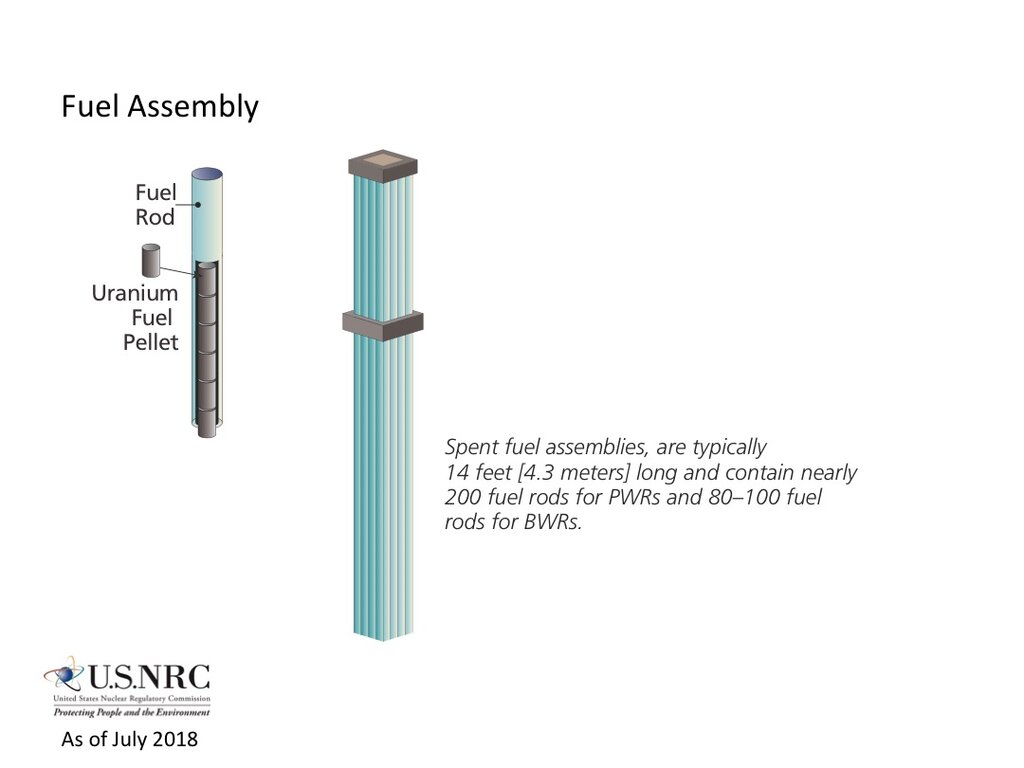
The heart of the plant is the reactor core, which contains the nuclear fuel. The fuel is typically uranium dioxide, formed into small ceramic pellets. These pellets are stacked into long, thin metal tubes called fuel rods. Hundreds of these rods are bundled together to form a fuel assembly, and a reactor core contains many of these assemblies.
To manage the chain reaction, operators use control rods. These rods are made of materials like boron or cadmium that absorb neutrons. When the control rods are lowered into the core, they soak up neutrons and slow the chain reaction. Raising them allows more neutrons to strike uranium atoms, speeding it up.
By precisely positioning the control rods, operators can maintain the reaction at a critical state, where it produces a constant, manageable amount of heat.
The intense heat generated by fission needs to be carried away. This is the job of the coolant, which is usually water. It flows through the reactor core, absorbing heat from the fuel rods. This superheated water is then used to boil another circuit of water, creating high-pressure steam. This steam is directed at a turbine, causing its blades to spin at high speed. The turbine is connected to a generator, which converts the mechanical energy of the spinning turbine into electricity.
Why Nuclear?
Traditional nuclear power plants are a powerful source of electricity. The fuel, uranium, is incredibly energy-dense. A single uranium fuel pellet, about the size of a gummy bear, contains as much energy as a ton of coal, 149 gallons of oil, or 17,000 cubic feet of natural gas.
Because they don't burn anything, nuclear plants don't produce greenhouse gases like carbon dioxide during operation. This makes them a key tool in the effort to generate clean, carbon-free electricity on a massive scale. They can also operate continuously for long periods, providing a reliable source of power that isn't dependent on weather conditions like solar or wind.
Now that you understand the basics of nuclear fission and power plants, let's test your knowledge.
What is the process of splitting a heavy nucleus, like uranium, into two smaller nuclei called?
In a nuclear power plant, what is the primary function of the control rods?