Modes of Nutrition Explained
Introduction to Nutrition
What is Nutrition?
Every living thing, from the smallest bacterium to the largest blue whale, needs fuel to survive. This fuel provides energy for movement, growth, and repairing damage. The process of taking in and using this fuel is called nutrition.
Nutrition
noun
The process by which an organism takes in food and uses it for energy, growth, and maintaining life.
Think of it like a car. A car needs gasoline to run its engine, move its wheels, and power its lights. Without gas, it's just a stationary piece of metal. Similarly, organisms need nutrients from food to power their cellular processes. These nutrients are broken down to release energy or used as building blocks to create new cells and tissues.
Two Paths to Food
While all organisms need food, they don't all get it the same way. Life on Earth has evolved two main strategies for nutrition. Some organisms make their own food, while others get it by eating other living things.
Organisms that make their own food are called autotrophs. Those that consume other organisms are called heterotrophs.
The word autotroph comes from Greek roots: auto meaning "self" and troph meaning "nourishment." These are the self-feeders. Plants are the most famous example. They use energy from sunlight to convert simple substances like water and carbon dioxide into energy-rich sugars. This process, photosynthesis, forms the foundation of most food chains on the planet.
Heterotrophs, on the other hand, get their nourishment from hetero, or "other" sources. This group includes all animals, fungi, and most bacteria. They can't produce their own food, so they must eat plants or other animals to get the energy and building blocks they need to survive.
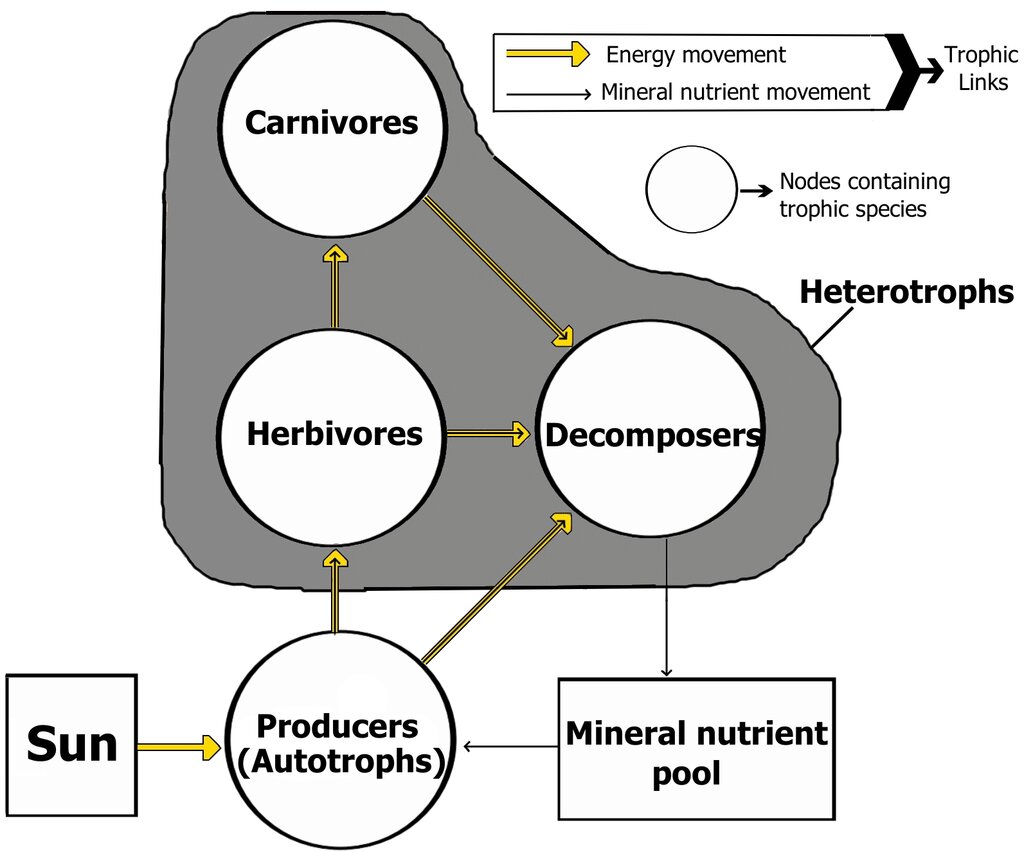
This fundamental difference splits the living world into producers and consumers. Autotrophs produce the food, and heterotrophs consume it. Here is a simple breakdown:
| Feature | Autotrophs | Heterotrophs |
|---|---|---|
| Food Source | Produce their own food | Consume other organisms |
| Energy Source | Light, or chemical reactions | Organic compounds from other life |
| Common Name | Producers | Consumers |
| Examples | Plants, algae, some bacteria | Animals, fungi, most bacteria |
Understanding this distinction is the first step in exploring the intricate ways that energy and nutrients move through ecosystems.