Modernize Your UK Electrical Contracting Business
Assess Current Business Performance
Gauging Your Business's Health
Before you can plan for the future, you need a clear and honest picture of where you stand right now. Assessing your business's performance is like a regular health check-up. It's not about finding faults, but about understanding what's working well and where there are opportunities to improve. This process gives you a solid baseline, a starting point from which all future strategies can grow.
Start with the Numbers
The most straightforward way to begin is by looking at your company's financials. These documents tell the story of your business in numbers, offering an objective view of its health. You don't need to be a certified accountant, but you should be familiar with the three core financial statements.
- The Income Statement shows your revenues and expenses over a period, revealing your profitability.
- The Balance Sheet provides a snapshot of your assets, liabilities, and equity at a single point in time.
- The Cash Flow Statement tracks how cash is moving in and out of the company from operations, investing, and financing.
Look through and analyze balance sheets, income statements, budgets, and cash flow reports to get a handle on the way money is moving into, through, and out of the company.
These statements help you calculate key financial ratios that measure performance. For example, profitability ratios (like gross profit margin) tell you how well you're turning revenue into profit. Liquidity ratios (like the current ratio) show if you can cover your short-term debts. Comparing these figures to past periods and industry averages tells you whether you're improving and how you stack up against the competition.

Look Beyond the Balance Sheet
Numbers only tell part of the story. You also need to assess your daily operations, your customers' happiness, and your position in the market.
Start with your operational workflows. How does work get done in your company? Map out the key processes, from making a sale to delivering the product or service. Look for bottlenecks, redundancies, or steps that cause delays. The goal is to see your operations as a system and identify points of friction.
Next, evaluate client satisfaction. Are your customers happy? Why do they choose you, and what makes them leave? You can gather this information through surveys, reviews, and direct conversations. Understanding customer perceptions is critical because a loyal customer base is one of the most valuable assets a business can have.
Finally, analyze your market position. Who are your main competitors? What are they doing well? What are their weaknesses? Understanding the competitive landscape helps you see where you fit in and identify opportunities to differentiate yourself. This isn't about copying others, but about understanding the environment you operate in.
Putting It All Together
Once you've gathered information on your finances, operations, customers, and market, you can bring it all together using a SWOT analysis. This framework helps you organize your findings into a clear, actionable format.
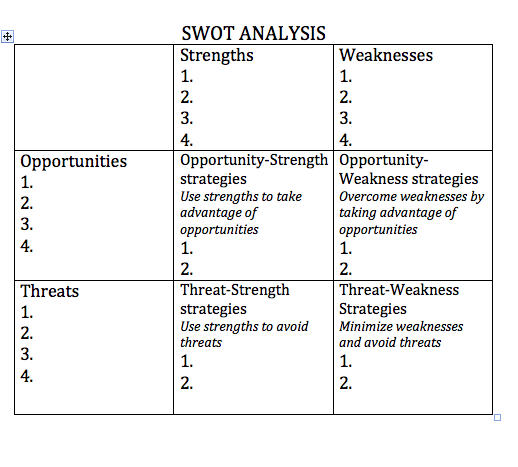
SWOT stands for Strengths, Weaknesses, Opportunities, and Threats.
- Strengths are internal attributes that give your business an advantage. This could be a strong brand reputation, a talented team, or efficient processes you identified in your workflow assessment.
- Weaknesses are internal factors that put you at a disadvantage. Examples might include high debt (from financial analysis) or poor customer service (from client feedback).
- Opportunities are external factors you could use to your advantage. This might be a new market trend, a competitor's misstep, or an unmet customer need.
- Threats are external factors that could harm your business, such as new regulations, a changing economy, or a powerful new competitor.
Force yourself to think through the implications of the factors you list in your strengths, weaknesses, opportunities and threats, and what they each mean for your business.
Completing this analysis gives you a comprehensive snapshot of your business's current state. It provides the clarity needed to make informed decisions and build a strategy that leans into your strengths, addresses your weaknesses, seizes opportunities, and defends against threats.
Ready to test your knowledge? This quiz will help you check your understanding of the core concepts for assessing business performance.
What is the primary purpose of assessing your business's current performance?
In a SWOT analysis, a major new competitor entering your market would be classified as a(n) ____.
By regularly performing these assessments, you stay connected to the reality of your business and the market, ensuring you can adapt and thrive.