Modern Web Architecture for Founders
Modern Tech Stacks
Speed vs. Scalability
Every new product starts with a fundamental trade-off: Do you build it fast, or do you build it to last? Building fast lets you test your idea with real users quickly. This is the heart of a Minimum Viable Product (MVP). Building to last, or for scalability, means creating a system that can handle millions of users without breaking a sweat. It’s robust, but also slow and expensive to create.
For an early-stage project, speed almost always wins. The goal is to validate your core idea before you run out of money. You don't need a system that can support a million users on day one if you only have ten. This choice directly influences your 'tech stack', the set of technologies used to build your application.
To ensure a successful MVP, choosing the right tech stack is crucial, as it forms the foundation of your product's capabilities and scalability.
Think of your web application as a restaurant. You have three main parts: the dining area, the kitchen, and the pantry. In the tech world, this is the Frontend-Backend-Database triad.
Frontend: This is your restaurant's dining area. It's everything the user sees and interacts with: buttons, dashboards, and text. It's built with frameworks like React or Next.js to create a smooth, responsive experience.
Backend: This is the kitchen. When a user clicks a button (places an order), the request goes to the backend. The backend contains the business logic, processing the request, figuring out what to do, and communicating with the pantry.
Database: This is the pantry. It stores all the crucial information: user accounts, course content, progress data, etc. The backend fetches ingredients (data) from the database to prepare the response, which is then sent back to the frontend for the user to see.
The Rise of BaaS
Traditionally, building a backend was a huge task. You had to set up servers, manage databases, and write code for user authentication, file storage, and more. This required hiring specialised, expensive developers (DevOps engineers) from day one. It was like building your restaurant's kitchen and pantry from scratch.
Now, there’s a better way for MVPs: (BaaS). BaaS providers give you a ready-made backend. They handle the servers, database management, and common features like user sign-ups and logins 'out of the box'.
Using a BaaS is like leasing a fully equipped, professionally managed kitchen for your restaurant. You don't have to build it; you just show up and start cooking.
This approach is perfect for MVPs because it's fast and cost-effective. You can launch a product without a dedicated backend team, saving precious time and capital.
The Modern MVP Stack
The combination of Next.js, Vercel, and Supabase has become a popular 'go-to' stack for building modern web applications, especially MVPs.
- Next.js: A frontend framework for building the user interface. It’s known for high performance and a great developer experience.
- Supabase: A BaaS provider. It gives you a database and all the essential backend features through an easy-to-use interface. It's the kitchen and pantry, pre-built.
- Vercel: A deployment platform created by the makers of Next.js. Think of it as the service that takes your finished application and makes it live on the internet for everyone to see, with zero configuration.
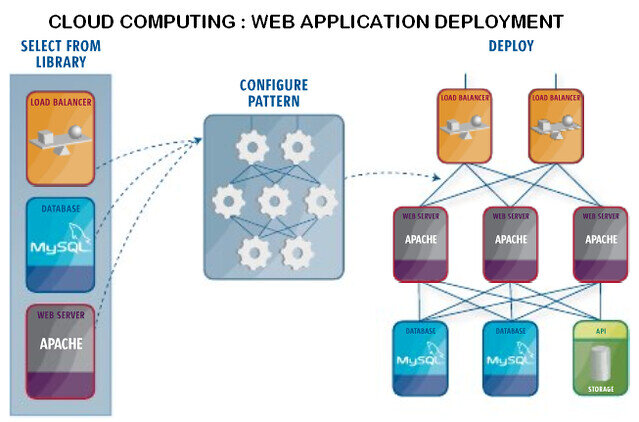
This trio works together seamlessly. Your Next.js frontend runs on Vercel and talks to your Supabase backend. The result? You can build and launch a feature-rich, scalable application incredibly quickly, often without writing a single line of traditional backend code. This lets you focus on what truly matters: building the right product for your users.
Is Your Stack Over-Engineered?
As a founder, you might hear developers propose complex architectures with terms like 'microservices', 'Kubernetes', or 'service mesh'. While powerful, these technologies are designed to solve problems for massive, established companies. For an MVP, they are almost always a form of over-engineering.
It’s like being told you need an industrial-grade food processing plant with a global logistics network just to open your first local cafe. It's expensive, slow, and completely unnecessary for testing whether people like your coffee.
| Product Stage | Good Tech Choice | Bad Tech Choice (Over-Engineered) |
|---|---|---|
| MVP / Idea Validation | Next.js + Vercel + Supabase (or similar BaaS) | Custom backend with microservices, Kubernetes |
| Growth / Scaling | Evolve the BaaS, maybe add custom functions | Rebuilding everything from scratch 'just because' |
| Mature / Enterprise | A mix of BaaS and custom microservices | Sticking to a restrictive MVP architecture |
If a developer suggests a complex stack for your MVP, ask them one simple question: "How does this help us launch faster and test our core idea with users?"
Often, a simpler stack built for speed is the right answer. Choosing the right technology for your stage is one of the most important decisions you'll make.
Now, let's test your understanding of these core architectural concepts.
What is the primary trade-off an early-stage project faces when choosing its initial technology?
In the restaurant analogy for a web application, what does the 'pantry' represent?
Understanding these trade-offs is key to guiding your product's technical strategy without needing to write a line of code yourself.