Modern Urban Planning and Strategic Zoning
Post-Zoning Urbanism
From Separation to Form
For decades, city planning followed a simple rule: keep things separate. This approach, known as Euclidean zoning, carved cities into distinct districts for living, working, and shopping. It was a proscriptive system, focused on prohibiting specific land uses in certain areas. While it helped organize industrial-era cities by keeping factories away from homes, it also baked in car dependency and discouraged vibrant, walkable neighborhoods.
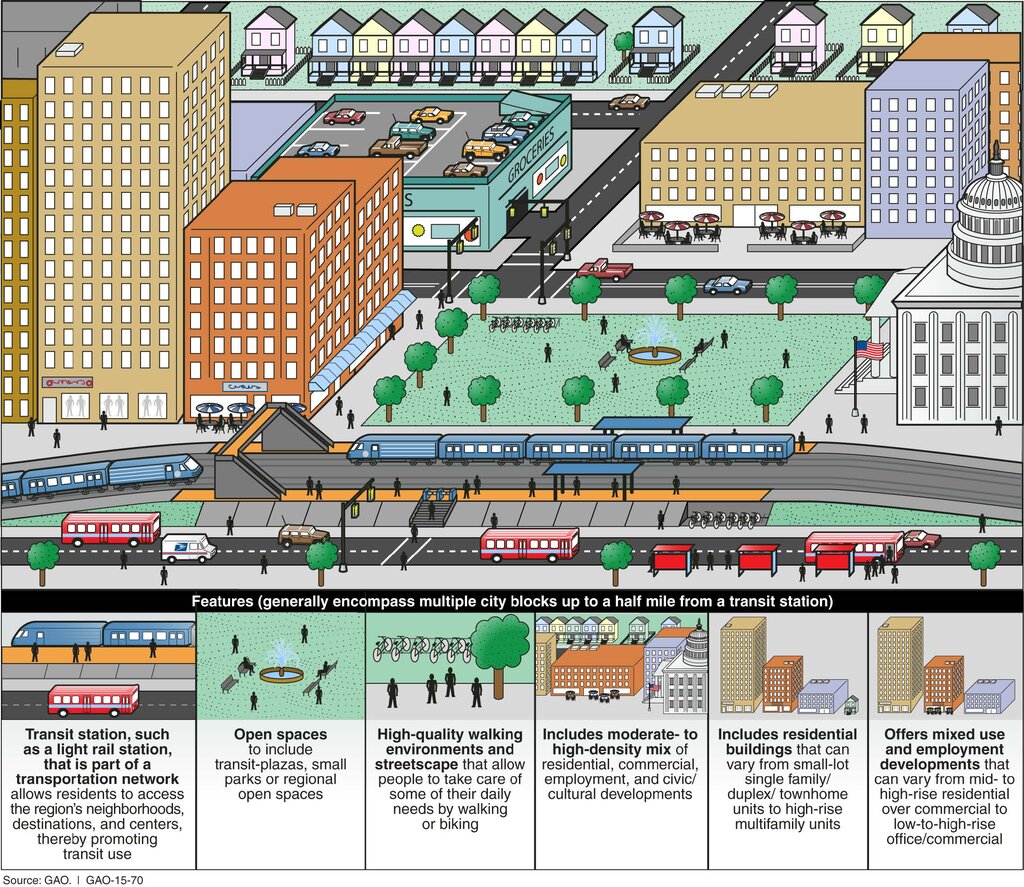
Today, many urban planners are moving beyond this rigid separation. The focus is shifting from what happens inside a building to how that building shapes the public space around it. This is the core of post-zoning urbanism: a move from regulating use to regulating form. Instead of just banning a shop from a residential street, planners now ask how a building, regardless of its use, can contribute to a lively, pedestrian-friendly environment.
The big philosophical shift is this: instead of asking “How many units are you allowed?” the city now asks “Does the building fit the neighborhood in size and form?”
This shift is most clearly seen in the adoption of Form-Based Codes (FBCs). Unlike Euclidean zoning, FBCs are prescriptive. They don't just forbid what's undesirable; they actively dictate the desired physical character of a place. Think of it like a recipe. A Euclidean code might list ingredients you can't use, while a Form-Based Code provides a detailed recipe for the cake you want to bake. It specifies building heights, setbacks from the street, window placement, and the location of entries to ensure new development creates a predictable and coherent public realm.
A key tool within FBCs is the concept of Transect Zones, which organize a community into a series of distinct habitats, from rural preserves to the dense urban core. Each zone has its own specific standards for form and density, creating a predictable transition from countryside to city center. This approach ensures that a new three-story apartment building feels appropriate in a bustling downtown but not in a neighborhood of single-family homes.
Predictability and Its Price
The greatest advantage of Form-Based Codes is predictability. When a code regulates the physical form of buildings, residents and developers have a much clearer picture of what their neighborhood will look and feel like in the future. This reduces contentious public hearings and provides certainty for investment. It ensures that the —the shared spaces like streets, sidewalks, and parks—is shaped intentionally to be comfortable, safe, and engaging for people.
However, this predictability requires a significant upfront investment. Crafting a Form-Based Code is a complex, community-intensive process. It involves workshops, detailed visual surveys, and extensive public discussion to create a shared vision for the community's physical future. This can be more time-consuming and expensive than simply updating a list of permitted uses in a traditional zoning ordinance.
Hybrid Approaches
Because a complete overhaul is so demanding, many cities adopt a hybrid approach. They keep their underlying Euclidean zoning but apply Form-Based Codes as "overlay districts" in specific areas targeted for change, such as a downtown core, a historic neighborhood, or a new transit corridor.
Denver, for example, transitioned its entire citywide zoning code in 2010 to a context- and form-based system. Instead of dozens of disparate use-based zones, the new code established neighborhood contexts, such as "suburban," "urban edge," or "general urban," each with its own set of predictable building forms. This created a more predictable built environment while still allowing for a mix of uses within those forms. It was a massive undertaking, but it provides a blueprint for how a large American city can move toward a more sophisticated, form-centric regulatory framework.
By blending prescriptive and proscriptive rules, cities can tailor their regulations to achieve specific goals, fostering the walkable, mixed-use neighborhoods that are increasingly in demand without discarding their entire regulatory structure at once.
What is the primary focus of traditional Euclidean zoning?
Which statement best describes the fundamental difference between a Form-Based Code (FBC) and a traditional Euclidean zoning code?