Modern Steel Manufacturing and Industrial Metallurgy
Primary Steelmaking Routes
Two Paths to Steel
Modern steel production follows two main industrial paths: the integrated route, using a Basic Oxygen Furnace (BOF), and the mini-mill route, which relies on an Electric Arc Furnace (EAF). The choice between them isn't arbitrary. It's a strategic decision based on available raw materials, energy costs, and the specific quality of steel required. Both methods transform iron into steel, but they start at very different points and use fundamentally different energy sources to get the job done.
The Integrated Route (BOF)
The integrated route is a large-scale operation that begins with iron ore. After being processed in a blast furnace, the ore becomes molten, carbon-rich iron known as pig iron or hot metal. This liquid iron is the primary charge for the Basic Oxygen Furnace.
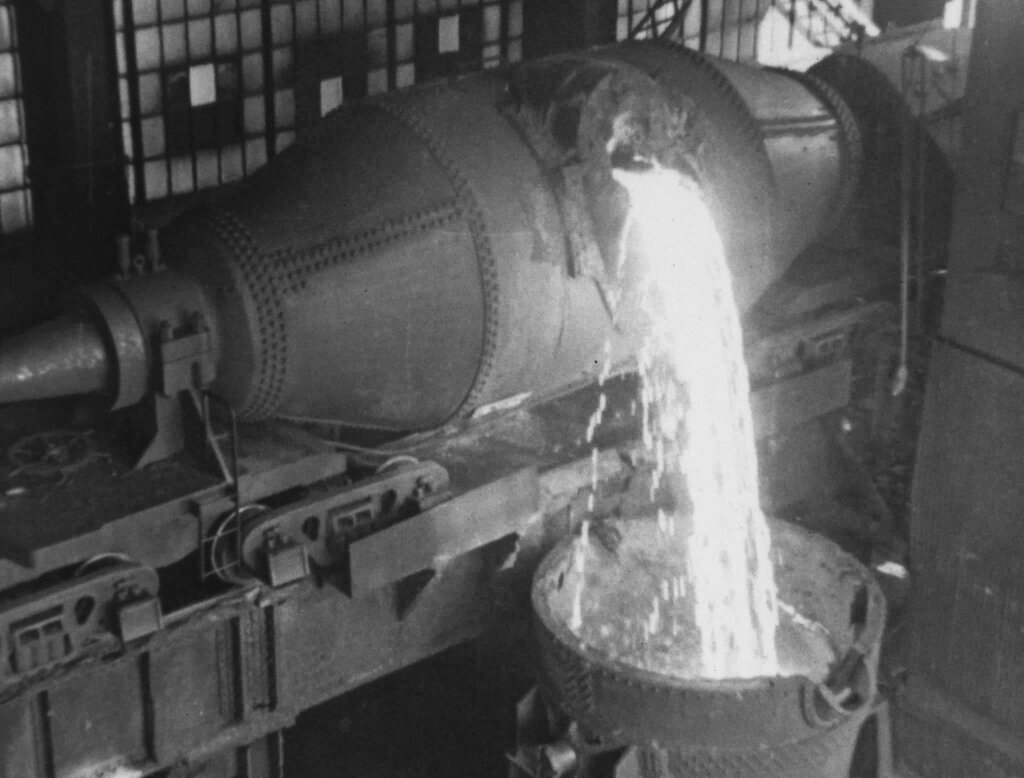
Inside the BOF, a water-cooled lance is lowered to just above the molten bath, blasting a jet of high-purity (99.5%) oxygen onto the surface at supersonic speeds. This triggers a series of rapid, exothermic oxidation reactions. The oxygen reacts with excess carbon, silicon, and manganese, removing them as impurities. The chemical heat from these reactions is so intense that it not only maintains the metal's liquid state but can also melt additional scrap steel, which is often added to the mix.
This entire process is incredibly fast. The time from charging the furnace with hot metal to tapping the finished liquid steel—the tap-to-tap time—is typically under 40 minutes. This efficiency is essential for the massive scale of integrated mills, which are complex industrial ecosystems designed for continuous, high-volume production.
The Mini-Mill Route (EAF)
Mini-mills offer a more flexible and less capital-intensive alternative. Instead of starting with iron ore, their primary feedstock is scrap steel, although they can also use (DRI). The Electric Arc Furnace uses electrical energy, not chemical energy, to do its work.
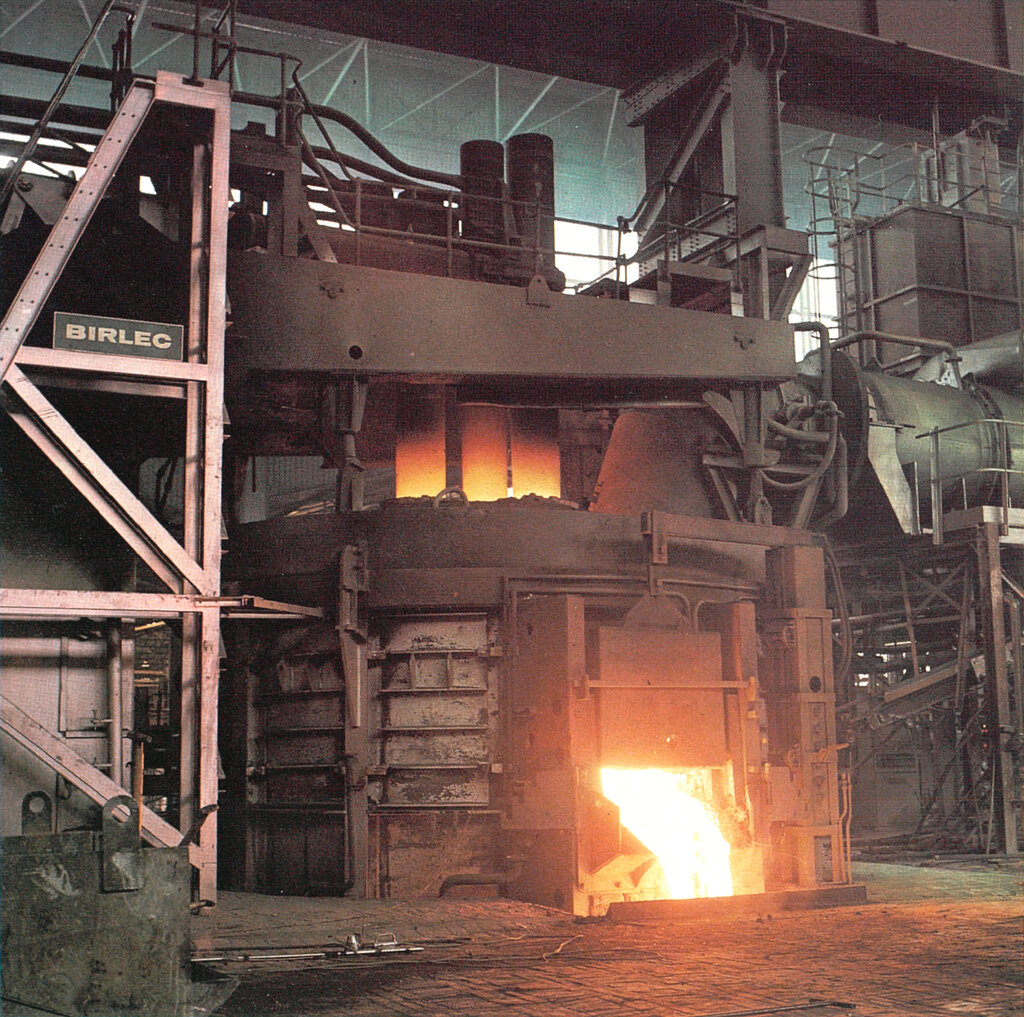
The process begins by loading scrap into the furnace. Three massive graphite electrodes are then lowered into the vessel. A high-voltage current is passed through them, creating powerful electric arcs that leap from the electrodes to the scrap metal. The electrical resistance generates immense heat, reaching temperatures of up to 3,000°C, which rapidly melts the charge.
EAF power profiles are carefully managed. The initial phase uses a long, high-voltage arc to bore down through the scrap pile. As the scrap melts and a liquid pool forms, the arc is shortened and the current is increased to efficiently transfer heat into the bath. Oxygen may also be injected to provide some chemical heat and speed up refining. This combination of electrical and chemical energy makes the EAF a highly efficient melting machine.
Route Comparison
The choice between an integrated BOF mill and an EAF mini-mill involves significant trade-offs in logistics, cost, and environmental impact.
| Feature | Integrated Route (BOF) | Mini-Mill Route (EAF) |
|---|---|---|
| Primary Feedstock | Molten pig iron from ore | Scrap steel, DRI |
| Primary Energy | Chemical (carbon oxidation) | Electrical (arc) |
| Capital Cost | Very high | Moderate |
| Scale & Flexibility | Massive, less flexible | Smaller, more flexible |
| CO₂ Emissions | Higher (coke production) | Lower (uses recycled material) |
| Product Quality | Excellent for demanding applications | High quality, but sensitive to scrap purity |
Ultimately, regional factors often dictate which process dominates. A region with abundant iron ore and coking coal but limited scrap might favor integrated mills. Conversely, an area with a large supply of scrap and access to affordable electricity is ideal for EAF mini-mills. Both routes are vital, producing the vast quantities of steel that form the backbone of modern infrastructure.
What is the primary raw material used in the integrated steel production route?
The primary source of energy for melting metal in a Basic Oxygen Furnace (BOF) is the intense heat from electrical arcs.