Modern Standard Arabic A2
Arabic Script and Pronunciation
The Arabic Alphabet
First, a key difference from English: Arabic is written and read from right to left. It might feel strange at first, but you'll get used to it quickly.
The Arabic script is an abjad, which means it primarily consists of consonants. Vowels are handled a bit differently, as we'll see soon. There are 28 letters to learn.
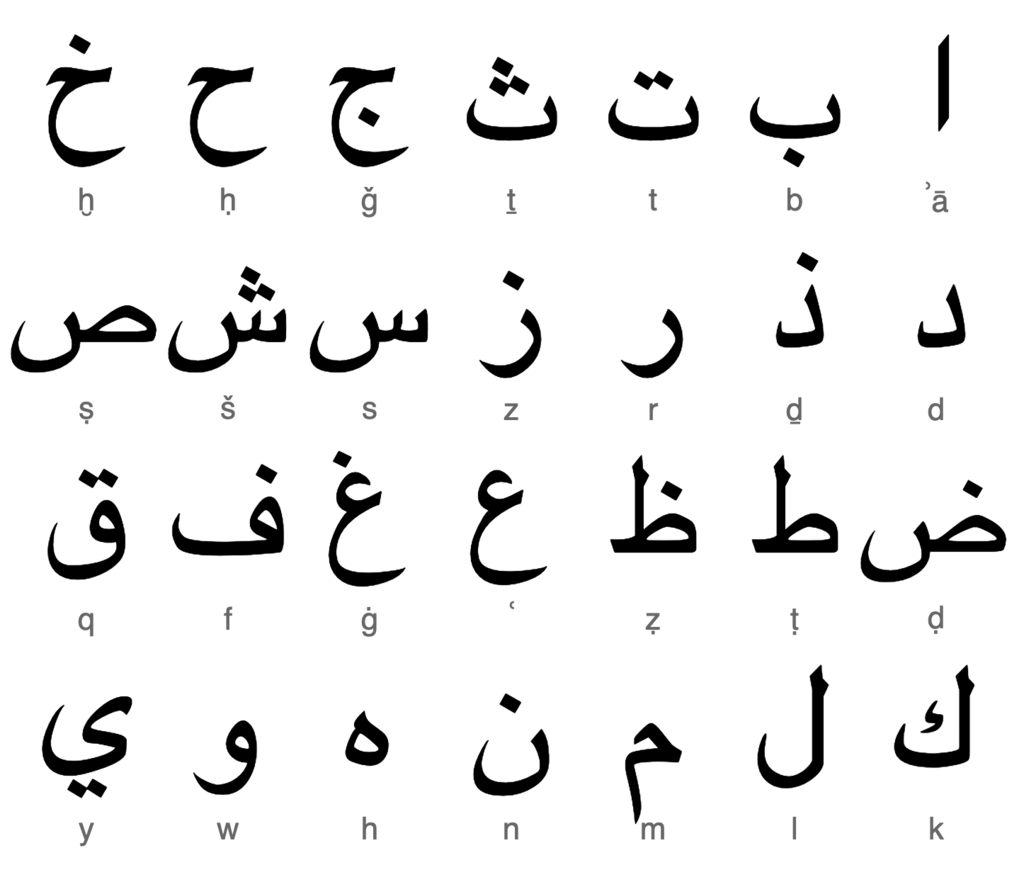
Let's look at the full alphabet. The table below shows each letter, its name, and the English sound it most closely resembles. Some sounds are unique to Arabic and don't have a direct English equivalent.
| Letter | Name | Sound |
|---|---|---|
| ا | Alif | ā (long a, as in 'car') |
| ب | Bāʾ | b |
| ت | Tāʾ | t |
| ث | Thāʾ | th (as in 'think') |
| ج | Jīm | j (as in 'jam') |
| ح | Ḥāʾ | A sharp 'h' sound from the throat |
| خ | Khāʾ | kh (like the 'ch' in Scottish 'loch') |
| د | Dāl | d |
| ذ | Dhāl | th (as in 'this') |
| ر | Rāʾ | A rolled r |
| ز | Zāy | z |
| س | Sīn | s |
| ش | Shīn | sh |
| ص | Ṣād | A heavy 's' sound |
| ض | Ḍād | A heavy 'd' sound |
| ط | Ṭāʾ | A heavy 't' sound |
| ظ | Ẓāʾ | A heavy 'dh' sound |
| ع | ʿAyn | A deep guttural sound with no English equivalent |
| غ | Ghayn | A gargling 'g' sound, like a French 'r' |
| ف | Fāʾ | f |
| ق | Qāf | A 'k' sound made further back in the throat |
| ك | Kāf | k |
| ل | Lām | l |
| م | Mīm | m |
| ن | Nūn | n |
| ه | Hāʾ | h |
| و | Wāw | w, or ū (long 'oo' sound) |
| ي | Yāʾ | y, or ī (long 'ee' sound) |
Letters Change Shape
In Arabic, letters usually connect to form words, much like cursive handwriting in English. Because of this, a letter’s shape changes depending on where it is in a word. Each letter has up to four forms:
- Isolated: When the letter stands alone.
- Initial: At the beginning of a word (connects to the left).
- Medial: In the middle of a word (connects on both sides).
- Final: At the end of a word (connects from the right).
Most letters connect on both sides, but a few are 'standoffish' and only connect to the letter on their right. Let's look at a few examples.
| Letter | Isolated | Initial | Medial | Final |
|---|---|---|---|---|
| ب (Bāʾ) | ب | بـ | ـبـ | ـب |
| ج (Jīm) | ج | جـ | ـجـ | ـج |
| س (Sīn) | س | سـ | ـسـ | ـس |
| ع (ʿAyn) | ع | عـ | ـعـ | ـع |
| م (Mīm) | م | مـ | ـمـ | ـم |
Six letters never connect to the letter on their left: ا (Alif), د (Dāl), ذ (Dhāl), ر (Rāʾ), ز (Zāy), and و (Wāw). They have only isolated and final forms.
Notice how the letter that follows one of these six must use its initial form, even though it's in the middle of the word. For example, in the word دَرْس (dars, 'lesson'), the letter 'د' (d) doesn't connect to the 'ر' (r), and the 'ر' (r) doesn't connect to the 'س' (s). So, the 'س' (s) uses its initial form, even though it's the last letter.
Adding the Vowels
So where are the short vowels? In Arabic, they aren't letters themselves. Instead, they are small marks called ḥarakāt written above or below the consonants to tell you how to pronounce them.
In most everyday writing like newspapers and books, these marks are left out. Native speakers know which vowels to use from context. But for learners, and in texts like the Qur'an, they are essential. There are three main short vowels.
| Mark | Name | Sound | Example |
|---|---|---|---|
| ◌َ | Fatḥah | Short 'a' (as in 'cat') | بَ (ba) |
| ◌ِ | Kasrah | Short 'i' (as in 'sit') | بِ (bi) |
| ◌ُ | Ḍammah | Short 'u' (as in 'put') | بُ (bu) |
There's also a mark called a sukūn (◌ْ), which indicates no vowel. For example, بْ is just the 'b' sound.
Practicing the unique sounds like 'ع' (ʿayn) and 'ح' (ḥāʾ) is crucial. They come from deep in the throat. Try watching videos of native speakers and mimicking their mouth movements. Recording yourself can also help you compare your pronunciation to theirs.
Practice Articulation Points Try to focus on difficult sounds like ʿayn (ع), khāʾ (خ), ḥāʾ (ح), and qāf (ق). Use a mirror or record yourself to check your pronunciation.
Time to review what you've learned about the alphabet.
Now, let's test your knowledge with a few questions.
The Arabic script is an 'abjad', which means that:
An Arabic letter that can connect to letters on both its left and right sides would use its _______ form when it appears in the middle of a word.
Mastering the script is the first big step. Don't worry about being perfect right away. Consistent practice is the key to making it feel natural.