Modern Software Engineering Fast Track
Hardware Logic Foundations
The Computer's Post Office
Think of a computer's hardware as a giant, incredibly efficient post office. The software you use, from a web browser to a game, sends messages (instructions) to this post office. The workers inside don't think for themselves; they just follow a very strict set of rules to sort and deliver mail.
The main worker is the Central Processing Unit, or CPU. It's like the head mail sorter. It can't understand human language, like "show me a cat video." Instead, it needs instructions broken down into tiny, simple steps, like a recipe. The recipe is the software, also known as an algorithm. The ingredients for this recipe are pieces of data, which are stored in neatly organized boxes called memory.
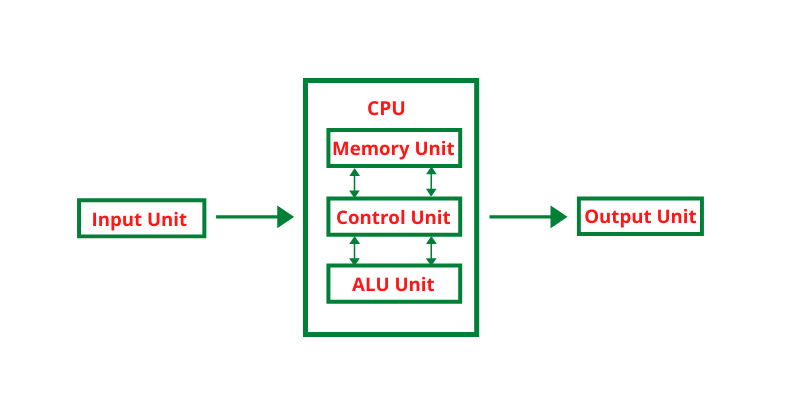
The CPU reads one step of the recipe, grabs the right ingredients from the memory boxes, performs the action, and then moves to the next step. It does this millions or even billions of times per second.
From Thoughts to Sparks
How does a human idea like "play this song" become a series of steps a CPU can follow? It's a process of translation. Programmers write instructions in high-level languages like Python or JavaScript, which are closer to human language. But the CPU only understands the most basic language possible: electricity being on or off.
To bridge this gap, the high-level code is translated down into low-level languages, which are much more detailed and closer to the hardware's design. Eventually, these instructions are converted into —a series of 1s and 0s. A '1' represents an electrical signal that is ON, and a '0' represents a signal that is OFF. That’s it. Every action your computer takes is ultimately just a complex pattern of on and off signals.
The CPU's Rhythm
So the CPU has its recipe, written in binary. How does it actually run the program? It follows a constant, looping rhythm called the which is the fundamental process of all modern computers.
- Fetch: The CPU fetches the next instruction from memory.
- Decode: The CPU decodes the instruction to understand what to do.
- Execute: The CPU performs the operation.
Imagine you're baking a cake. You fetch the next step from the recipe card ("Add eggs"). You decode it, realizing you need to get eggs and crack them into the bowl. Finally, you execute the action by actually adding the eggs. The CPU does this for every single step, from opening a file to rendering a character on screen.
Countertops and Pantries
One last piece of the puzzle is understanding where the CPU gets its instructions and data. Computers have two main types of places to hold information: memory and storage.
Memory, also known as , is like your kitchen countertop. It's where you put the ingredients you're actively working with. It's very fast to access, so the CPU keeps all the data and instructions for currently running programs here. The downside? When you turn off the power, everything on the countertop is cleared away.
Storage (like a hard drive or SSD) is the pantry. It's where you store ingredients for later. It's slower to access, but it holds information even when the power is off. When you open an application, the computer copies the necessary data from the pantry (storage) to the countertop (RAM) so the CPU can work with it quickly.
Understanding this flow—from high-level ideas to electrical signals, processed through the fetch-decode-execute cycle using fast memory—is the key to seeing how a silent box of metal and silicon brings software to life.
Time to check your understanding.
In the analogy of a computer being like a kitchen, what does RAM (Random Access Memory) represent?
What is the correct sequence of the CPU's fundamental operating cycle?
By grasping these core ideas, you've peeked behind the curtain to see how computers really work at their most fundamental level.