Modern Software Application Architecture
Application Environment Trade-offs
Choosing the Right Environment
Where an application lives is one of the most critical decisions in its design. This choice between web, mobile, and desktop environments dictates everything from user experience to performance and how you'll deliver updates. Each environment comes with a distinct set of rules, benefits, and limitations that shape what an application can ultimately do.
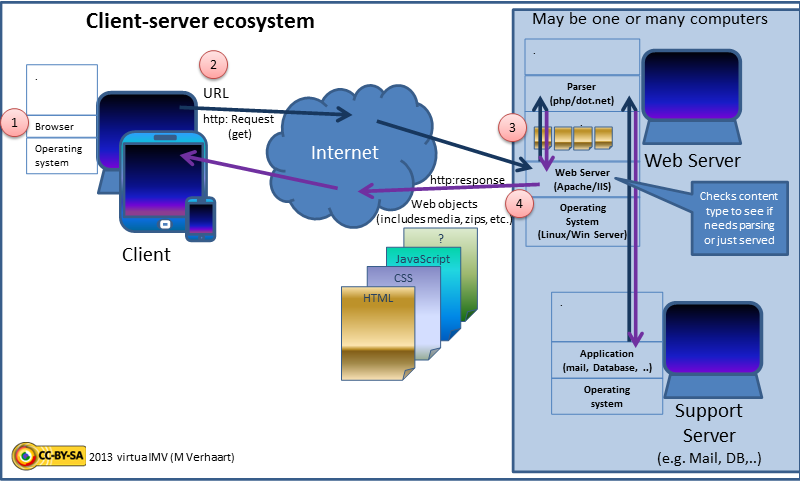
Web applications are defined by their reach. Accessible from any browser, they offer unparalleled convenience. Updates are pushed to the server and are instantly available to all users—no installation required. This ease of distribution is a massive advantage.
However, this accessibility comes at the cost of capability. Web apps run inside a browser sandbox, a security feature that isolates the application's code from the host operating system. This prevents a malicious website from accessing your personal files, but it also restricts legitimate applications. Direct access to hardware like advanced camera controls or local file systems is heavily limited. Performance is also tied to network latency; a slow connection means a slow application.
Mobile and Desktop Power
Mobile apps, by contrast, are installed directly onto a device. This gives them deep access to hardware features like the GPS, accelerometer, camera, and push notifications. They can also be designed to work offline by storing data locally, a crucial feature for users with intermittent connectivity.
The trade-off is the distribution model. Mobile apps must be submitted to an app store (like Apple's App Store or Google Play), where they undergo a review process. Updates aren't instantaneous; users must download and install them. This creates a fragmented ecosystem where different users might be running various versions of your app.
A mobile app will have very different design decisions then a tablet/web app, some of the poorest user interactions are when they are using the app on the device it was not planned for.
Desktop applications offer the highest level of performance and system control. They run directly on the operating system, free from a browser sandbox, and can interact with the file system, peripherals, and other applications with few restrictions. This makes them ideal for resource-intensive tasks like video editing, 3D modeling, and gaming.
Traditionally, desktop development required writing separate applications for each operating system (Windows, macOS, Linux). However, modern frameworks like Electron allow developers to build desktop applications using web technologies (HTML, CSS, JavaScript). This bridges the gap, offering a single codebase that can be deployed across multiple platforms, though sometimes with a performance penalty compared to a fully native application.
Native vs. Cross-Platform
The decision between mobile and desktop often leads to another choice: build natively or use a cross-platform framework?
Native development means writing code specifically for one platform, like Swift for iOS or Kotlin for Android. This approach delivers the best possible performance and guarantees access to the latest OS features as soon as they're released. The downside is cost and time—you need to maintain separate codebases and often require specialized development teams for each platform.
Cross-platform development, using frameworks like React Native or Flutter, allows you to write a single codebase that works on both iOS and Android, and sometimes even web and desktop. This significantly reduces development time and cost. However, it can introduce a layer of abstraction that may lead to performance bottlenecks or delays in supporting new native features.
The choice isn't just about technology; it's about business goals. A startup might use a cross-platform framework to launch quickly, while a high-performance gaming company will almost always choose native development.
| Feature | Web | Mobile | Desktop |
|---|---|---|---|
| Accessibility | High (any browser) | Medium (app store) | Low (manual install) |
| Performance | Network-dependent | High (native) | Highest |
| Hardware Access | Very Limited | High | Full |
| Offline Use | Limited | High | Full |
| Updates | Instantaneous | User-initiated | User-initiated |
Time to see what you've learned.
Which application environment is most constrained by a "sandbox" that limits its access to the host operating system's hardware and file system?
A key advantage of native mobile development (using Swift for iOS or Kotlin for Android) is that it offers the best possible performance and immediate access to the latest OS features.
Ultimately, there is no single "best" environment. The right choice depends entirely on the application's purpose, its target audience, and the resources available for development and maintenance.