Modern Separation Techniques Explained
Introduction to Separation Techniques
Why Separate?
Most things in nature are mixed. The air we breathe is a mix of nitrogen, oxygen, and other gases. The water in the ocean is a blend of salt, minerals, and H₂O. Even the food we eat is a complex combination of proteins, fats, and carbohydrates. In science, working with these mixtures can be tricky. To understand a single component, you first have to isolate it from everything else.
This is where separation techniques come in. They are physical methods used to isolate the components of a mixture. The goal isn't to change the substances chemically, but simply to untangle them from each other. Think of it like sorting your laundry. You separate the whites, darks, and colors based on a specific property, dye color, so you can wash them properly. Chemists and biologists do the same thing, but with molecules.
The Basis of Separation
Every separation technique exploits a difference in the physical or chemical properties of the components in a mixture. If two substances have the exact same properties, they are incredibly difficult to separate. Luckily, that's rarely the case. A few key properties are often used:
Size: Some molecules are larger than others. Filtration works on this principle, like a pasta strainer holding back noodles while letting water pass through. Boiling Point: Different substances boil at different temperatures. This is the basis for distillation, which is used to separate alcohol from water to make spirits. Solubility: This is how well a substance dissolves in another. You can separate sand from salt by adding water. The salt dissolves, but the sand doesn't. Charge: Molecules can have a positive, negative, or neutral charge. An electric field can be used to pull charged molecules in different directions, a technique called electrophoresis.
Common Methods
There are countless separation methods, each suited for different kinds of mixtures. Some are simple enough to do in a kitchen, while others require sophisticated lab equipment.
One of the most powerful and widely used techniques is chromatography. The basic idea is to have a stationary phase (a solid or a liquid) and a mobile phase (a liquid or a gas that moves). The mixture is placed in the mobile phase, which flows past the stationary phase. Components that stick more tightly to the stationary phase travel slower, while components that are more soluble in the mobile phase travel faster. This difference in speed causes the components to separate over time.
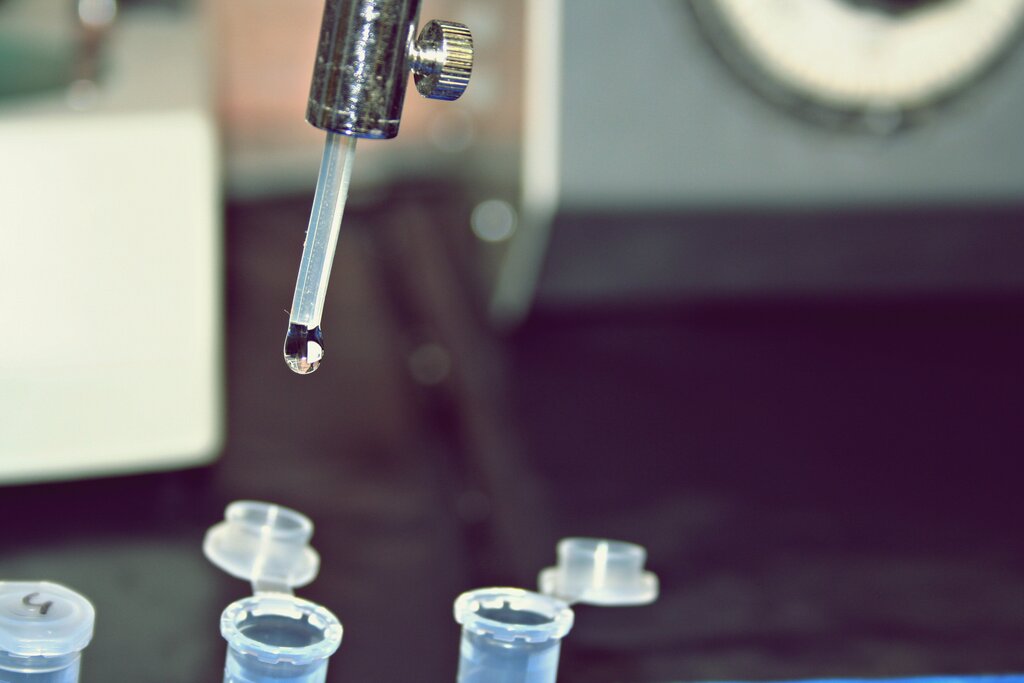
Another key technique, especially in biology, is electrophoresis. This method separates molecules like DNA, RNA, and proteins based on their size and electrical charge. The mixture is placed in a gel, and an electric field is applied. Molecules move through the gel at different speeds depending on their size and charge, separating into distinct bands.
Why It Matters
Separation is a fundamental step in both analysis and preparation. In analytical chemistry, the goal is often to determine what is in a sample and how much. For example, a sports doping agency will use separation techniques to find tiny amounts of banned substances in an athlete's urine.
In preparative applications, the goal is to purify a large amount of a substance for later use. Pharmaceutical companies must separate the active drug from any byproducts and impurities created during synthesis. The purity of a drug is critical for its safety and effectiveness.
From ensuring our food is safe to developing new medicines and solving crimes with DNA evidence, separation techniques are an invisible but essential part of modern science and technology.
By understanding how to isolate the individual parts of a mixture, scientists can study them in detail, purify them for use, and measure their presence with incredible accuracy. It's a foundational skill that opens the door to countless discoveries.