Modern Security Operations Mastery
Modern SOC Architectures
Choosing Your SOC Model
The days of a single, one-size-fits-all Security Operations Center are over. Today, organizations must choose an architecture that aligns with their budget, in-house expertise, and tolerance for risk. The decision boils down to a trade-off between control, cost, and access to specialized talent.
The three dominant models are In-house, Managed, and Hybrid. An in-house SOC provides maximum control and contextual awareness, but it's expensive to build and staff 24/7. A managed service, often called SOCaaS (Security Operations Center as a Service), offers immediate access to expert analysts and advanced tools for a predictable subscription fee, but you cede some operational control. The Hybrid model attempts to find a middle ground, often by outsourcing overnight monitoring while handling high-priority investigations internally.
| Model | Cost | Control | Expertise |
|---|---|---|---|
| In-house | High (CapEx & OpEx) | Maximum | Developed Internally |
| Managed (SOCaaS) | Predictable (OpEx) | Lower | Outsourced Specialists |
| Hybrid | Variable | Balanced | Shared Responsibility |
The Cloud-Native SOC
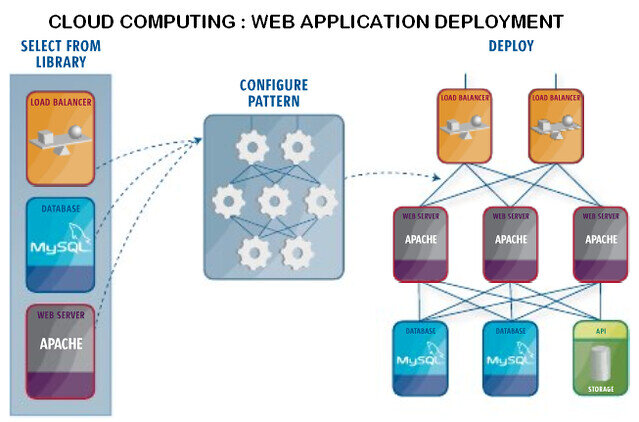
As infrastructure moves to the cloud, security must follow. A cloud-native SOC doesn't just monitor cloud assets; it's built using cloud principles. Instead of monolithic applications, it leverages and serverless functions to analyze security data elastically. This architecture is designed to scale up or down automatically, handling massive bursts of telemetry from cloud services without the need for fixed, on-premise hardware.
This paradigm relies on a new class of tools. Cloud Security Posture Management (CSPM) tools continuously scan for misconfigurations in cloud services. Cloud Workload Protection Platforms (CWPP) focus on securing the actual code running in containers and virtual machines. Increasingly, these are converging into Cloud-Native Application Protection Platforms (CNAPPs), which provide a single, integrated view of risk from development through to production.
The Unified Security Trio
The effectiveness of a modern SOC isn't just about individual tools, but how they integrate. The core of this ecosystem is the "Security Trio": SIEM, SOAR, and XDR. They are no longer siloed technologies but parts of a cohesive security fabric.
Next-generation Security Information and Event Management (SIEM) platforms have evolved beyond simple log collection. They now function as massive security data lakes, capable of ingesting and storing petabytes of telemetry from every corner of the enterprise.
This data lake fuels the other components. (Extended Detection and Response) provides the crucial layer of correlation. It pulls data not just from endpoints, but also from identity systems, cloud environments, and network traffic to piece together complex attack chains that would otherwise look like unrelated, low-priority events. When the SIEM or XDR platform detects a credible threat, it triggers the Security Orchestration, Automation, and Response (SOAR) platform. SOAR acts as the connective tissue, using pre-defined playbooks to automate response actions like isolating an infected machine, blocking a malicious IP address, or disabling a compromised user account.
Modern Architectural Realities
Beyond specific tools, modern SOCs are built on new principles. With applications and data scattered across multiple clouds and on-premise locations, the old idea of a secure network perimeter is obsolete. Today, identity is the perimeter. Security controls are centered around verifying user and device identities and granting access based on a principle of least privilege.
This shift brings its own challenges. When using hybrid clouds, data residency becomes a critical concern. Regulations like GDPR dictate where citizen data can be stored and processed, forcing architects to design systems that keep sensitive telemetry within specific geographic boundaries. Another significant challenge is tool sprawl. While the integrated trio is powerful, many SOCs are burdened with dozens of disconnected security tools. This increases complexity and contributes to analyst cognitive load, making it harder to spot real threats in a sea of alerts.
Time to test your knowledge of modern SOC concepts.
What is the primary trade-off an organization accepts when choosing a fully managed Security Operations Center (SOCaaS) over an in-house SOC?
A company is rapidly developing and deploying applications in containers and serverless functions. Which type of tool specifically focuses on securing these running application components?
Building a modern SOC involves a series of strategic trade-offs. By understanding the different models, the role of cloud-native architecture, and the power of an integrated toolset, organizations can design a security function that is both resilient and adaptable to future threats.