Modern Music Pedagogy and Instructional Design
Comparative Pedagogy
Four Philosophies of Music Education
There is no single 'right' way to teach music. During the 20th century, four major philosophies emerged, each with a unique approach to how we learn and internalize musical concepts. These methods, developed by Émile Jaques-Dalcroze, Zoltán Kodály, Carl Orff, and Shinichi Suzuki, offer different pathways to musicianship. Understanding their core ideas and trade-offs allows educators to choose and combine techniques that best suit their students' needs and their own teaching goals.
The Dalcroze Method: Feeling the Music
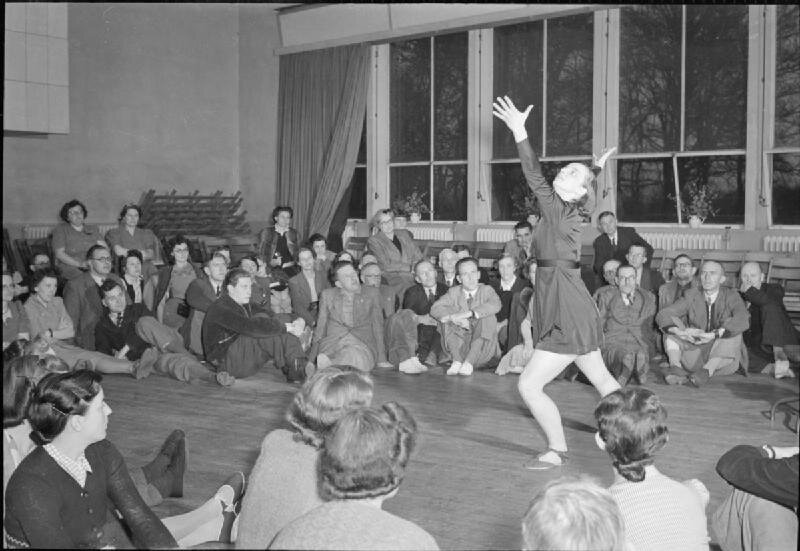
Émile Jaques-Dalcroze believed that the body is the first instrument. He noticed his conservatory students were technically skilled but lacked a deep, intuitive sense of rhythm. His solution was to connect music, movement, and the mind.
The core of his method is Eurhythmics, a practice where students respond to music with physical movement. For example, they might walk the beat, show the melody's contour with their arms, or change direction when the harmony shifts. The goal isn't dance, but to internalize musical concepts like rhythm, dynamics, and phrasing through physical experience. The student learns to feel music before they analyze it on a page.
The primary strength of the Dalcroze method is its ability to cultivate a profound and natural musicality. Students develop an excellent sense of rhythm and an instinctive understanding of musical expression. A potential limitation is that it places less initial emphasis on traditional notation and instrumental technique, which are often introduced after a strong rhythmic foundation is built through movement.
The Kodály Method: The Voice as the First Instrument
For Zoltán Kodály, the ultimate goal was universal music literacy. He believed that music education should be accessible to everyone, and the most accessible instrument is the human voice. His method is a highly structured, sequential approach aimed at teaching students to read, write, and think in music as fluently as they do in their native language.
Two key tools in the Kodály method are movable-do solfège and hand signs. In movable-do, the 'do' syllable is always the tonic, or home note, of the key. This helps students understand the relationships between notes within any key. Each solfège syllable is paired with a specific hand sign, creating a physical link to the pitch. This combination engages visual, aural, and kinesthetic learning channels simultaneously, making sight-singing much more intuitive.
The great strength of the Kodály approach is its unparalleled success in developing music literacy. Students often become strong sight-singers with a deep understanding of music theory. The main trade-off is its focus on vocal music first; instrumental instruction is typically delayed until students have achieved a certain level of vocal and theoretical competence.
Orff Schulwerk: Learning Through Play
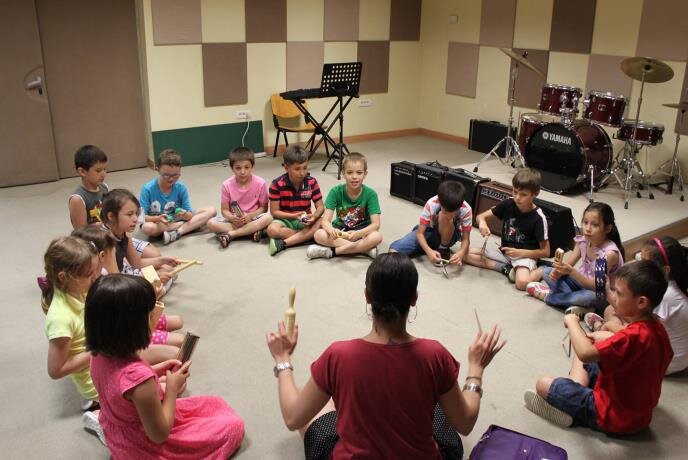
Carl Orff's philosophy is captured in the term Schulwerk, which translates to 'school work'. For Orff, however, this work was play. He believed that children learn music the same way they learn language: by listening, imitating, exploring, and improvising. The Orff classroom is a place of active creation, where music is combined with movement, drama, and speech.
The process begins with elements children already know, like nursery rhymes and folk songs. The curriculum is built around improvisation and composition. A key feature is the Orff instrumentarium: a set of specially designed percussion instruments like glockenspiels, xylophones, and metallophones with removable bars. This design makes it easy for even very young children to create pleasing harmonies and melodies without hitting 'wrong' notes.
Orff Schulwerk excels at fostering creativity, collaboration, and a joyful, confident relationship with music. It is highly inclusive and allows for immediate musical success. The trade-off is that it is less structured regarding formal theory and the development of traditional instrumental technique. The focus is on creative expression rather than technical perfection.
The Suzuki Method: The Mother Tongue Approach
Shinichi Suzuki observed that all children learn to speak their native language with ease and fluency. He asked: why not apply the same principles to learning a musical instrument? His Mother Tongue approach is built on this idea.
The method emphasizes starting at a very young age, often as early as two or three. Learning begins with listening. Just as a baby is surrounded by language, a Suzuki student is immersed in recordings of the music they will learn to play. Rote imitation comes before note reading. Parents play a crucial role, acting as the 'home teacher' by attending lessons and guiding practice. The environment is one of constant encouragement and positive reinforcement.
The Suzuki method's greatest strength is its ability to produce instrumentalists with a high level of technical proficiency and a beautifully developed ear from a very young age. Because note reading is delayed, students develop an exceptional ability to play by ear. The trade-off is that music reading skills are not the initial priority and must be introduced systematically later on. The heavy reliance on parental involvement can also be a challenge for some families.
| Method | Core Philosophy | Key Technique | Primary Strength | Potential Trade-Off |
|---|---|---|---|---|
| Dalcroze | Feel music through the body | Eurhythmics (Movement) | Deep rhythmic intuition | Less initial focus on notation |
| Kodály | Music literacy for all | Movable-Do Solfège, Hand Signs | Strong sight-singing skills | Vocally-centric; instruments later |
| Orff | Learn music like language, through play | Improvisation with Orff Instruments | Creativity, collaboration, accessibility | Less structured for formal theory |
| Suzuki | Learn music like a mother tongue | Listening, imitation, repetition | High technical skill, excellent ear | Note reading is introduced later |
Each of these methods offers a powerful framework for music education. None is inherently better than another; they simply prioritize different aspects of musicianship. A Dalcroze student might feel the music in their bones, a Kodály student can sing anything at sight, an Orff student can create music on the spot, and a Suzuki student can play with incredible technical command. The best educators often borrow from each, adapting their techniques to fit the specific goals they have for their students.
Which music education philosophy is built around the idea that the body is the first instrument, using movement to internalize concepts like rhythm, dynamics, and phrasing?
An educator designs a lesson where young children explore nursery rhymes using speech, movement, and improvisation on specially designed xylophones with removable bars. This approach is most characteristic of which philosophy?