Modern Man’s Traditional Skills
Mastering Necktie Knots
The Art of the Knot
Tying a necktie is a simple act, but tying it well is a skill. The right knot does more than just secure the tie; it communicates intention, complements your features, and completes your outfit. The knot's size, shape, and symmetry all play a role in the final look.
We will focus on two foundational knots: the lean and classic Four-in-Hand, and the bold, symmetrical Windsor. Understanding the mechanics of each allows you to choose the perfect knot for any occasion, collar, or tie.
The Four-in-Hand
The is the cornerstone of necktie knots. It's simple, quick to tie, and results in a slender, slightly asymmetrical knot. This subtle imbalance gives it a touch of effortless charm. Because of its narrow profile, it's best suited for button-down or standard point collars.
It's a forgiving knot that works well with thicker ties made from wool or grenadine, as it doesn't create too much bulk. The key is to keep the motions smooth and avoid pulling too tight until the final step.
Before you pull the knot tight, this is the moment to create the coveted tie dimple. Lightly pinch the fabric of the wide end just below the knot to form a small fold or cleft. As you slide the knot up to your collar, keep this pinch in place. The dimple adds a touch of sophistication and shows you've paid attention to detail. Finally, ensure the tip of the tie just touches the top of your belt buckle.
The Symmetrical Windsor
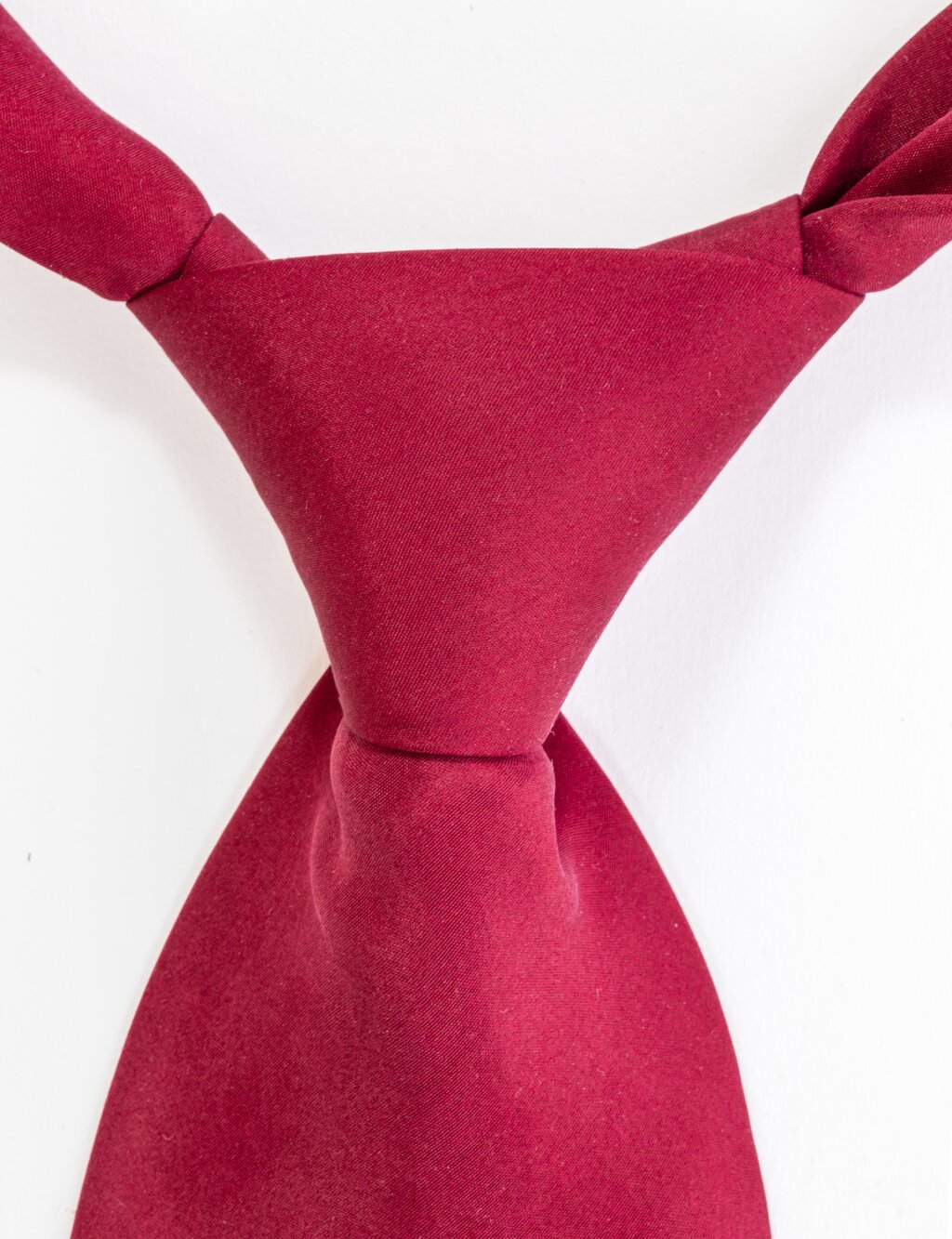
The is the Four-in-Hand's formal counterpart. It produces a wide, symmetrical, and substantial triangular knot. Its commanding presence makes it the ideal choice for shirts with wide-spread or cutaway collars, as it fills the larger space between the collar points.
This knot requires more of the tie's length and involves an extra wrapping step on each side, which is what creates its signature symmetry and heft. Because it's a bulkier knot, it's best for ties made from lighter materials like silk. A thick wool tie in a Full Windsor can look comically large.
A popular alternative is the Half-Windsor. It uses one fewer wrapping step, resulting in a knot that is smaller than a Full Windsor but larger and more symmetrical than a Four-in-Hand. It’s a versatile, medium-sized knot for most occasions.
Proportion and Pairing
Choosing the right knot is a matter of proportion. The goal is visual harmony. A large knot on a narrow collar looks choked, while a small knot on a wide-spread collar appears lost. Let the collar guide your choice.
| Collar Type | Recommended Knot(s) |
|---|---|
| Point / Button-Down | Four-in-Hand |
| Semi-Spread | Four-in-Hand, Half-Windsor |
| Spread / Cutaway | Half-Windsor, Full Windsor |
Beyond the knot, consider the tie's width. As a general rule, the width of your tie at its widest point should be similar to the width of your suit lapel. A slim tie pairs best with narrow lapels, while a wider tie complements a more traditional, wider lapel.
Finally, always check the length. The tip of the wide end should end at the top of your waistband or belt buckle. The narrow end should never hang lower than the wide end. Achieving the right length with a Windsor may take a few tries, as it uses more fabric.
Which knot is best suited for a shirt with a wide-spread collar and why?
What is a defining characteristic of the Four-in-Hand knot?