Modern Identity Security Advancements
Identity Security Fundamentals
What Is Identity Security?
In the digital world, your identity is more than just your name. It's your username, your email address, and the collection of data that represents you online. It’s how websites, apps, and networks know who you are. Identity security is the practice of making sure that only the right people can access the right things at the right time.
Think of it like the security for your home. You have a key that proves you're allowed to enter. Identity security provides a digital key for every user, ensuring that only authorized individuals can access sensitive information, company resources, or personal accounts. Without it, anyone could pretend to be you and walk right in.
Identity is your security perimeter.
Protecting these digital identities is crucial. A compromised identity can lead to data breaches, financial loss, and damaged reputations for both individuals and organizations. The goal is to create a secure environment where every user's identity is verified and their access is appropriate for their role.
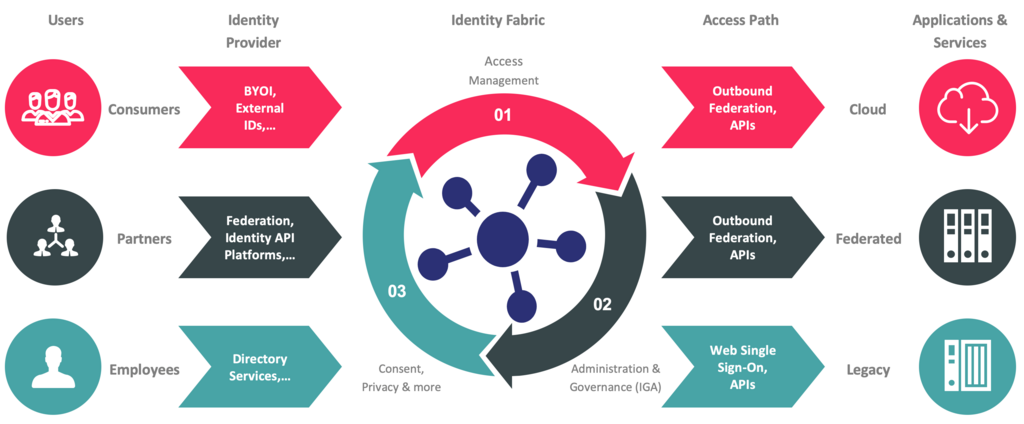
Proving You Are You
Before any system can grant you access, it needs to confirm your identity. This process is called authentication. It's the digital equivalent of showing your ID to a security guard. Authentication works by asking for proof, which typically falls into one of three categories.
| Factor | Description | Examples |
|---|---|---|
| Something You Know | Information that only you should know. | Password, PIN, answer to a secret question |
| Something You Have | A physical object in your possession. | Smartphone (for receiving a code), key fob, smart card |
| Something You Are | A unique biological trait. | Fingerprint, facial scan, voice recognition |
Using only one of these factors, like a password, is known as single-factor authentication. While common, it can be vulnerable. If someone steals your password, they can easily impersonate you.
That's why many systems now use multi-factor authentication (MFA). MFA requires you to provide proof from two or more of these categories. For example, you might enter your password (something you know) and then enter a code sent to your phone (something you have). This layered approach makes it much harder for an unauthorized person to gain access.
Controlling Access
Once your identity is authenticated, the next step is determining what you're allowed to do. This is called access control.
Imagine you have a keycard for an office building. Authentication is swiping the card to get through the front door. Access control determines which specific rooms inside the building your card will unlock. You might be able to enter the marketing department, but your card won't work for the finance office or the server room.
In the digital world, access control works the same way. It grants permissions based on your role and responsibilities.
A core concept in access control is the Principle of Least Privilege. This principle states that users should only be given the minimum levels of access, or permissions, needed to perform their job functions. A salesperson doesn't need access to engineering code, and an accountant doesn't need to see customer support tickets. By limiting access, organizations reduce the potential damage if an account is ever compromised.
Ready to check your understanding? Let's see what you've learned about the fundamentals of identity security.
What is the primary goal of identity security?
Which of the following scenarios is an example of multi-factor authentication (MFA)?
By understanding these core concepts—identity, authentication, and access control—you can see how organizations build a foundation for protecting their most valuable assets.