Modern Global Conflict Dynamics
Grey Zone Warfare
Between Peace and War
Not all conflicts are declared. In the 21st century, the most significant strategic moves often happen in a murky space between routine statecraft and open warfare. This is the ‘grey zone’. It’s a domain where nations pursue their objectives using methods that are aggressive, but deliberately calibrated to remain below the threshold that would justify a conventional military response.
Think of it as a contest of wills fought with plausible deniability. Actors like Russia and China have become adept at using a mix of political, economic, informational, and unconventional military tools to chip away at an adversary's power without firing a single shot in a declared war. These are not random acts of aggression; they are calculated components of a long-term strategy, often referred to as hybrid threats because they blend different methods of coercion.
State gray-zone activities both exploit and create legal ambiguity, and collectively, state gray-zone activities represent a significant challenge to the international rule of law.
The core challenge for nations on the receiving end is deciding where the line is. At what point does a cyberattack on critical infrastructure become an act of war? When does economic pressure cross from competition into coercion? Grey zone operators thrive in this ambiguity. Their goal is to make gains, test responses, and slowly alter the strategic landscape in their favour, all while giving their opponents no clear justification to escalate.
The Grey Zone Toolkit
Grey zone operations are not a single tactic, but a synchronised campaign using multiple tools. These campaigns are designed to be unattributable, or at least deniable.
Disinformation and political subversion are primary tools. This isn't just 'fake news'. It's about systematically eroding trust in institutions, amplifying social divisions, and manipulating public discourse to weaken a country from within. AI-powered surveillance can identify wedge issues in a target population, while bot networks and deepfakes can create and spread tailored propaganda at a scale and speed previously unimaginable. The goal is to make a society ungovernable and unable to muster a unified response.
Economic coercion is another key pillar. This can involve anything from sudden trade tariffs to restricting access to critical resources. A more subtle form is creating debt-dependency. By providing huge loans for infrastructure projects that a country may struggle to repay, a state can gain leverage over its strategic decisions, access to ports, or political loyalty. It's a quiet form of conquest without a single soldier crossing a border.
Ambiguous Armies
Perhaps the most defining feature of grey zone conflict is the use of ambiguous and proxy forces. These are units that act on behalf of a state but have no official link to it. Russia’s use of “little green men”—soldiers in unmarked uniforms who seized control of Crimea in 2014—is a textbook example. They were clearly professional military forces, but Moscow denied any involvement, creating confusion and paralysing an effective international response.
Similarly, China employs a vast maritime militia in the South China Sea. These are ostensibly civilian fishing vessels, but they work in coordination with the Chinese coast guard and navy to harass other nations' ships, occupy disputed reefs, and assert territorial claims. If another country’s navy were to fire on these “fishing boats,” it would appear to be the aggressor, escalating the situation. This legal and political trap is precisely what the grey zone strategy is designed to create.
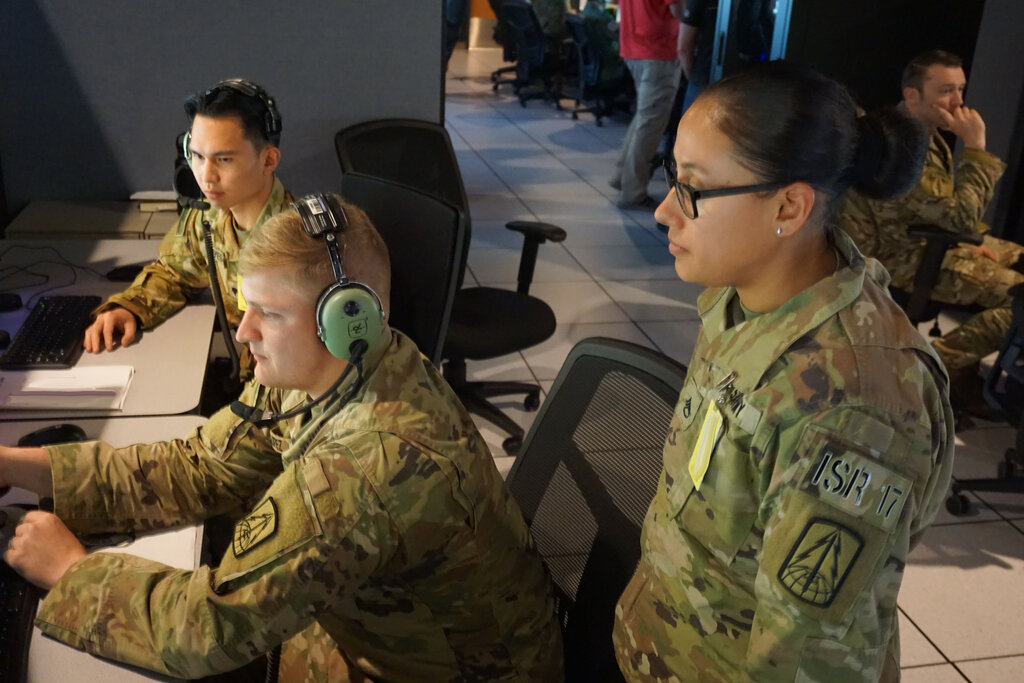
Cyber operations are the connective tissue for many of these activities. They enable disinformation campaigns, they can be used to steal sensitive economic or military data, and they can be deployed to disrupt critical infrastructure. Advanced cyber actors use sophisticated techniques to hide their tracks, routing attacks through multiple countries and using custom malware that is difficult to trace. This focus on online invisibility is central to evading attribution and maintaining plausible deniability. The attacker’s identity remains in the shadows, leaving the victim to deal with the consequences without a clear enemy to retaliate against.
Understanding the grey zone is the first step in preparing for a future where the lines of conflict are deliberately blurred. It’s a battlefield where information, economics, and law are weapons, and victory is measured not in territory captured, but in strategic advantage gained quietly over time.
What is the primary objective of a 'grey zone' strategy?
The use of "little green men" by Russia in Crimea is a textbook example of which grey zone tactic?